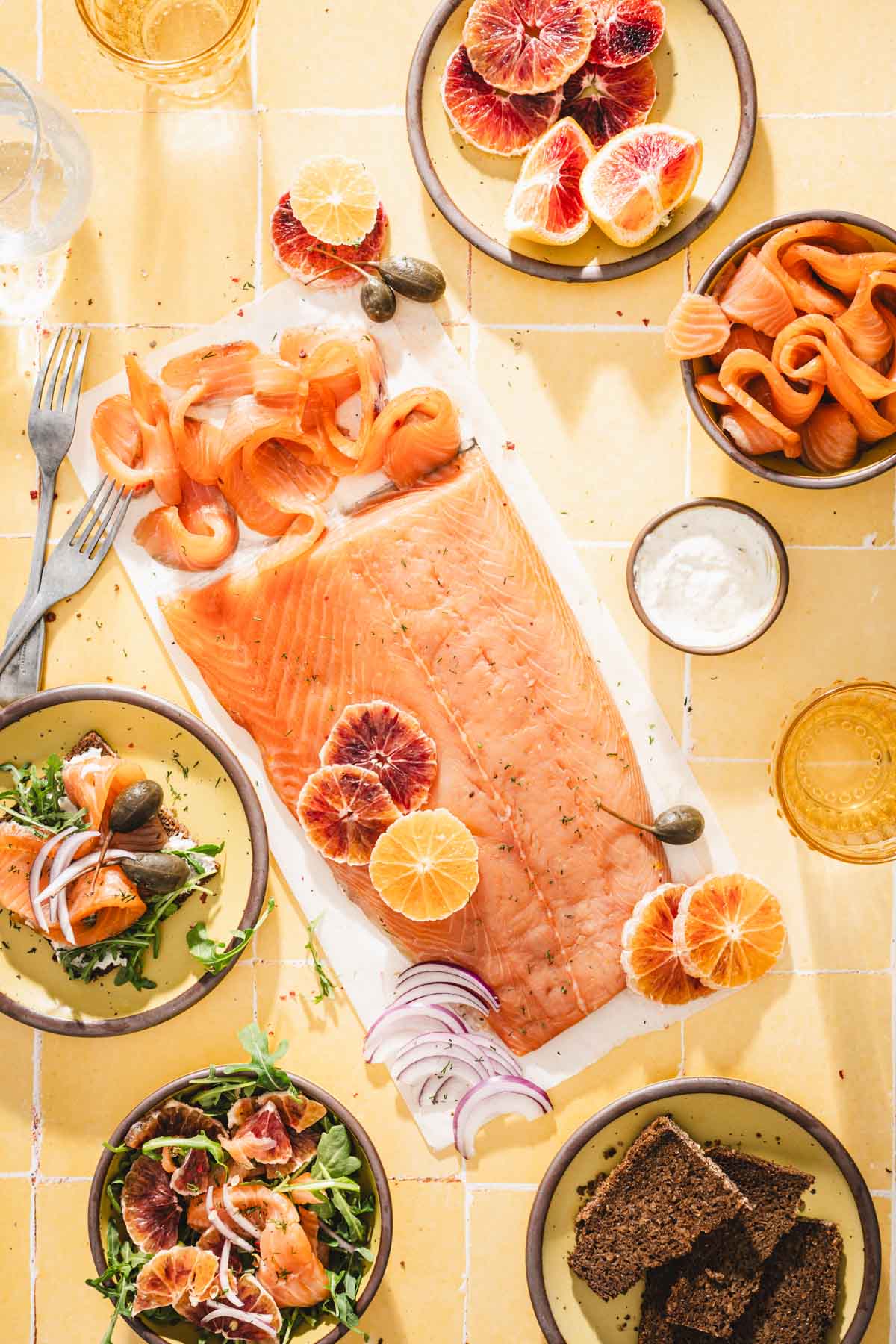

How to make a Citrus-Cured Gravlax Recipe.
No culinary skills needed, this Citrus-Cured Gravlax is shockingly simple. It’s raw salmon transformed by nothing more than salt, honey, citrus zest, and time. The cure firms up the fish, pulls out moisture, and infuses it with bright, aromatic flavor.
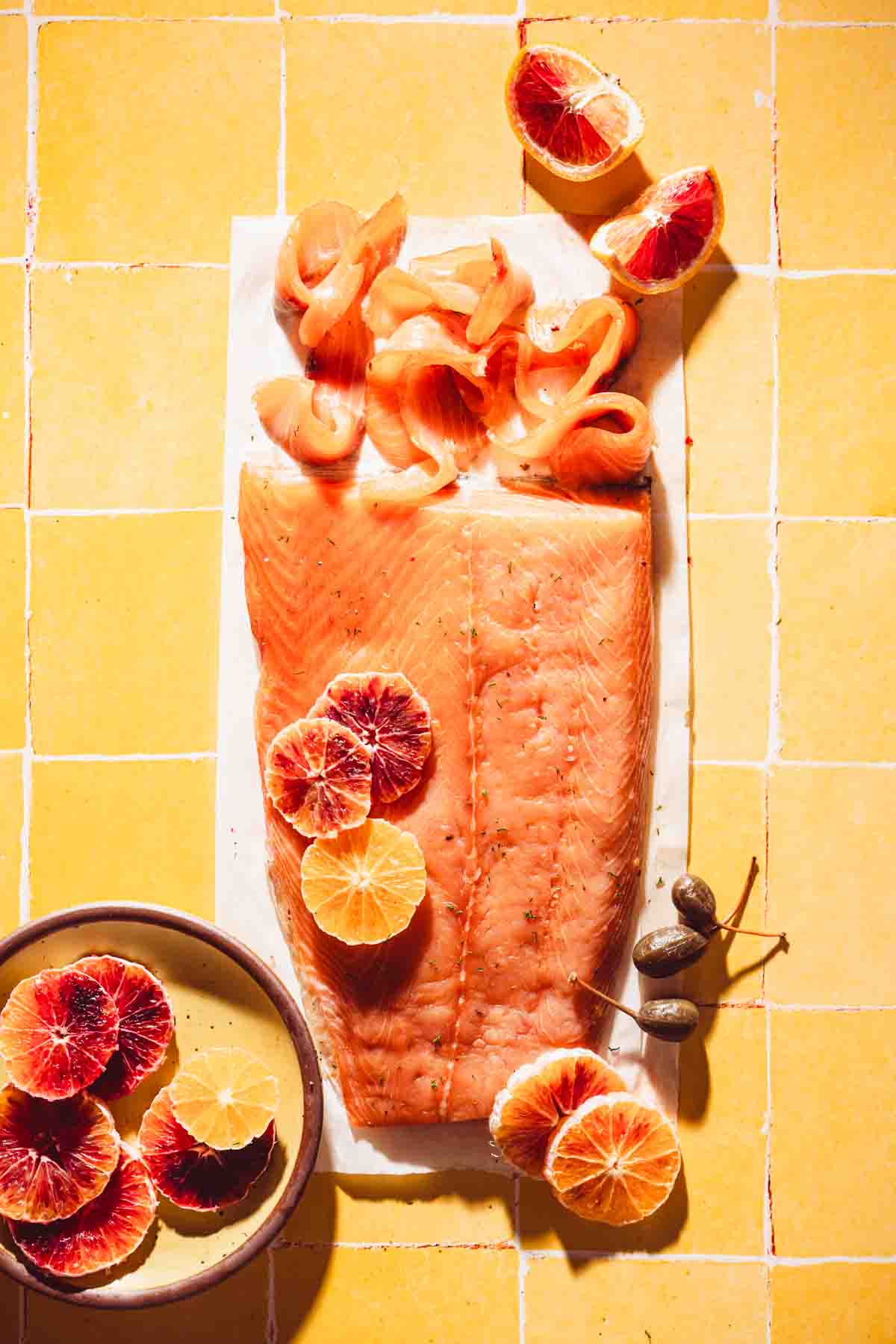
You cure it in your fridge for two days, then slice it thin and pile it onto bagels, toast, or eggs with crème fraîche. It’s the kind of thing that makes brunch feel like an event.
And once you’ve done it, you’ll never buy the pre-sliced stuff again.
Looking for more recipes like this?
Quick Look at this Recipe:
How is this recipe different?
- I used blood oranges
- I added caraway
- I used orange blossom honey
Key Ingredients and Substitutions
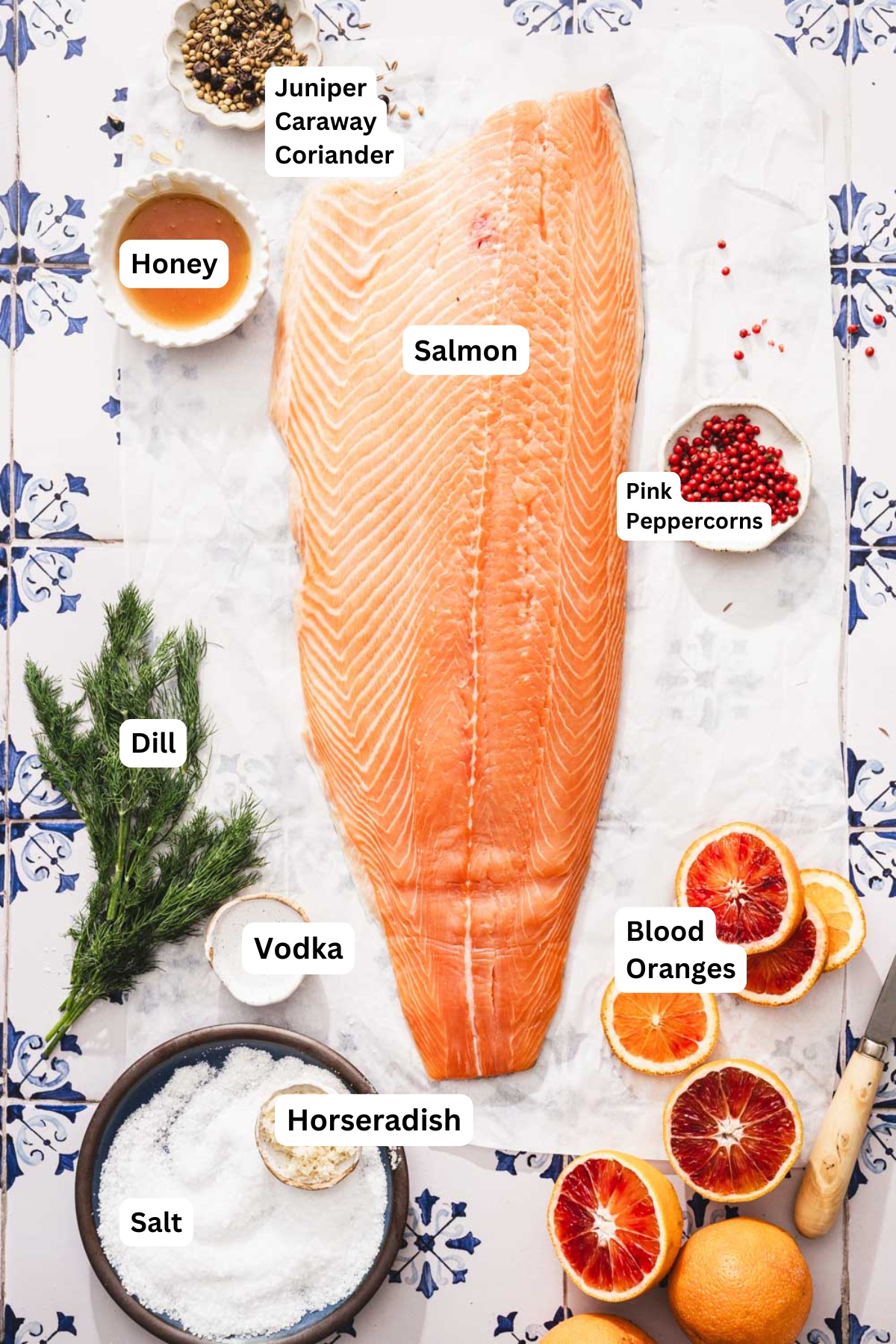
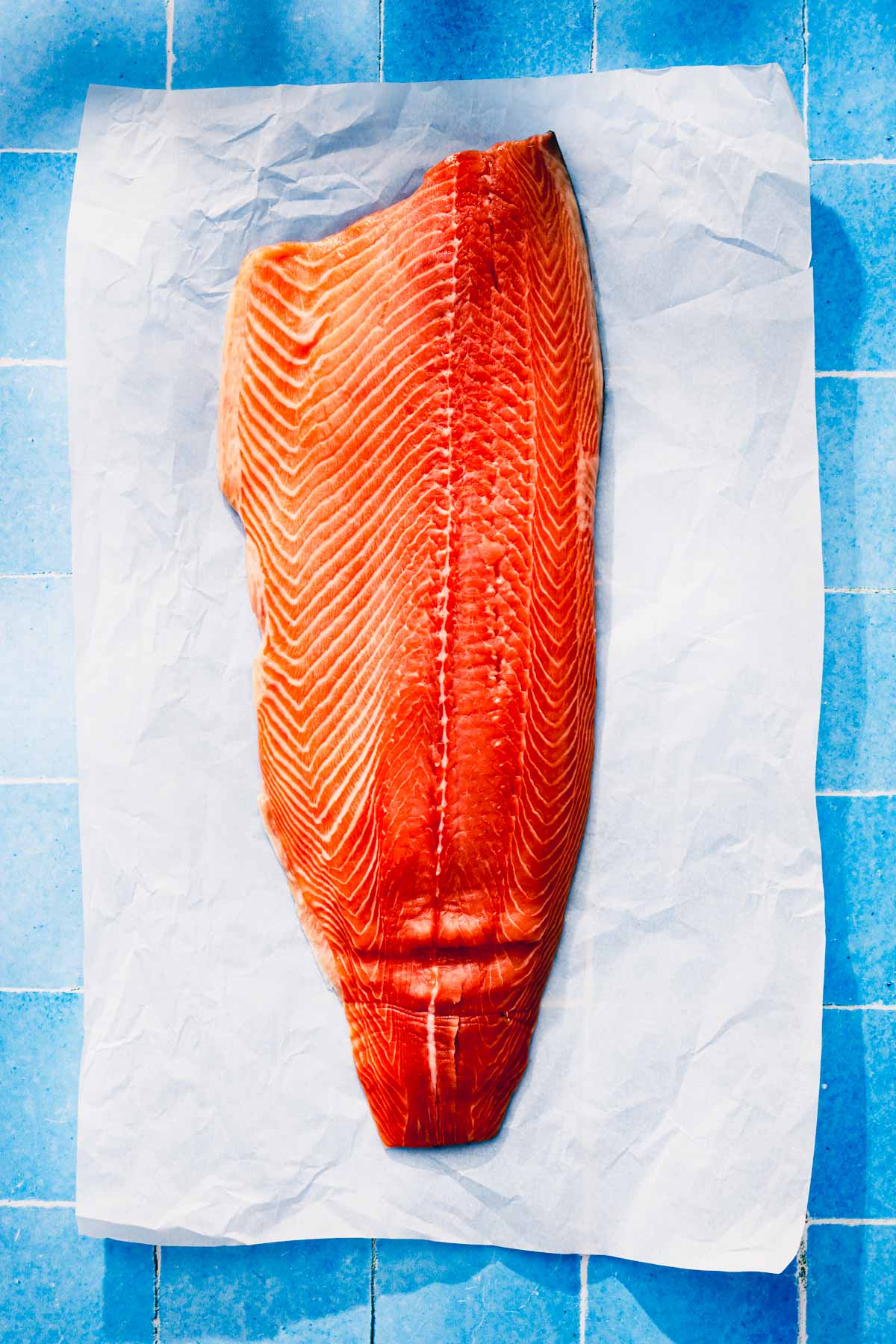
Salmon – a thick, center-cut side of salmon cures evenly and slices beautifully, giving you that silky gravlax texture. The curing process gently firms the fish while keeping it tender. Look for very fresh, sushi-grade or previously frozen salmon for the best flavor and food safety. Use skin-on fillets whenever possible; the skin protects the fish during curing and makes slicing easier. If using frozen salmon, thaw it slowly in the refrigerator and pat it very dry before curing.
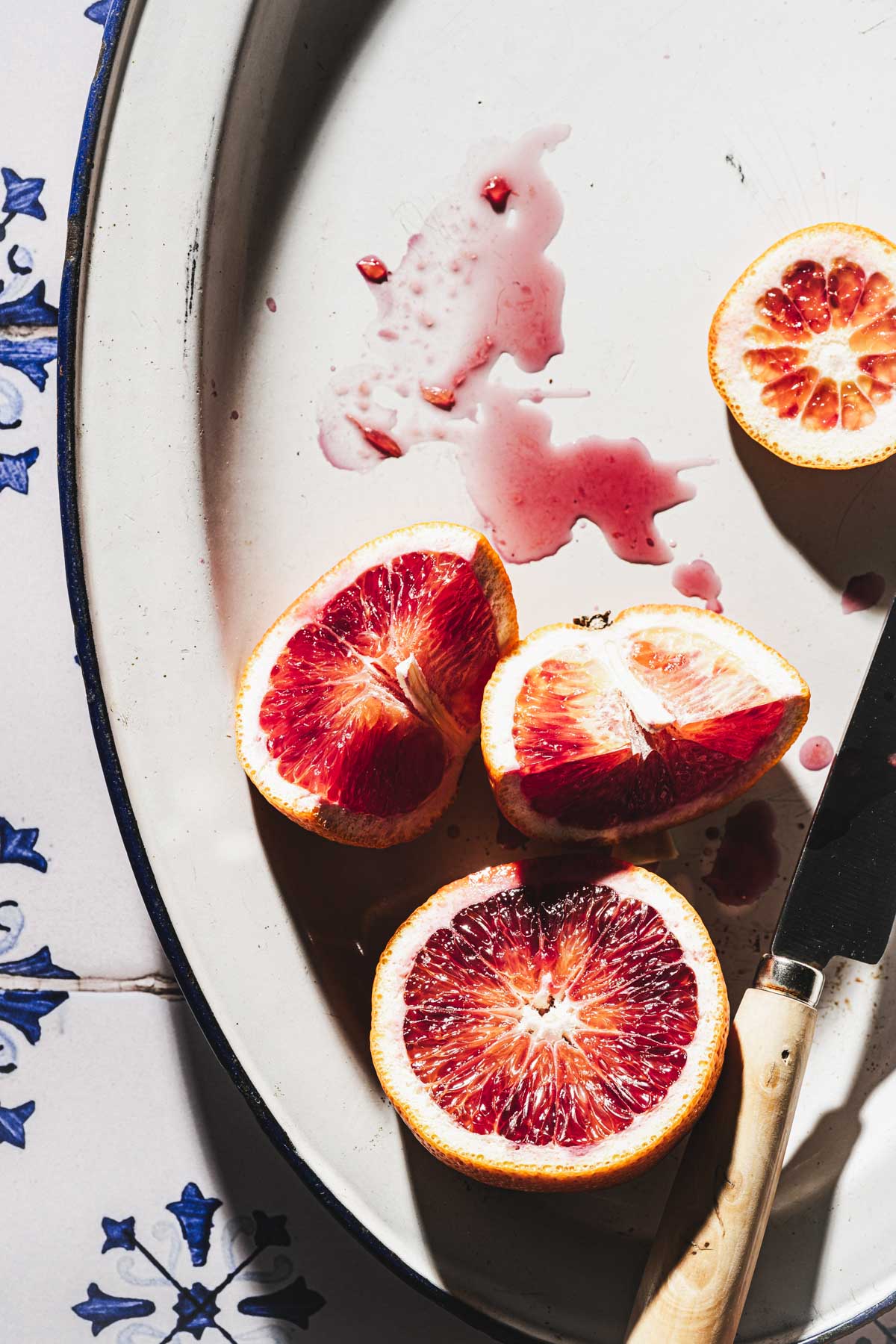
Blood Oranges – bring bright citrus aroma and subtle sweetness. The zest perfumes the cure while the slices add fresh citrus oils that lightly infuse the fish as it cures. Blood oranges also balance the richness of the salmon and the sharpness of horseradish. If blood oranges aren’t available, Cara Cara or navel oranges work well. A mix of orange zest and a little grapefruit zest can also mimic the deeper citrus flavor.
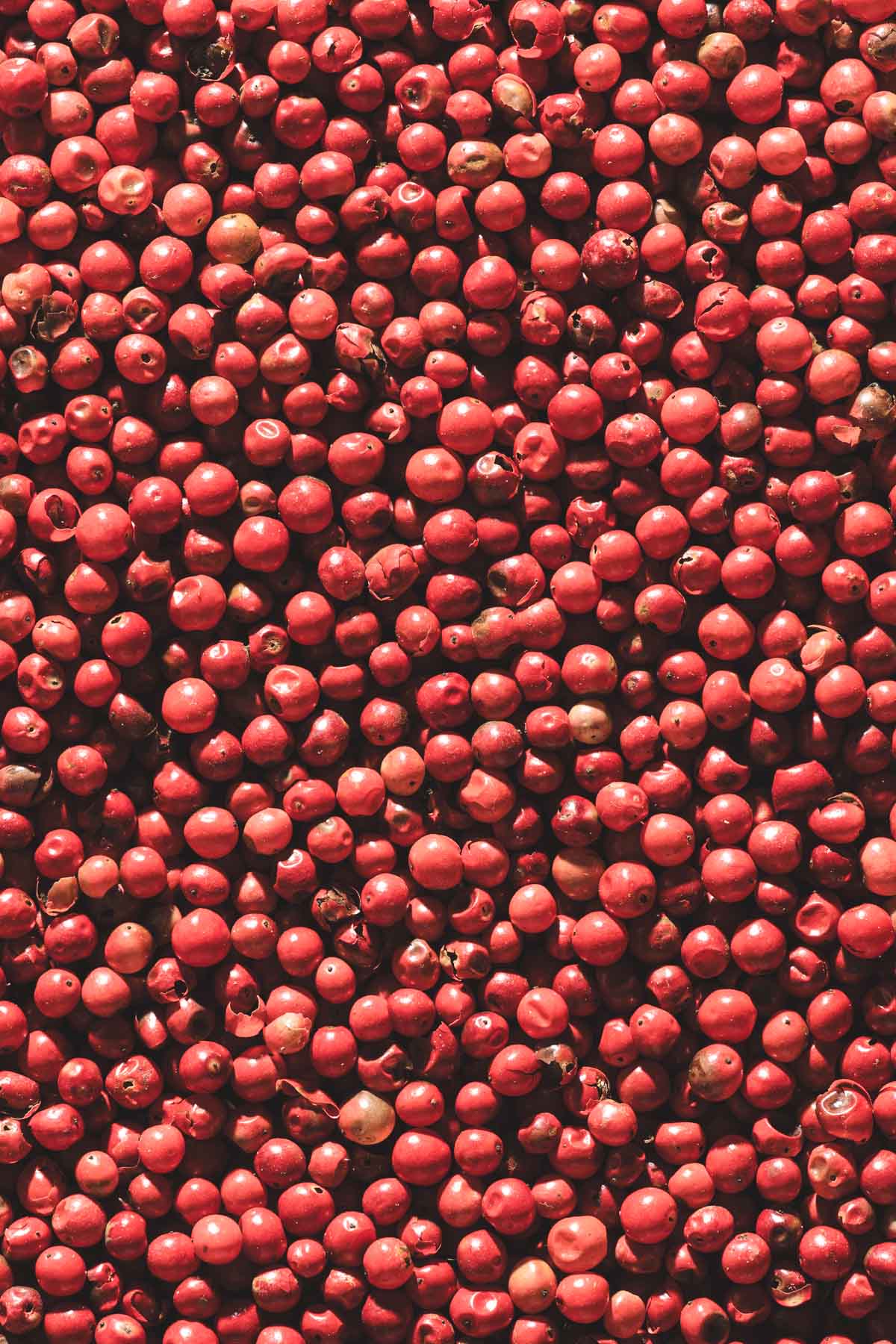
Aromatics (Caraway, Juniper, Coriander & Pink Peppercorns) – this blend gives the salmon a distinctly Central-European character. Caraway adds that unmistakable rye-bread warmth, juniper brings a subtle piney brightness, coriander contributes citrusy spice, and pink peppercorns offer gentle floral heat. If you don’t have juniper berries, the cure will still work beautifully without them. Fennel seeds can substitute for caraway. Whole spices that are lightly crushed will give a cleaner flavor than pre-ground spices
Orange Blossom Honey – instead of traditional sugar, honey adds a soft floral sweetness that pairs beautifully with citrus and salmon. Orange blossom honey in particular reinforces the blood orange flavor while helping the cure form a slightly glossy coating on the fish.
Other ingredients: kosher salt, horseradish, and fresh dill.
Equipment you will need
- Sharp knife (preferably long and thin)
- Fish tweezers or needle-nose pliers
- Mixing bowl
- Microplane or fine grater
- Cutting board
- Plastic wrap (cling film or parchment + foil)
- Rimmed baking sheet or shallow dish
- Second tray or flat plate
- Weights (cans, jars, or a small skillet)
- Small saucepan
- Small bowl
Top Tips
Start with very dry salmon. Before applying the cure, pat the fish thoroughly dry with paper towels. Citrus and honey already add moisture, so starting with dry fish helps the salt draw out liquid properly and ensures the salmon cures evenly.
Freeze your salmon first. Even if you’re buying sushi-grade fish, a 24-hour freeze at home kills any lingering parasites and firms up the flesh, which makes slicing way easier later. Thaw it in the fridge overnight before you start the cure. Restaurants do this as standard practice because it’s a safety net and improves texture.
Use a scale, not measuring cups. A 1:1 ratio of salt to sugar by weight is more accurate than by volume because different brands of kosher salt have wildly different crystal sizes. If you’re making gravlax often, weigh your cure. This eliminates the guesswork and prevents over-salting.
Use plenty of zest, not just juice. The real citrus flavor comes from the oils in the zest. Zest perfumes the cure beautifully without watering it down, while a few slices of blood orange add aroma and visual appeal.
Lightly crush the spices – whole spices release flavor slowly during curing. Gently crushing the caraway, juniper, coriander, and peppercorns wakes up their essential oils without turning the cure gritty.
Don’t skip the weight – Placing a small weight on the wrapped salmon presses the cure into the fish and helps create that signature silky gravlax texture. Even a couple of cans or a small skillet works perfectly.
Flip the salmon halfway through curing – After about 24 hours, unwrap the fish, flip it over, and rewrap it. This redistributes the curing liquid and keeps the flavor balanced on both sides.
Give it a short air-dry before slicing – after rinsing off the cure, let the salmon rest uncovered in the refrigerator for about an hour. This firms the surface slightly, making those thin, elegant slices much easier.
How to make it
- Remove any pin bones from your 3-pound skin-on salmon fillet, center cut using tweezers or needle-nose pliers, and run your fingers along the flesh to feel for them. Pat the salmon completely dry with paper towels. A dry surface helps the cure adhere better and penetrate more evenly.
- Use the flat side of a knife or a mortar and pestle to gently crack 1 tablespoon of pink peppercorns and 2 teaspoons of caraway seeds. Aim for rough pieces, not a fine powder. This process releases the essential oils.
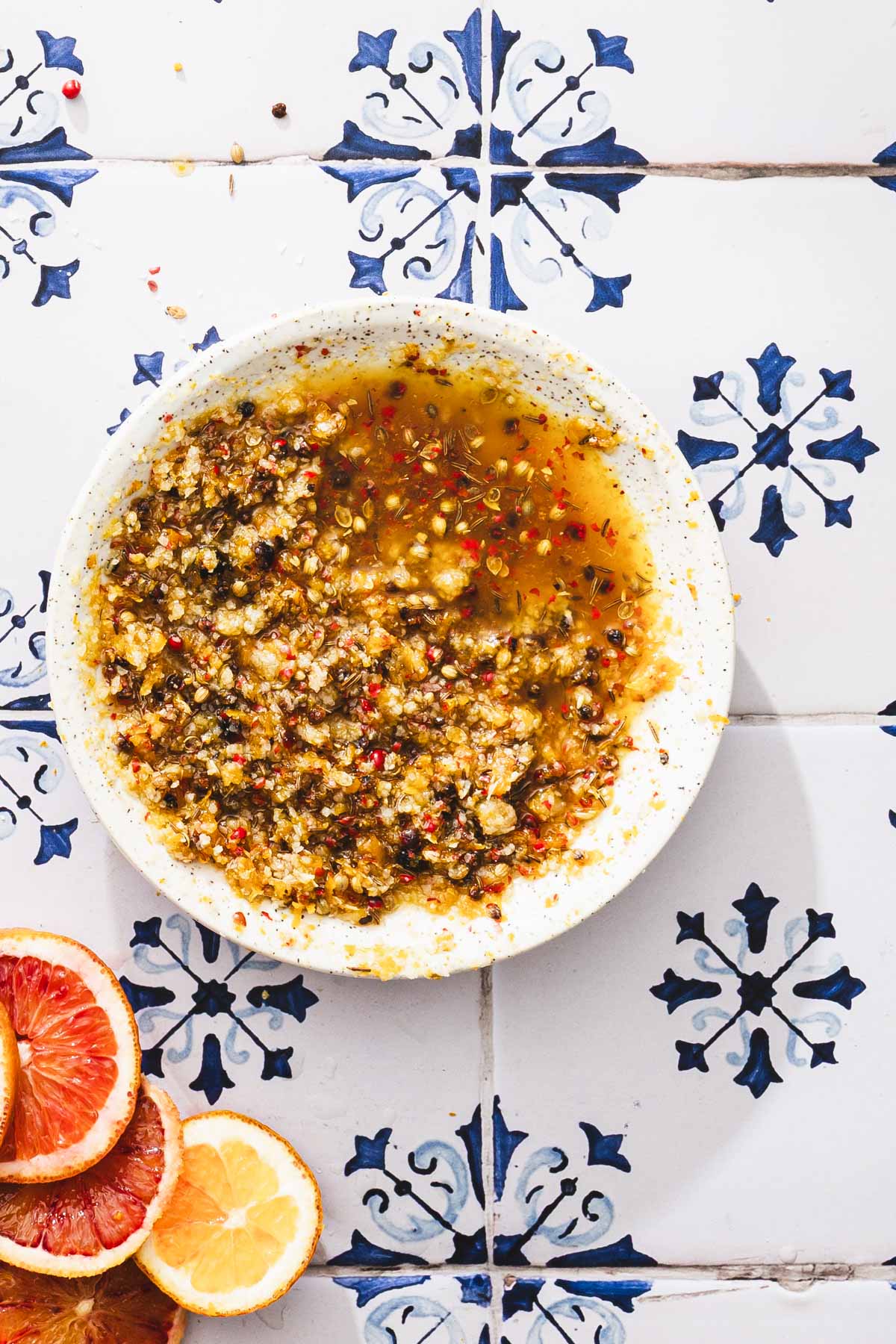
- In a bowl, combine 6 tablespoons of kosher salt, 3 tablespoons of orange blossom honey, 2 tablespoons of fresh horseradish, the zest of 4 blood oranges, 1 tablespoon of crushed pink peppercorns, 1 teaspoon of ground coriander, and 2 teaspoons of lightly crushed caraway seeds. Mix well. Add the 4 tablespoons of vodka and stir until the mixture forms a slightly damp batter.
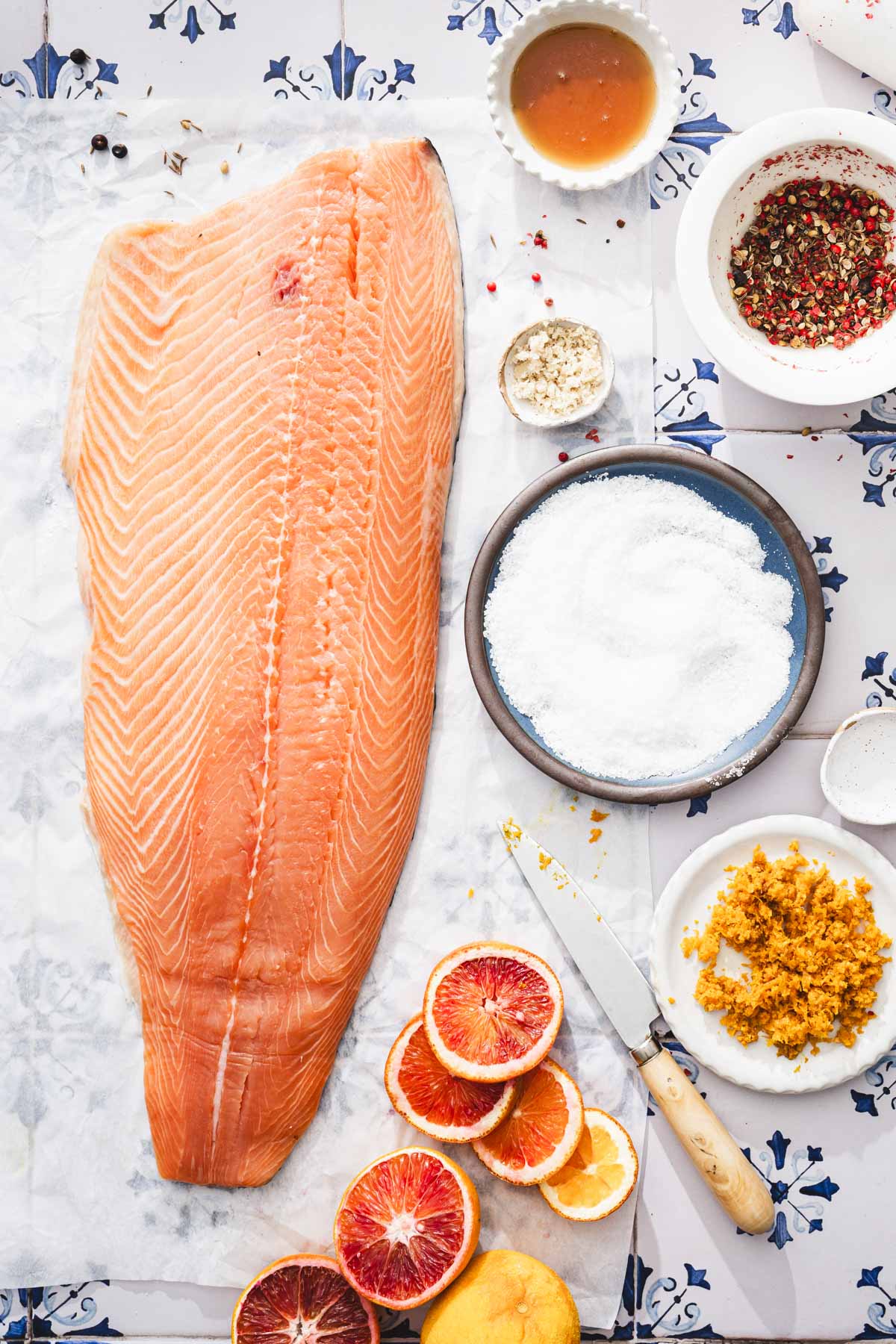
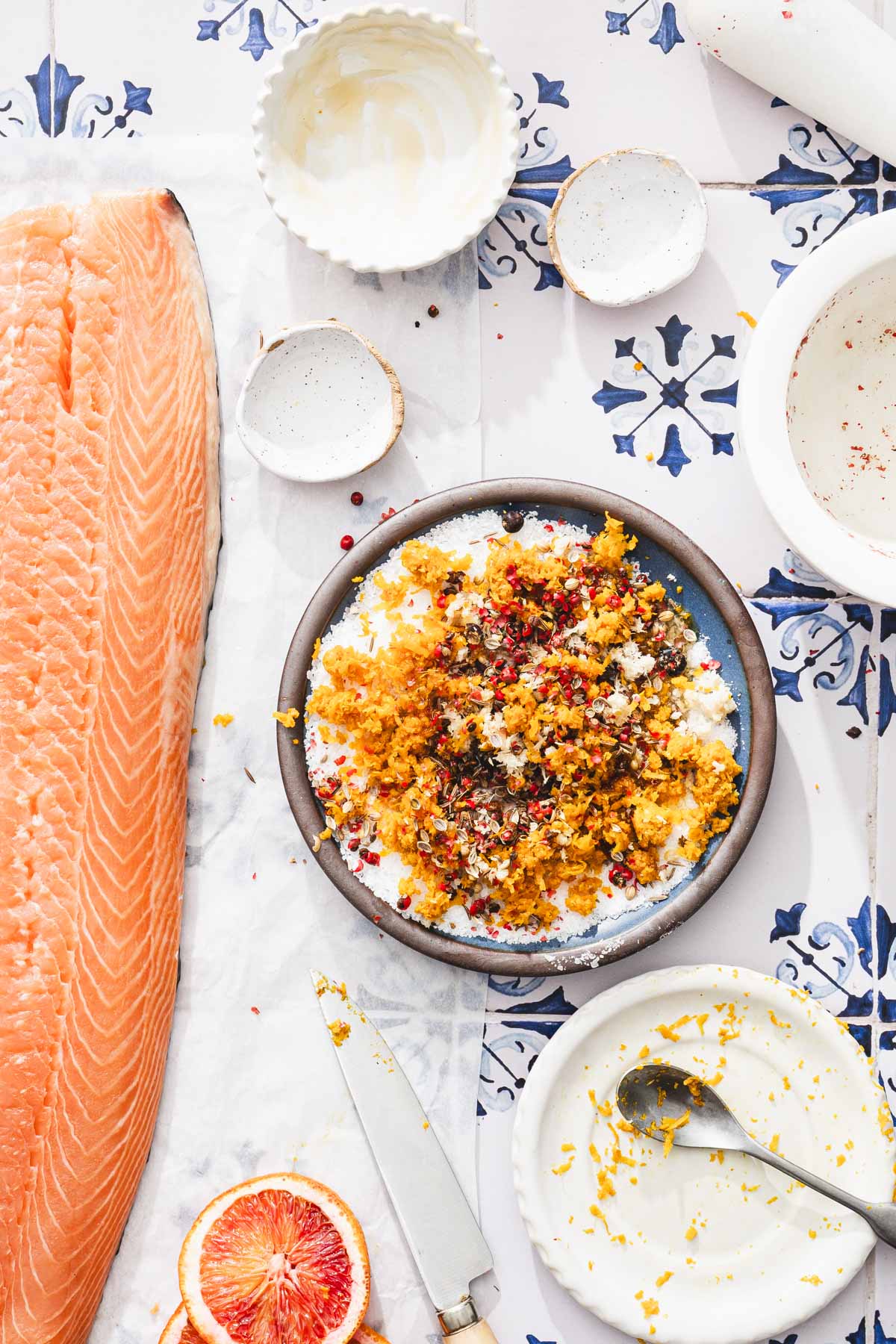
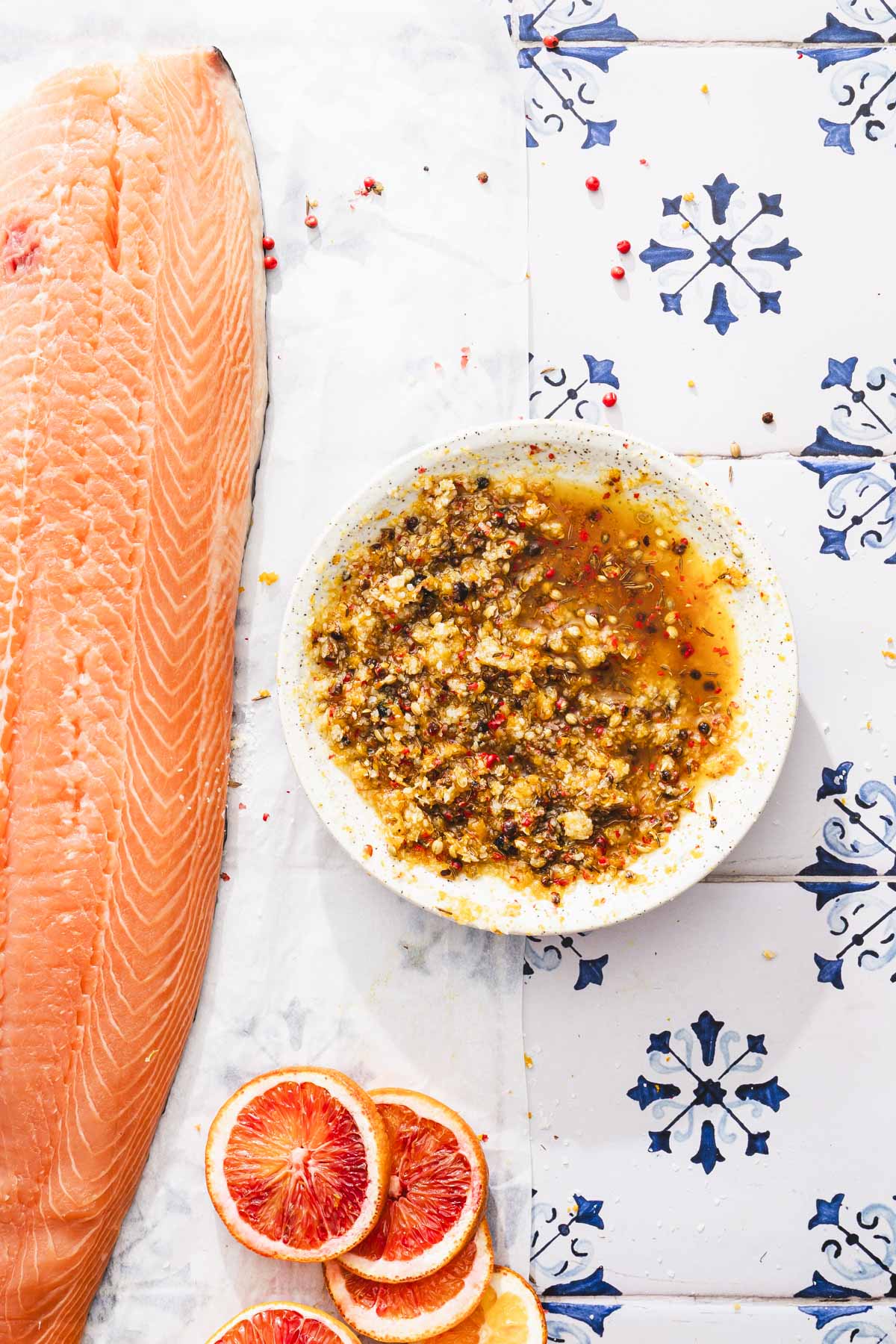
- Place a large piece of plastic wrap on your work surface, big enough to fully wrap the salmon twice. Spread half of the fresh dill, loosely packed, along the center, then arrange half of the 2 blood orange slices, thinly sliced into rounds, over the dill. Place the salmon skin side down on top. Cover the top of the salmon completely with the curing mixture, pressing it in firmly. Top the flesh side of the fish with the remaining blood orange slices and dill.
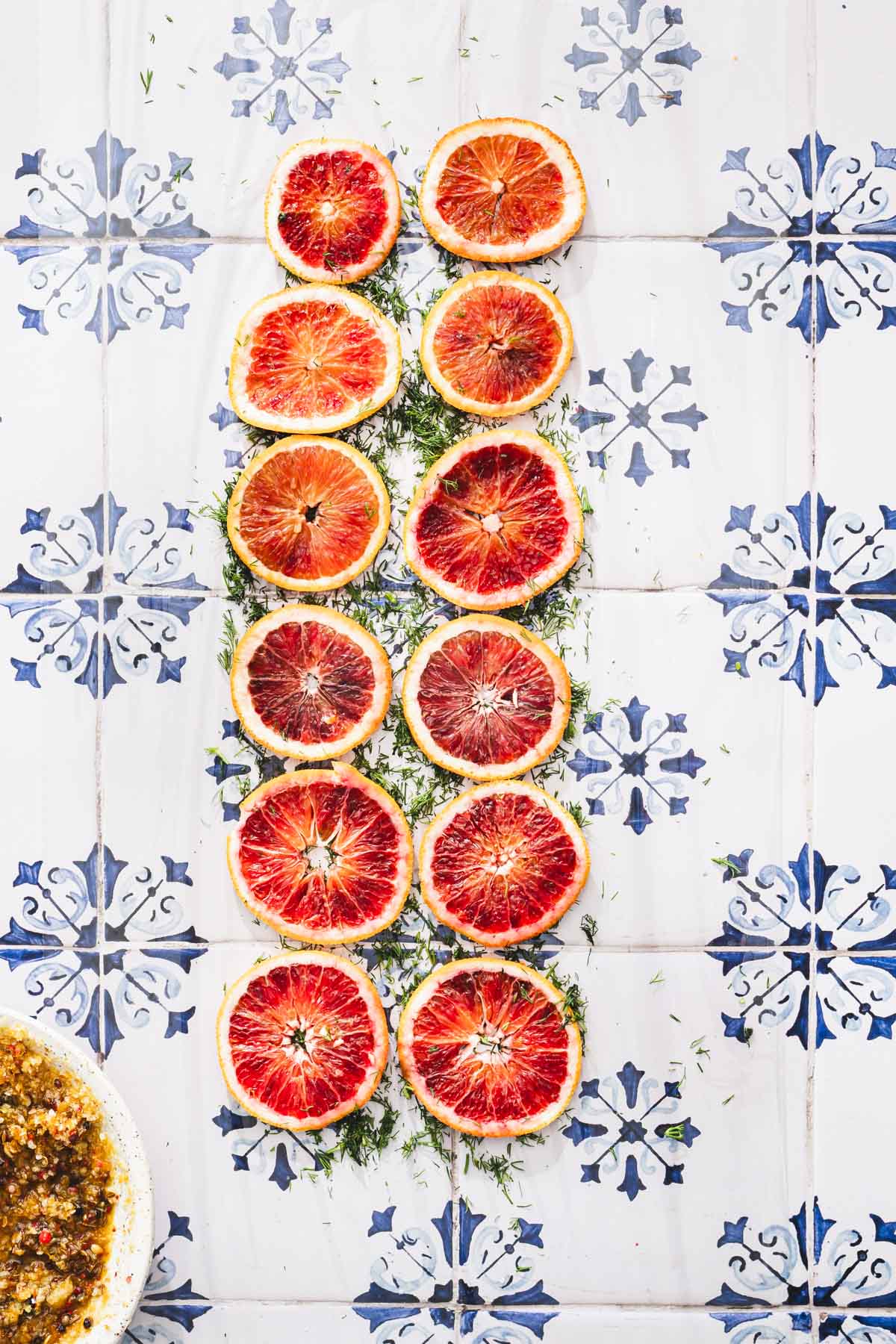
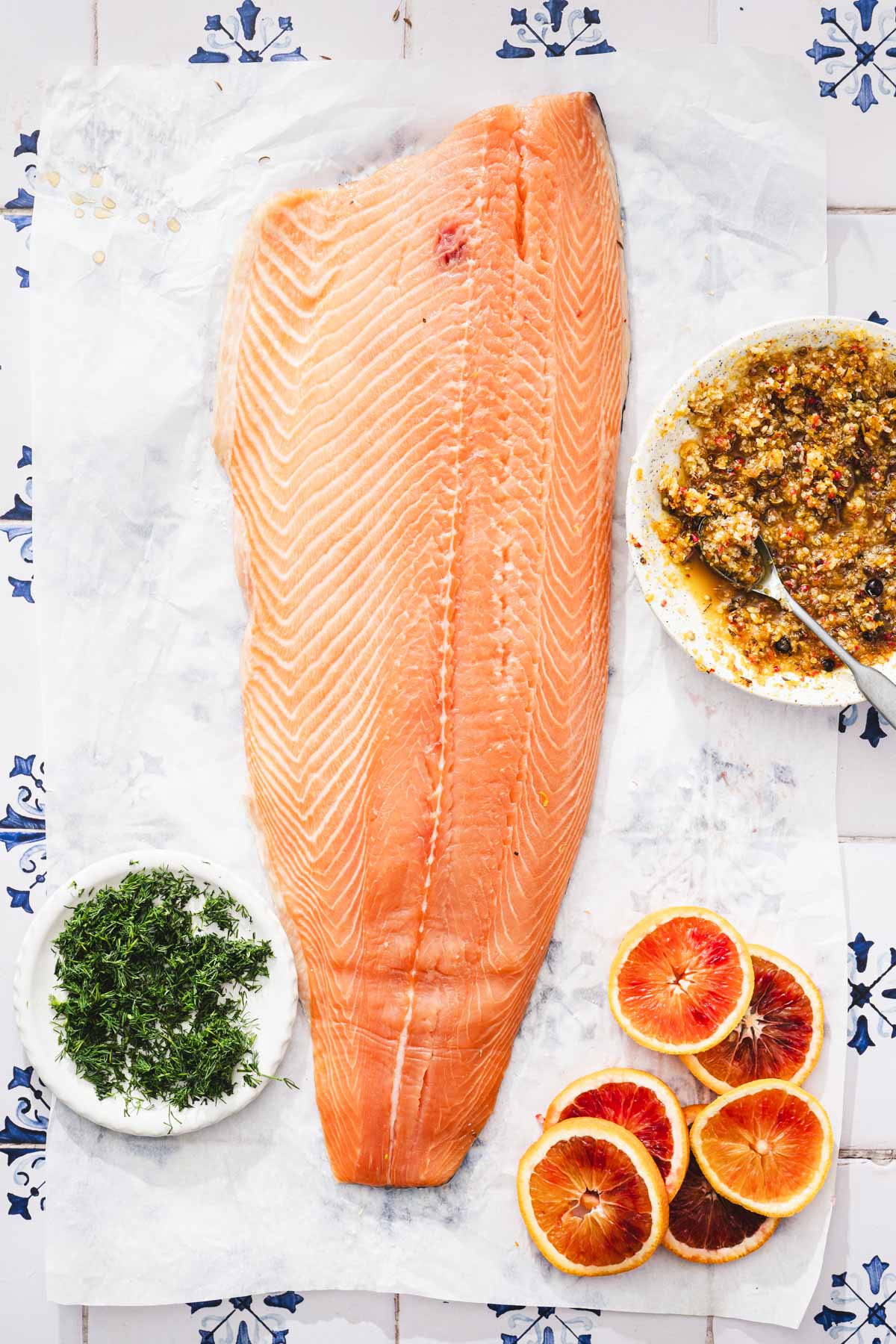
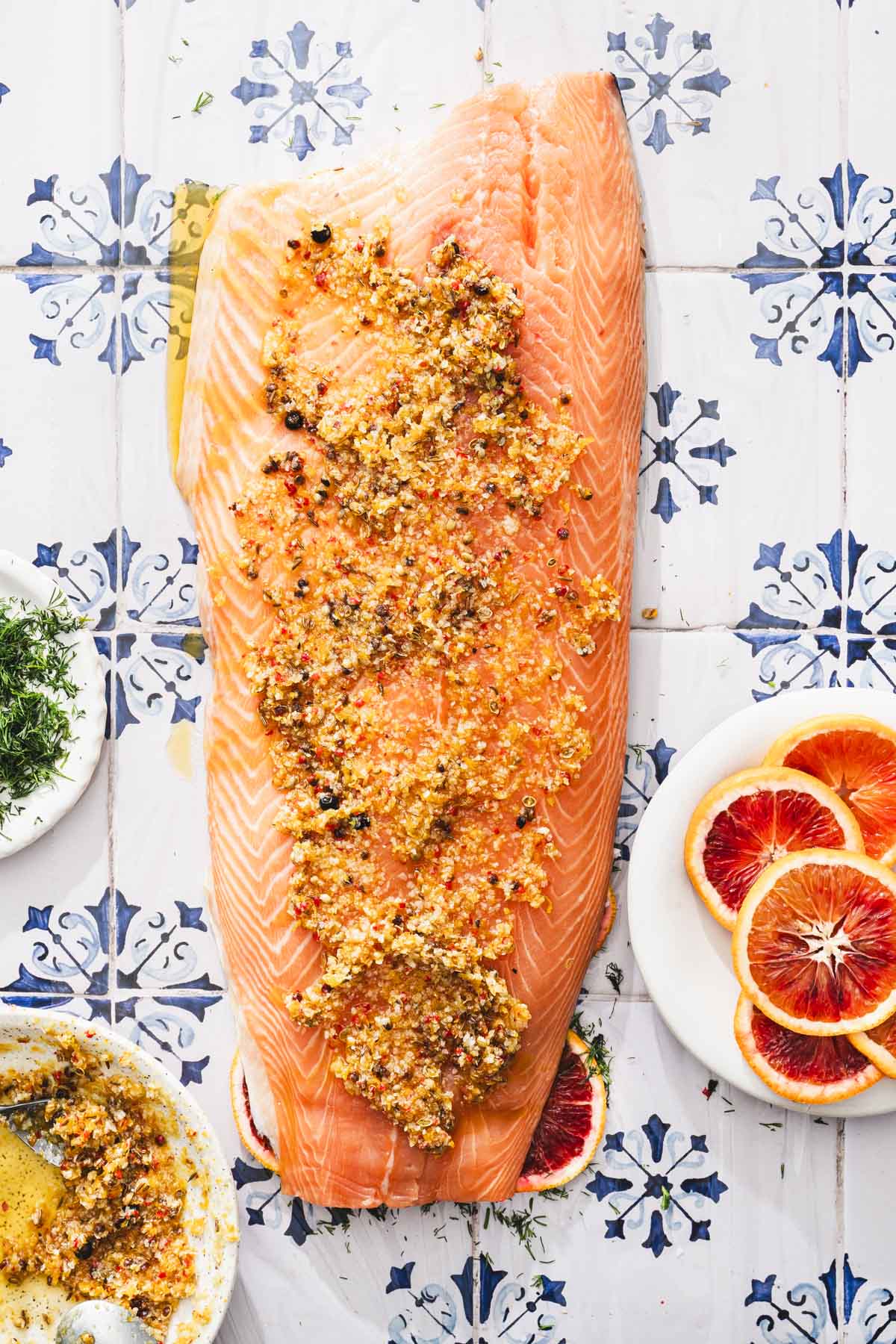
- Tightly wrap the salmon in two layers of plastic wrap. Place it in a deep ceramic dish or sheet pan. Put another pan on top and weigh it down with heavy cans or a cast-iron skillet. This pressure helps create the beautiful, silky texture of the gravlax.


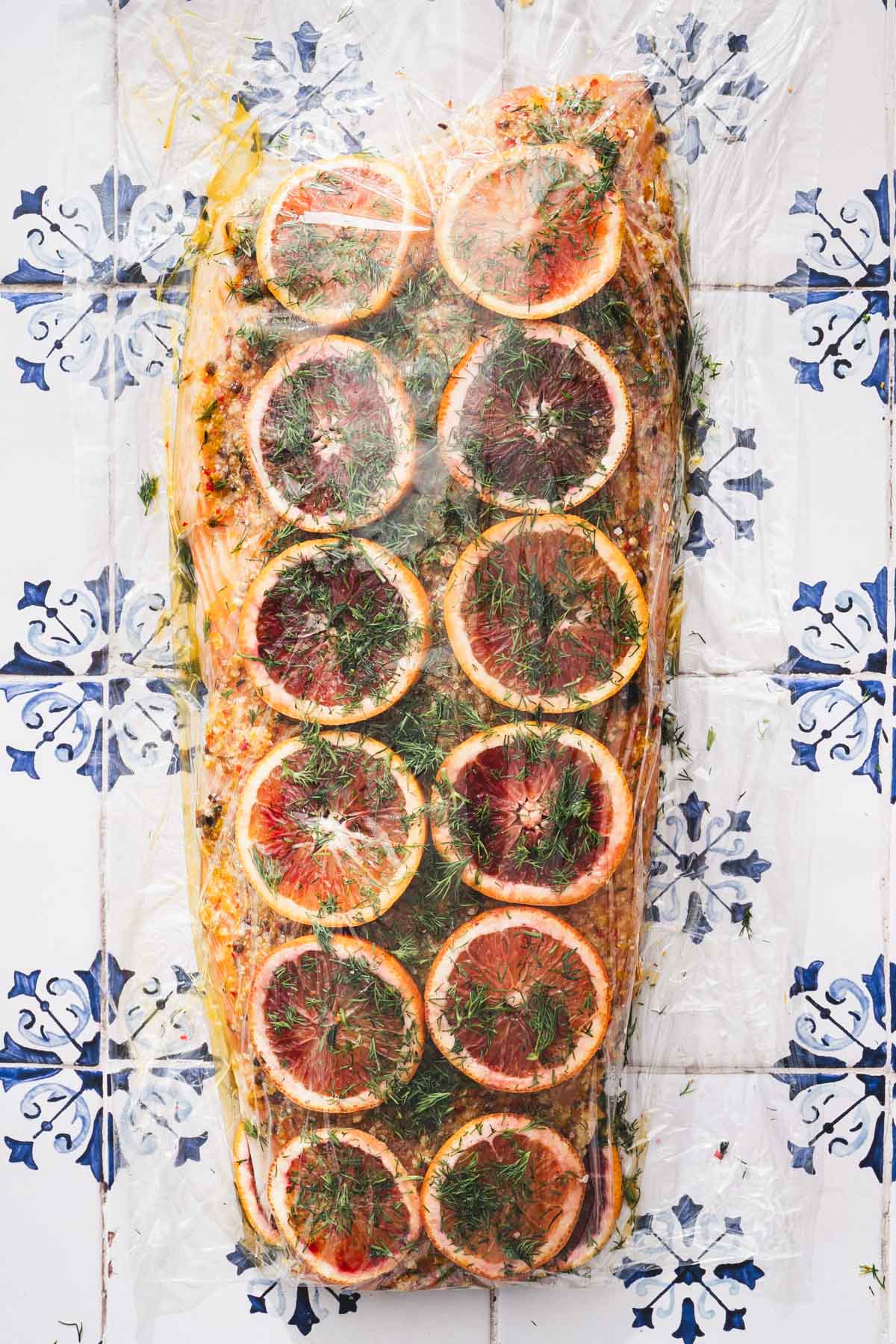
- Refrigerate for 48 hours, flipping it over at the 24-hour mark. You’ll notice liquid pooling in the dish; that’s the brine doing its job. Don’t drain it until you’re ready to unwrap.
- After 48 hours, unwrap the salmon over the sink. Gently rinse off the cure with cold water; don’t scrub, just rinse. Pat completely dry with paper towels. The flesh should feel firm and silky.
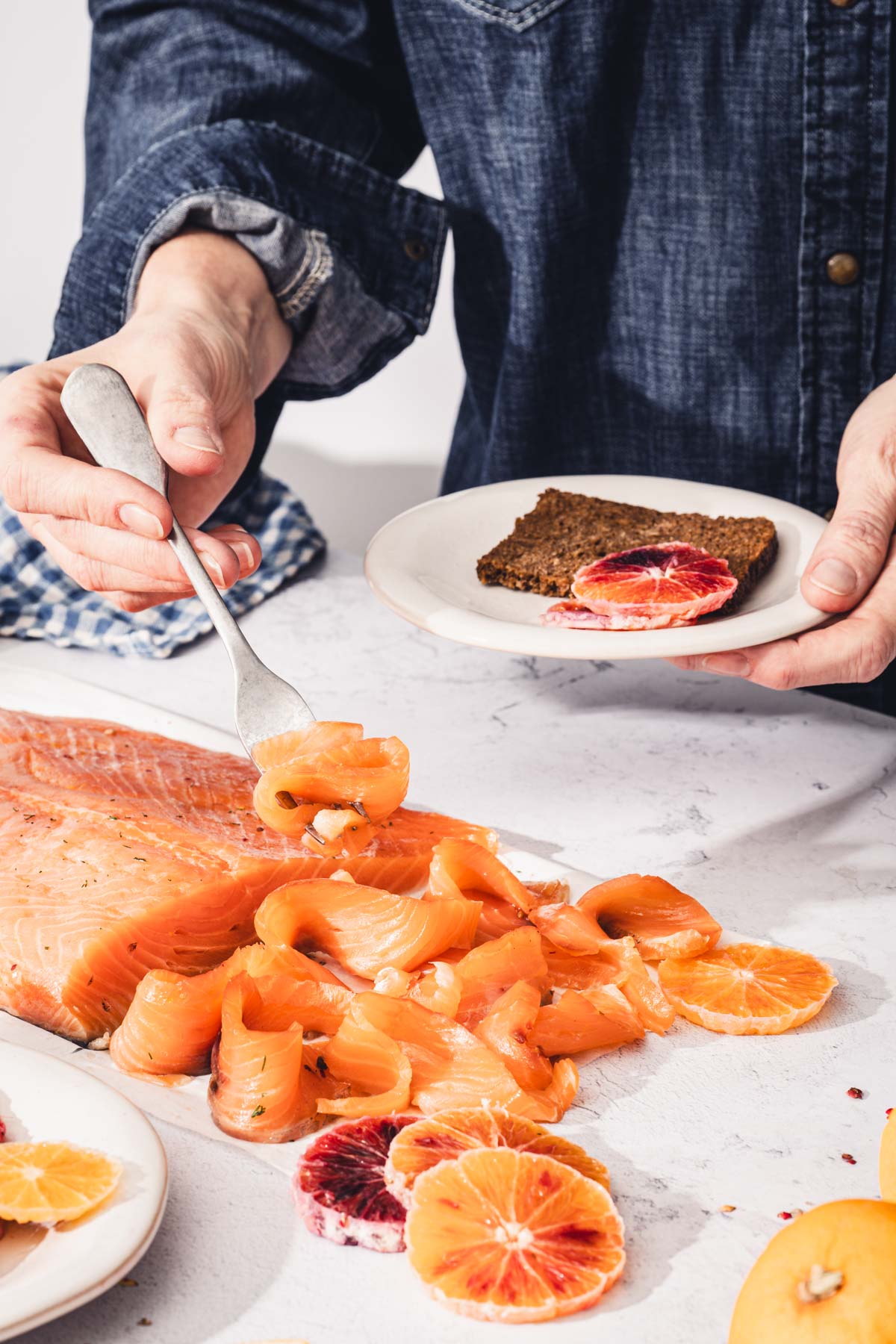
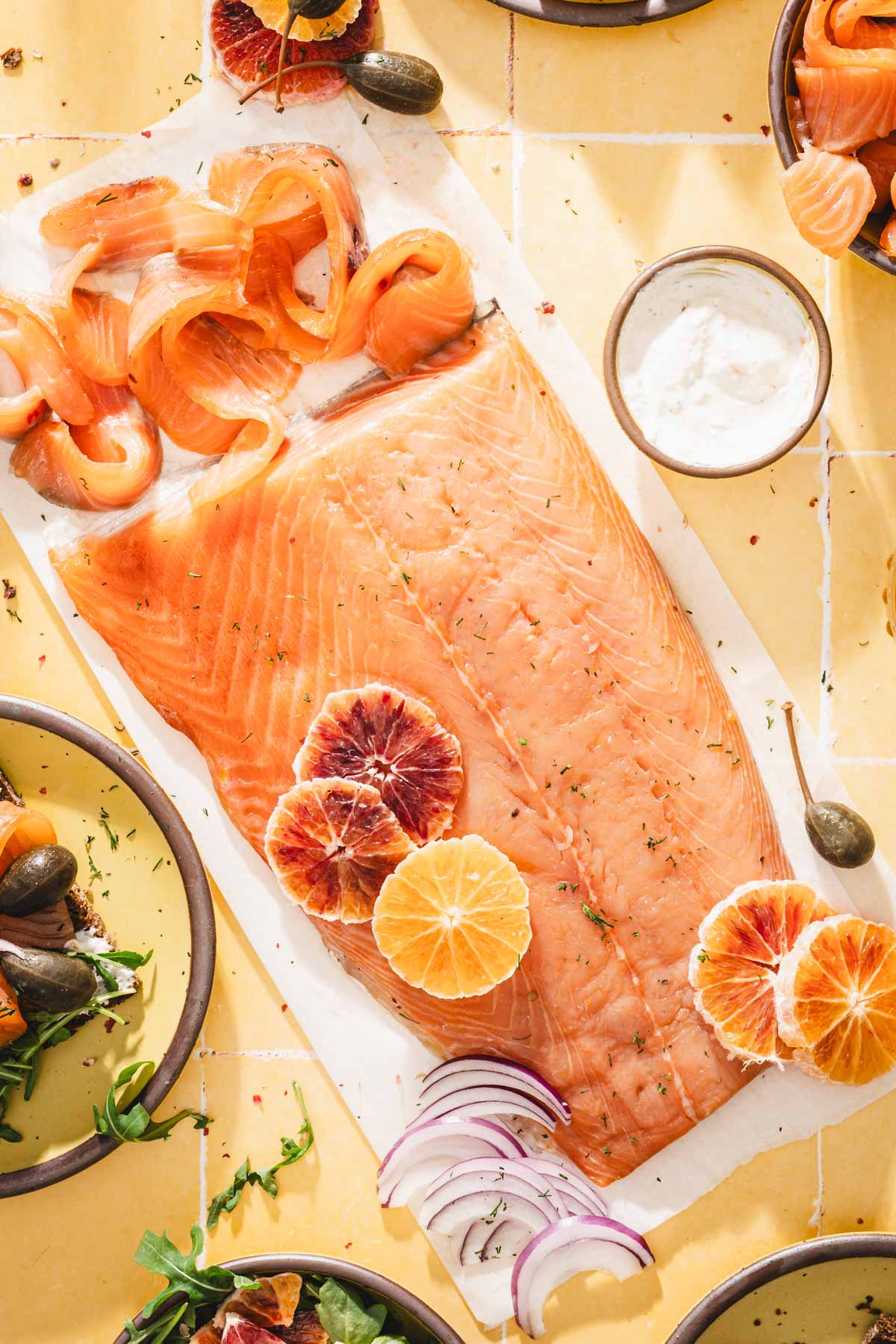
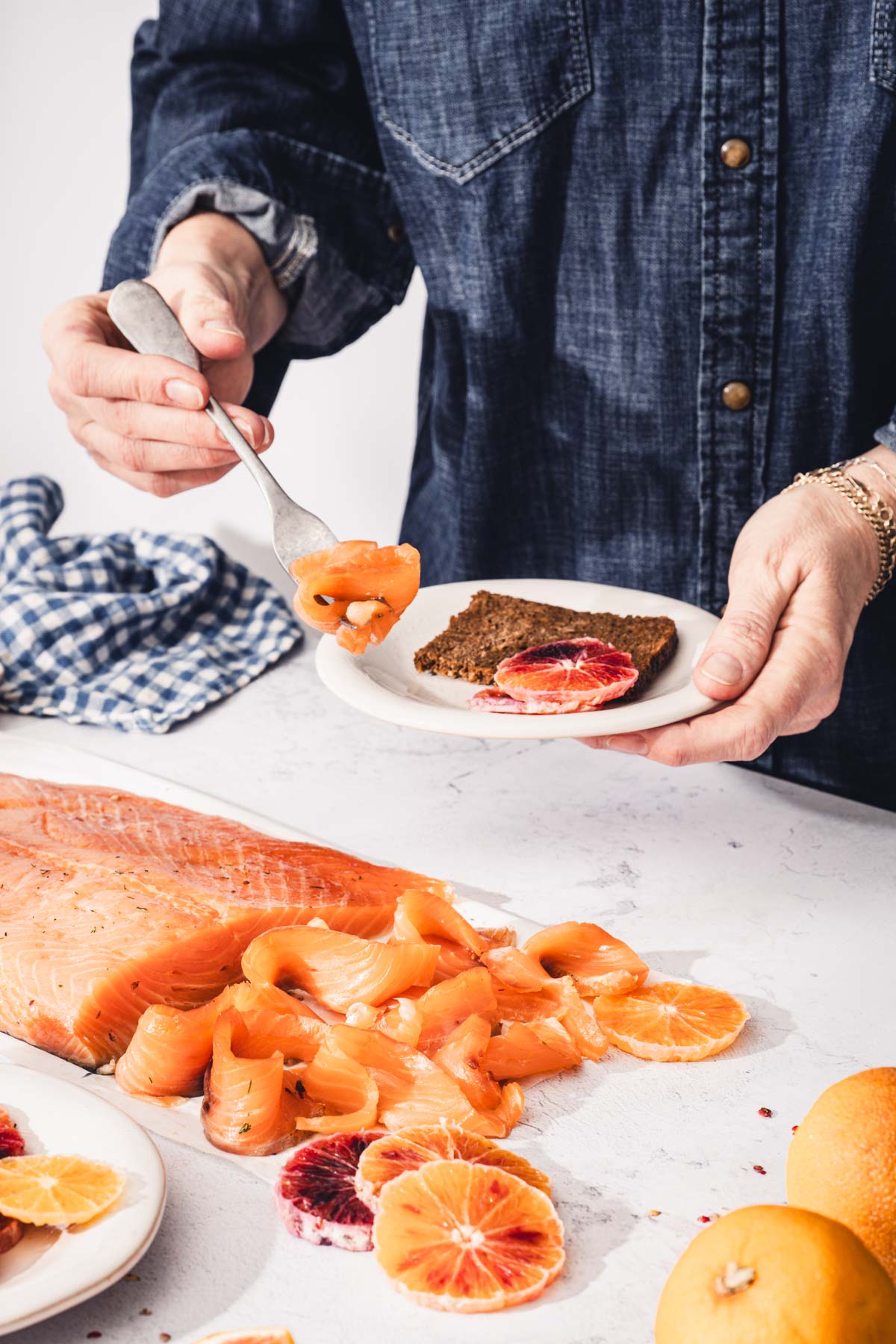
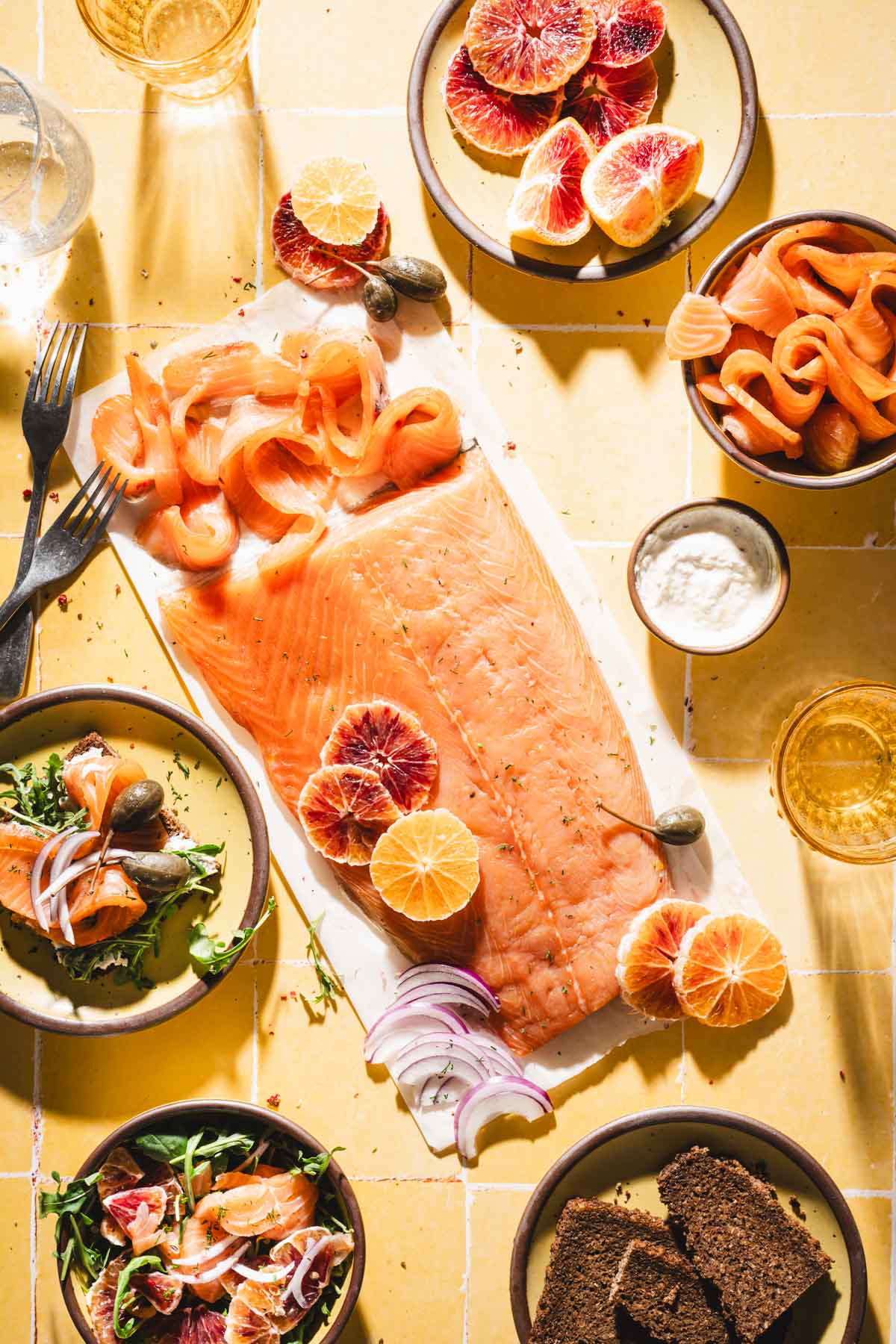
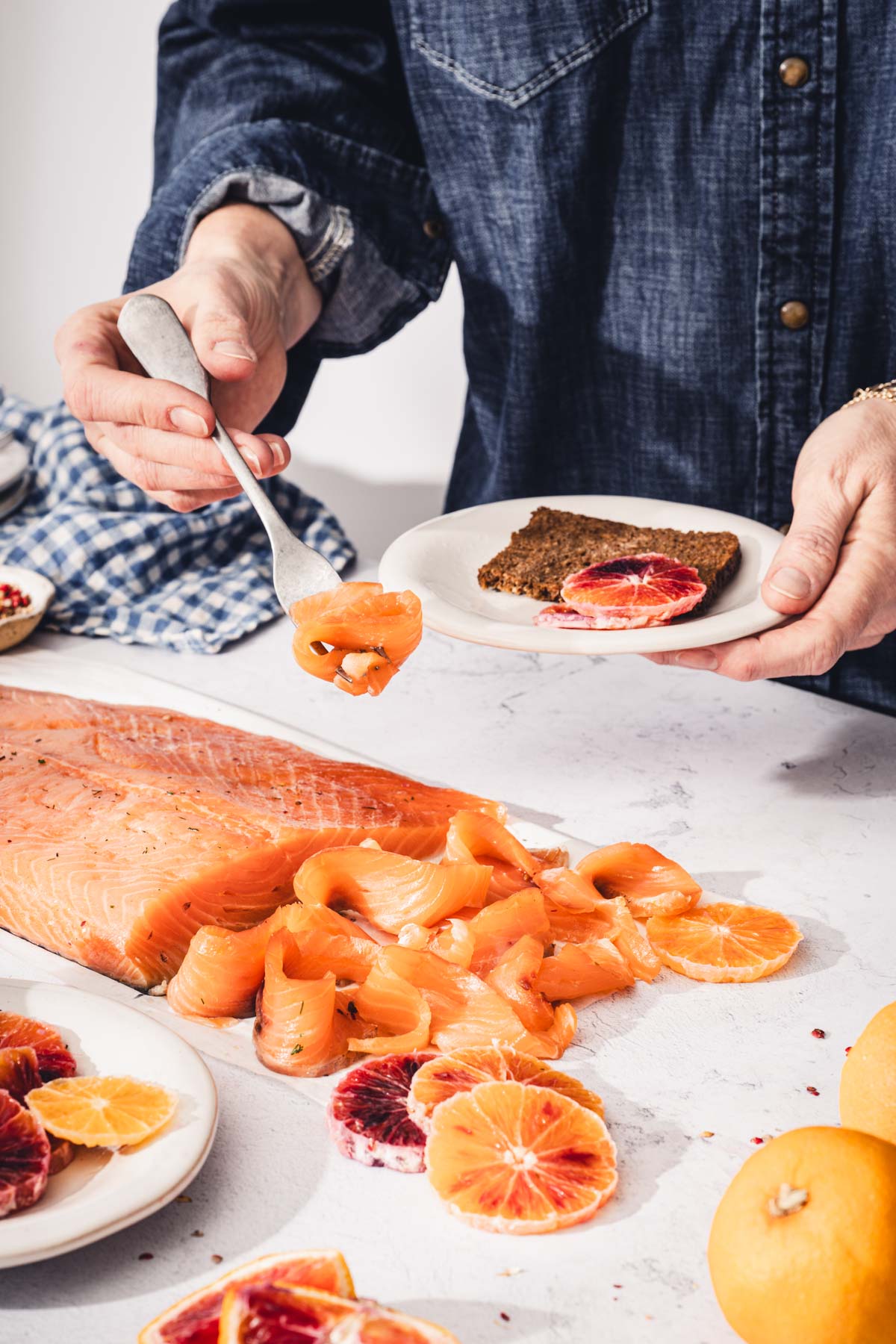
- Using your sharpest, longest knife, cut the salmon on a gentle diagonal into thin, almost translucent slices, angling the blade away from you. Start at the tail end and work toward the center. Wipe the blade clean between cuts for the neatest slice
Best ways to enjoy
classic on a bagel with cream cheese
on a toast
with scrambled eggs or frittata
with homemade pasta
You may also like:
Storage instructions, reheating
Refrigerator (after curing) – Once cured, rinsed, and dried, wrap the salmon tightly in plastic wrap or store it in an airtight container. It will keep well in the refrigerator for up to 4–5 days.
For best flavor and texture, slice only what you need and keep the rest wrapped — this prevents it from drying out.
Before slicing (best method) – If you haven’t sliced the salmon yet, store it as a whole cured piece. It stays fresher longer and slices cleanly when needed.
Freezing
Cured salmon freezes surprisingly well.
- Wrap tightly in plastic wrap, then foil (or use a freezer-safe container)
- Freeze for up to 2 months
To use, thaw slowly in the refrigerator overnight. The texture will be slightly softer but still very good.
Storage tip for best texture – Place a small piece of parchment or wax paper directly against the surface of the salmon before sealing. This helps prevent oxidation and keeps the color vibrant.
Horseradish Cream – Store in an airtight container in the refrigerator for up to 3 days. Stir before serving.
How to make Citrus-Cured Gravlax Recipe.
Equipment
- sharp knife
- fish tweezers
- mixing bowl
- microplane, fine grater
- cutting board
- plastic wrap
- baking sheet or ceramic dish
- weights
- small bowl
Ingredients
THE CURE
- 3 lb skin-on salmon fillet center cut
- 6 tabelspoons kosher salt
- 2 tabelspoons orange blossom honey
- 2 tabelspoons horseradish finely grated
- 4 tabelspoons vodka
- 2 tabelspoons horseradish
- 4 Zest of blood oranges
- 2 blood oranges thinly sliced into rounds
- 1 tabelspoons pink peppercorns lightly crushed
- 1 teaspoon ground coriander lightly crushed
- 2 teaspoons caraway seeds lightly crushed
- ½ tsp crushed juniper
- 1 dill about 1 cup loosely packed
Garnish
- capers
- blood orange rounds
- Fresh dill sprigs
Instructions
- Remove any pin bones from your 3 lb skin-on salmon fillet, center cut, using tweezers or needle-nose pliers. Run your fingers along the flesh to feel for them. Pat the salmon completely dry with paper towels. A dry surface helps the cure adhere better and penetrate more evenly.
- Use the flat side of a knife or a mortar and pestle to gently crack 1 tabelspoons pink peppercorns and 2 teaspoons caraway seeds. Aim for rough pieces, not a fine powder. This process releases the essential oils.
- In a bowl, combine 6 tabelspoons kosher salt, 2 tabelspoons orange blossom honey, 2 tabelspoons horseradish and the 4 Zest of blood oranges, 1 tabelspoons pink peppercorns, 1 teaspoon ground coriander, and 1 teaspoon ground coriander. Mix well. Add the 4 tabelspoons vodka and stir until the mixture forms a slightly damp batter.
- Place a large piece of plastic wrap on your work surface, large enough to fully wrap the salmon twice. Spread half of the fresh dill, loosely packed, along the center, then arrange half of the thinly sliced blood orange rounds over the dill. Place the salmon skin side down on top. Cover the top of the salmon completely with the curing mixture, pressing it in firmly. Top the flesh side of the fish with the remaining blood orange slices and dill.
- Tightly wrap the salmon in two layers of plastic wrap. Place it in a deep ceramic dish or sheet pan. Put another pan on top and weigh it down with heavy cans or a cast-iron skillet. This pressure helps create the beautiful, silky texture of the gravlax.
- Refrigerate for 48 hours, flipping it over at the 24-hour mark. You’ll notice liquid pooling in the dish; that’s the brine doing its job. Don’t drain it until you’re ready to unwrap.
- After 48 hours, unwrap the salmon over the sink. Gently rinse off the cure with cold water—don’t scrub, just rinse. Pat completely dry with paper towels. The flesh should feel firm and silky.
- Using your sharpest, longest knife, cut the salmon diagonally into thin, almost translucent slices, angling the blade away from you. Start at the tail end and work toward the center. Wipe the blade clean between cuts for the neatest slices.
Notes
Nutrition
Did you make this recipe?
Tag me @sylwiavaclavekphotography or tag me using #myomnikitchen so I can see your creations! You can also leave a comment below!
Conclusion
Do you agree? This Blood orange and honey-cured Salmon is easy to make
The simple curing process transforms a beautiful piece of salmon into something that feels special.
Paired with rye bread, horseradish cream, and a few pickled onions, it hits that perfect mix of fresh and hearty. And once you’ve made it once, it’s the kind of recipe you’ll come back to. Easy to prep ahead, versatile, and very impressive.
FAQ
Can I use frozen salmon for gravlax?
Yes, and it’s actually safer. Freezing salmon at -4°F for at least seven days kills any parasites. If you’re buying fresh salmon, ask if it’s been previously frozen. Most “fresh” fish at the counter has been.
What if I don’t have vodka?
Swap it for gin, aquavit, white rum, or tequila. Each will add a different flavor. Gin brings botanicals, aquavit adds caraway and dill, and tequila gives a subtle agave note. You can also skip alcohol entirely and just use the dry cure, though the flavor won’t penetrate as deeply.
How do I know when the gravlax is done curing?
Press the thickest part of the fillet. It should feel firm, not squishy. The flesh will have darkened slightly and taken on a translucent appearance. If it still feels soft or raw, give it another 12 to 24 hours.
Can I cure gravlax without the skin?
You can, but it’s harder. The skin holds the fillet together and prevents over-curing on one side. If you must go skinless, reduce the cure time and check it more frequently.
Why is my gravlax too salty?
You likely cured it for too long or didn’t rinse it well enough. Always rinse the salmon thoroughly under cold water after curing to remove excess salt. If it’s still too salty, soak it in cold water for 10 to 15 minutes, then pat dry.
Can I use table salt instead of kosher salt?
No. Table salt is much finer and dissolves faster, which can over-cure and over-salt the fish. Stick with kosher salt. If you only have Morton’s kosher salt, reduce the amount by about a third since it’s denser than Diamond Crystal.
What’s the white stuff that forms on the salmon during curing?
That’s albumin, a protein that gets pushed out as the fish firms up. It’s completely harmless. Just rinse it off when you rinse the cure. It won’t affect flavor or safety.
Can I cure the salmon longer than 48 hours?
You can, but it will become firmer and saltier. For this citrus-forward version, 36-48 hours gives the best balance of texture and flavor.
Hungry for more? Check out the latest posts from My Omni Kitchen.
- How to make a Citrus-Cured Gravlax Recipe.
- Best Mushroom-Stuffed Deviled Eggs Recipe
- Best Upside down Carrot Cake Recipe
- Red Cabbage with Celery Root and Apple Slaw Recipe
- Reuben Salad with Mustard Dressing Recipe