
How to make homemade Roasted Tomato Paste Recipe
Have a pile of fresh tomatoes? Roast them into a rich, flavorful paste, made with garlic, onion, herbs, and a splash of balsamic.

This paste is perfect for freezing, pasta nights, or anytime you want to elevate the tomato flavor of your dish.
How is this recipe different?
- We are roasting tomatoes
- We are using a variety of tomatoes
- We added balsamic vinegar
Key Ingredients, Variations and Substitutions
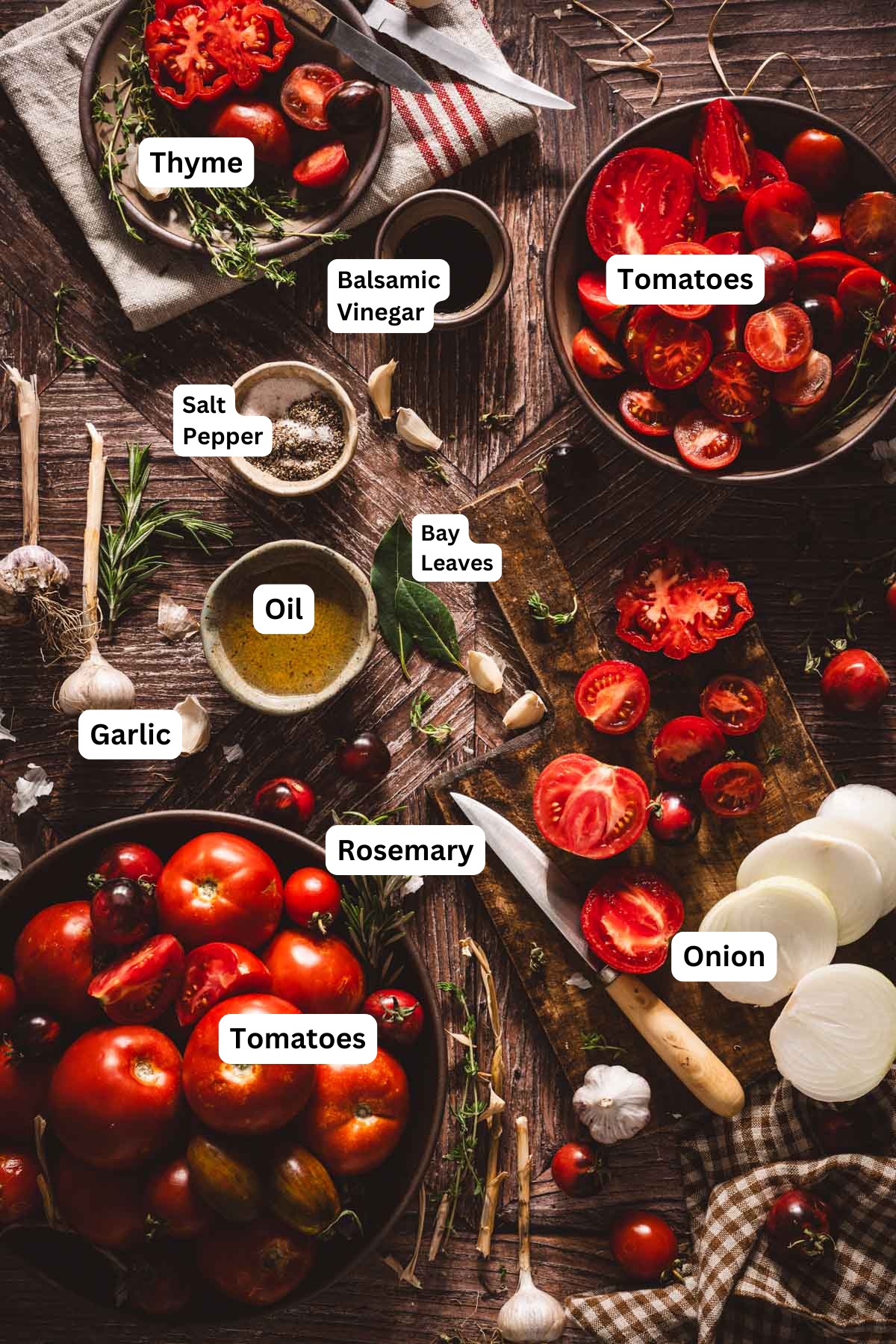
Fresh Tomatoes – Plum (Roma) tomatoes are the most popular choice. They are meaty and not overly watery, which makes for a thicker, more flavorful sauce. Heirloom or cherry tomatoes are sweeter and more complex, but need longer reduction. That said, any ripe tomato works, especially the “what am I going to do with all these?” garden mix.
Onion adds a gentle sweetness that balances the tomatoes’ natural acidity. I like using yellow onion for its mellow flavor, but red or even shallots bring their own charm. If you prefer your sauce brighter and less sweet, you can scale back or skip the onion altogether.
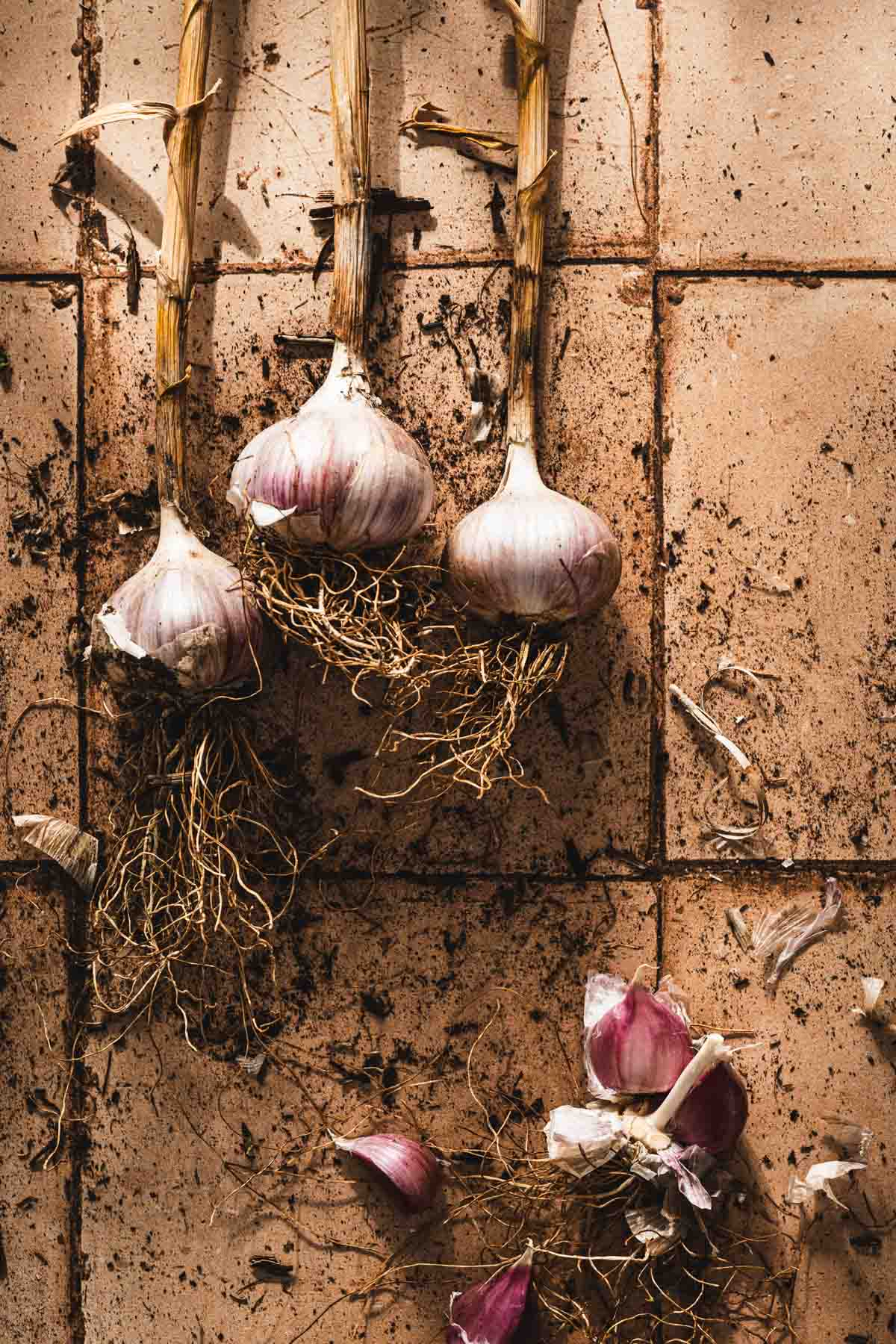
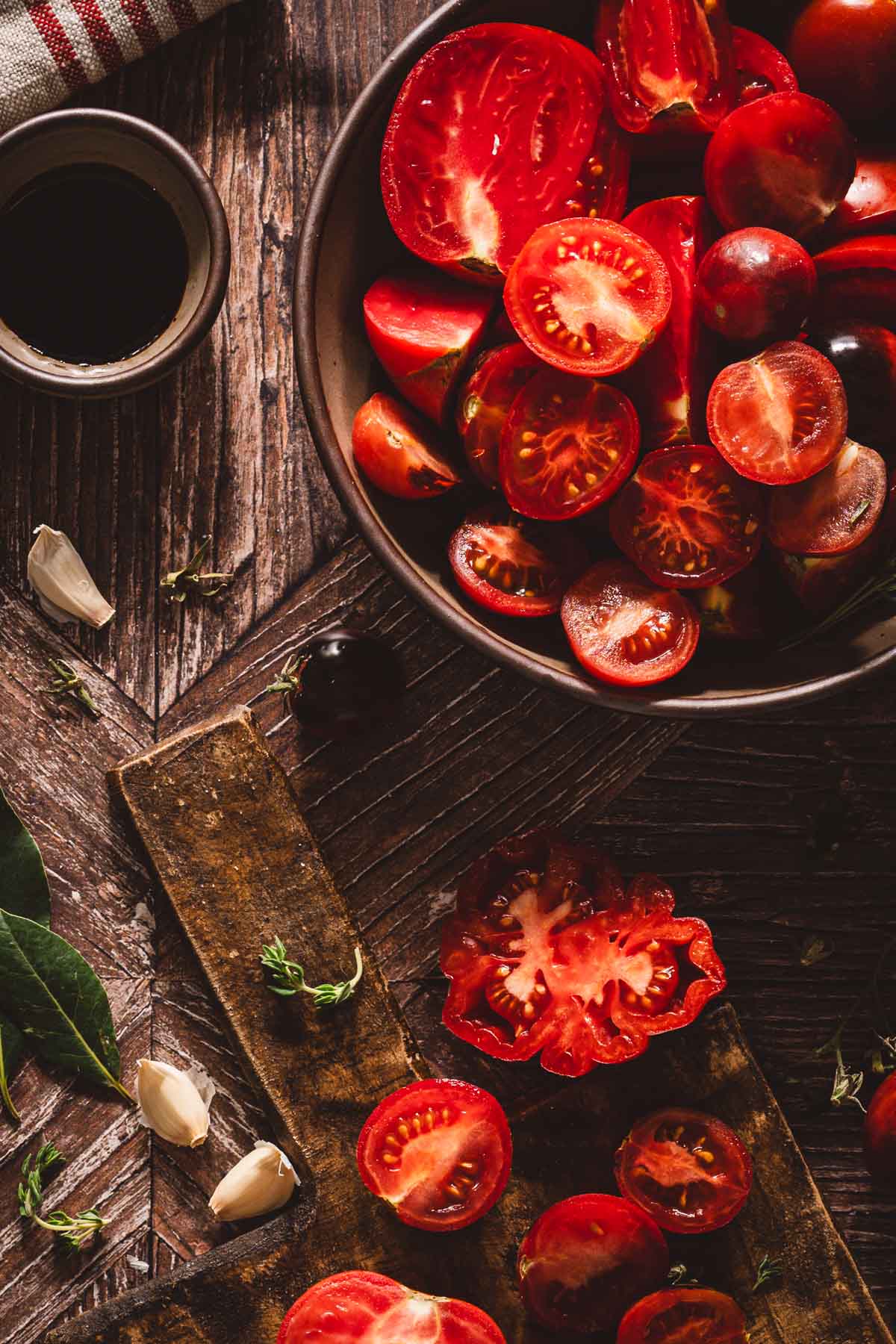
Garlic – roasting turns it soft, and just a little nutty. It melts right into the sauce and gives it depth. If you’re sensitive, you can tone it down or even roast it separately and stir in a little at a time until it’s perfect for you. Alternatively, you can use good quality garlic powder.
Herbs – fresh thyme or rosemary roasted alongside the tomatoes infuse the sauce with earthy notes. If you only have dried herbs, add them during the simmer step so they have time to bloom. Or keep it simple — plain roasted tomatoes without herbs make a beautiful “blank canvas” sauce you can season later.
Other ingredients: olive oil, salt, black pepper, balsamic vinegar, bay leaves.
Equipment you will need
- Rimmed baking sheets
- Large, wide pot (Dutch oven or wide sauté pan)
- Food mill. Alternative: fine-mesh sieve + sturdy spatula/ladle
- Chinois (conical strainer) if you want extra-silky paste.
- Wooden spoon or silicone spatula
- Freezer-safe containers: silicone ice cube trays (perfect for 1 Tbsp portions) or small jars/containers with lids
- Freezer bags (for storing cubes once frozen)
- Sharp knife + cutting board (for tomato prep)
- Measuring spoons/cup
- Immersion blender
- Parchment paper (optional, for easier clean up)

Top Tips
Go wide, not deep – a wide pot or sauté pan reduces paste faster than a tall stockpot.
Roast first – roasting concentrates flavor and makes milling easier.
Low and slow – resist cranking the heat to speed things up. Scorched tomato paste is no good.
Stir more often near the end – once the paste thickens, it’s clingy. Watch closely so it doesn’t burn.
Oil for storage – drizzle a thin layer of olive oil over paste in jars before freezing or refrigerating to keep it fresh and flavorful.
Expect less yield than you think – ten pounds of tomatoes sounds like a mountain, but after roasting and reducing, you’ll get about 1 to 1½ cups of paste.
Stir often at the end to avoid burning — the paste is prone to stick once it thickens.
If it sticks – deglaze with a splash of water/stock, scrape the fond, then continue reducing.
If too dark – reduce heat earlier next time — color deepens as sugars caramelize.
Step-by-step instructions
- Preheat oven to 275°F / 135°C.
- Halve/quarter tomatoes and arrange them cut-side up on a rimmed sheet pan.
- Scatter peeled garlic cloves + sliced onion + herb sprigs.
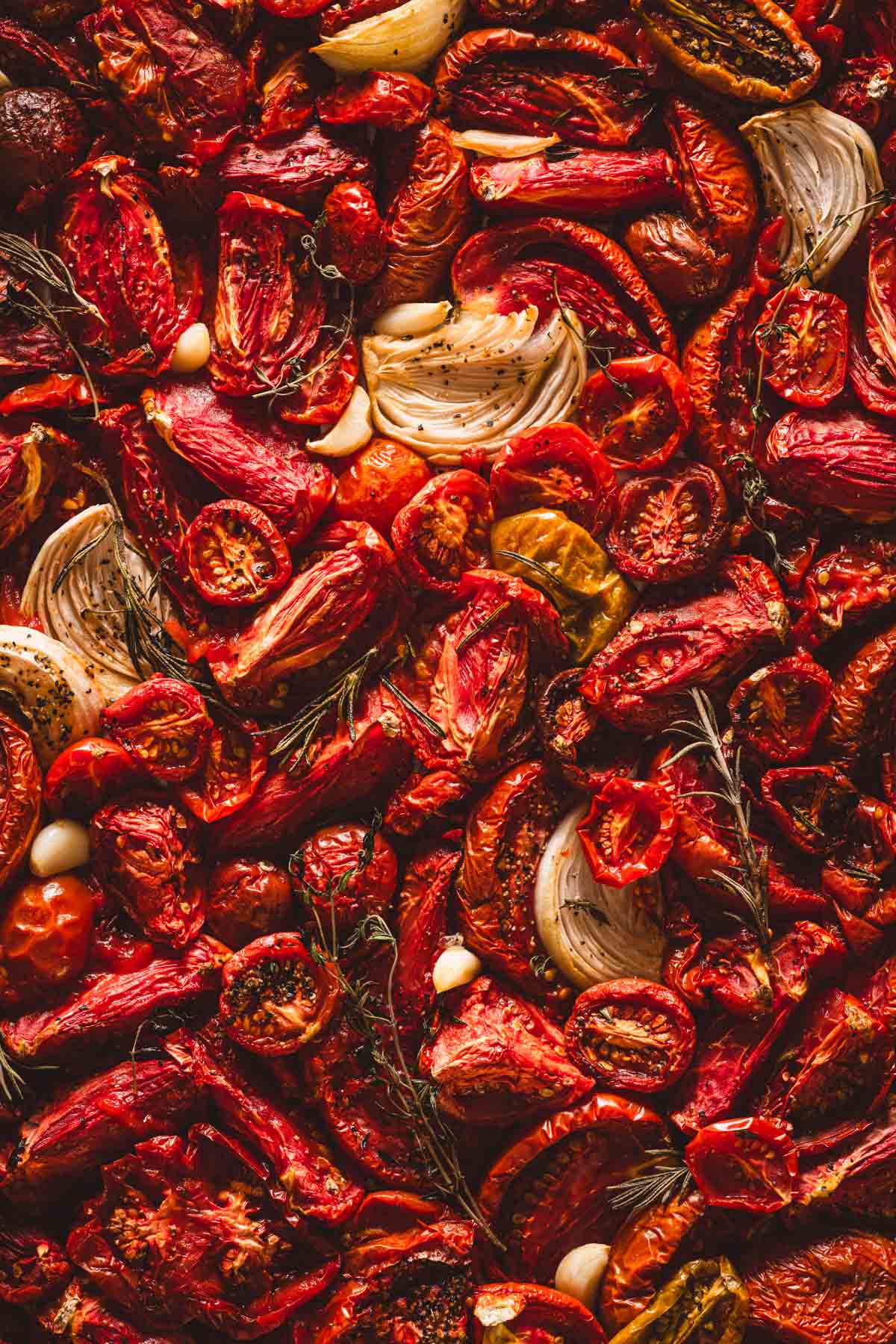
- Drizzle with olive oil, season with salt + pepper. Roast 2–3 hrs until collapsed, caramelized, and jammy.
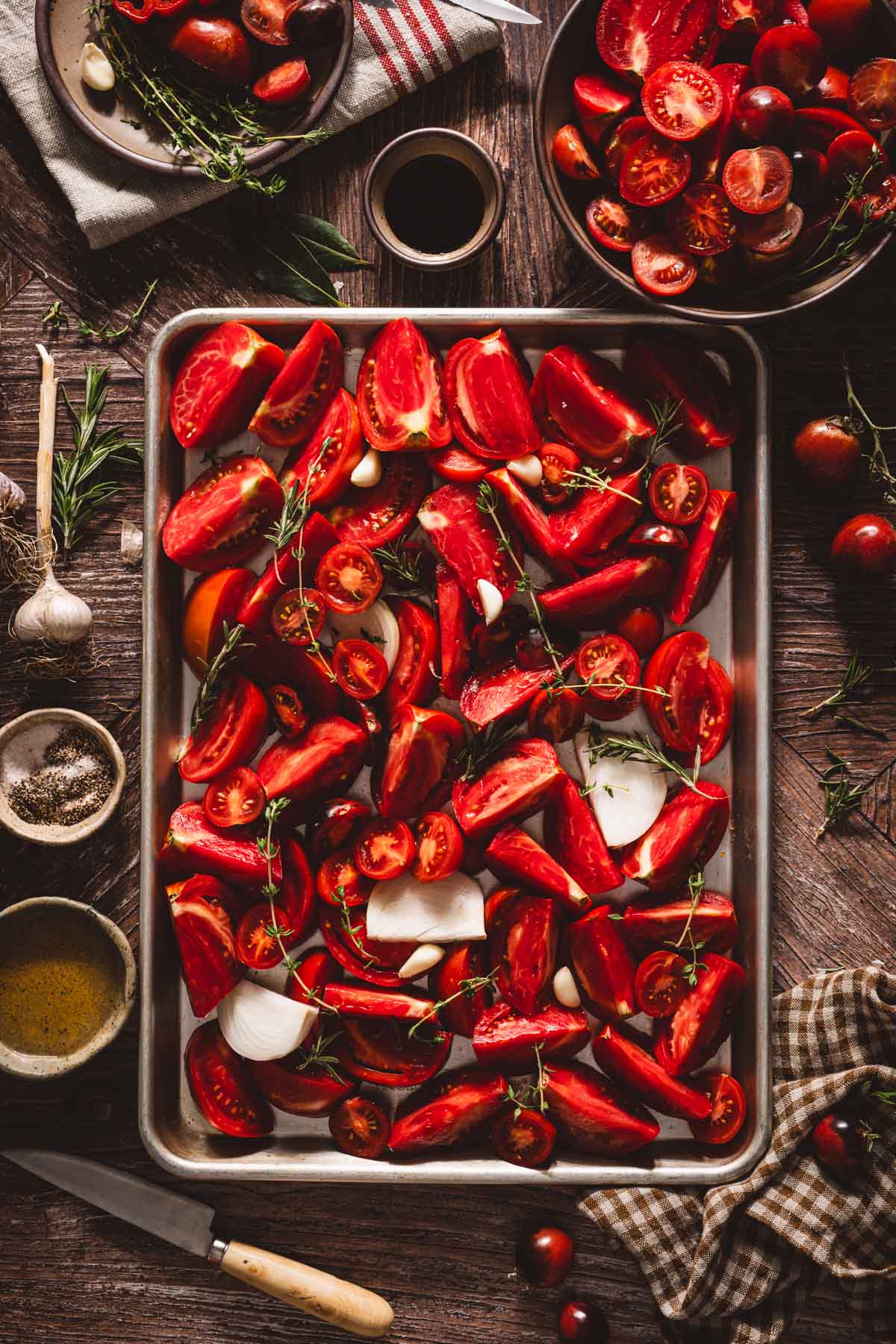
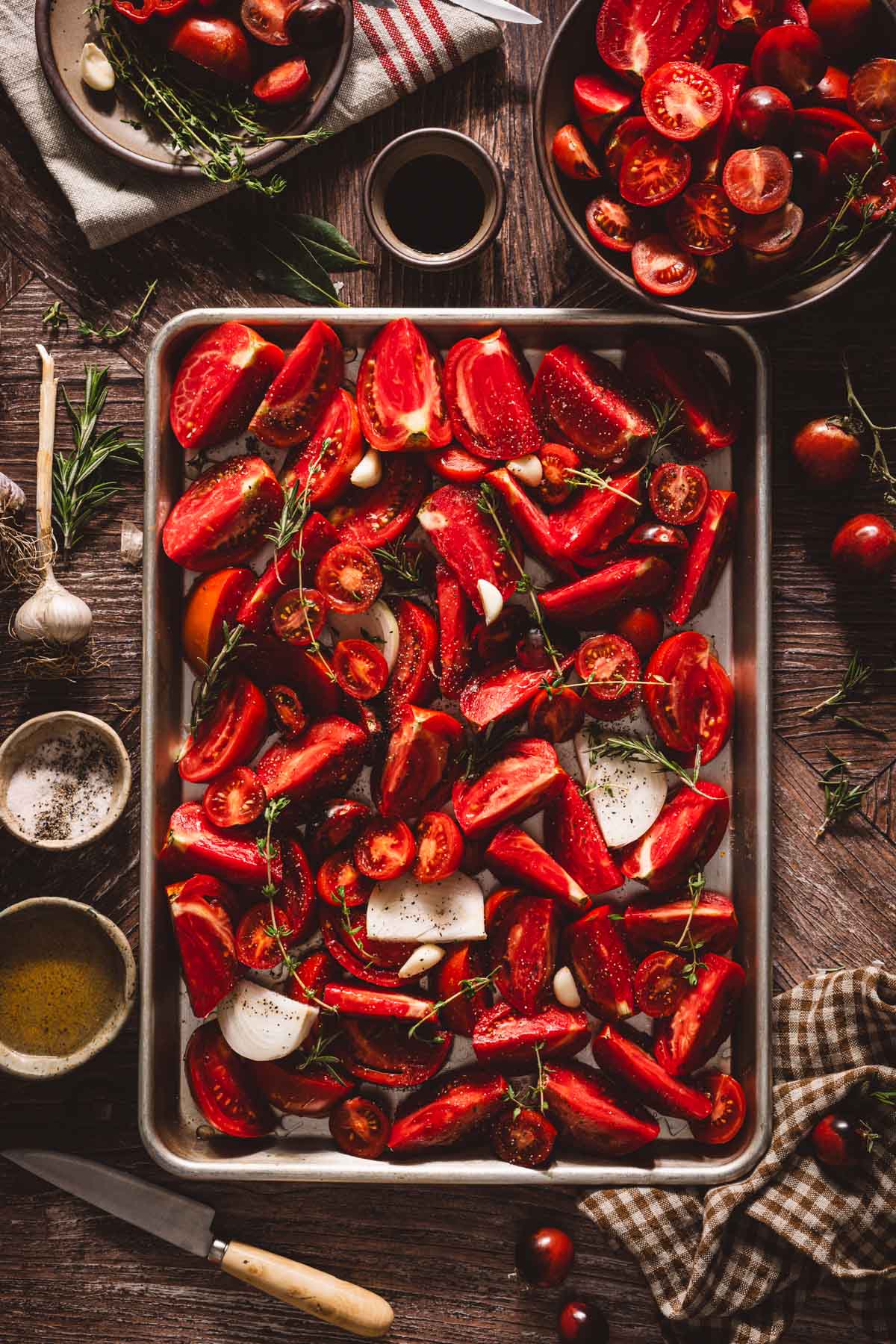
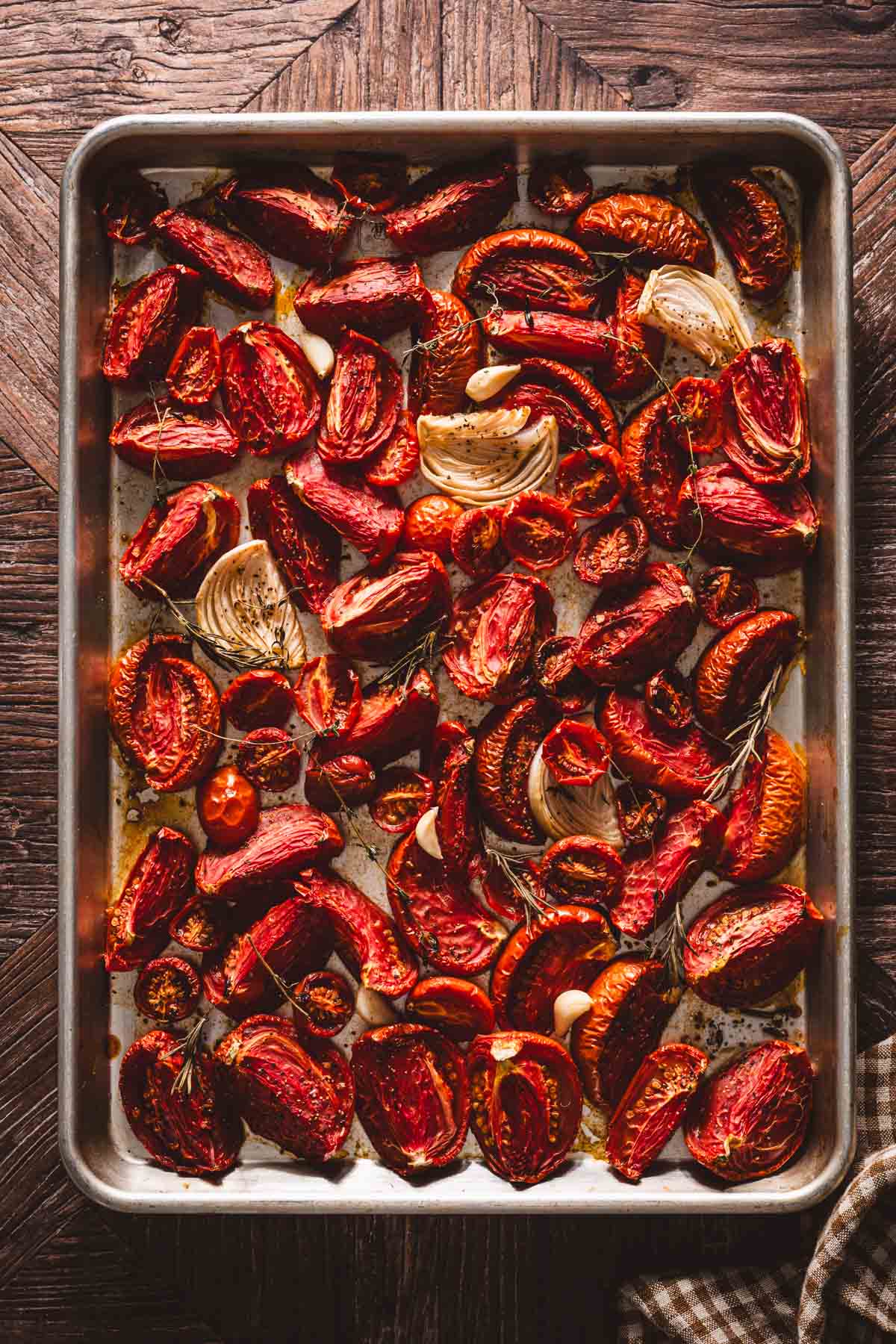
- Let cool slightly. Scrape tomatoes, garlic, onion, and all juices into a big pot.
- Keep the roasted tomatoes in the pot. Add bay leaf and balsamic vinegar.
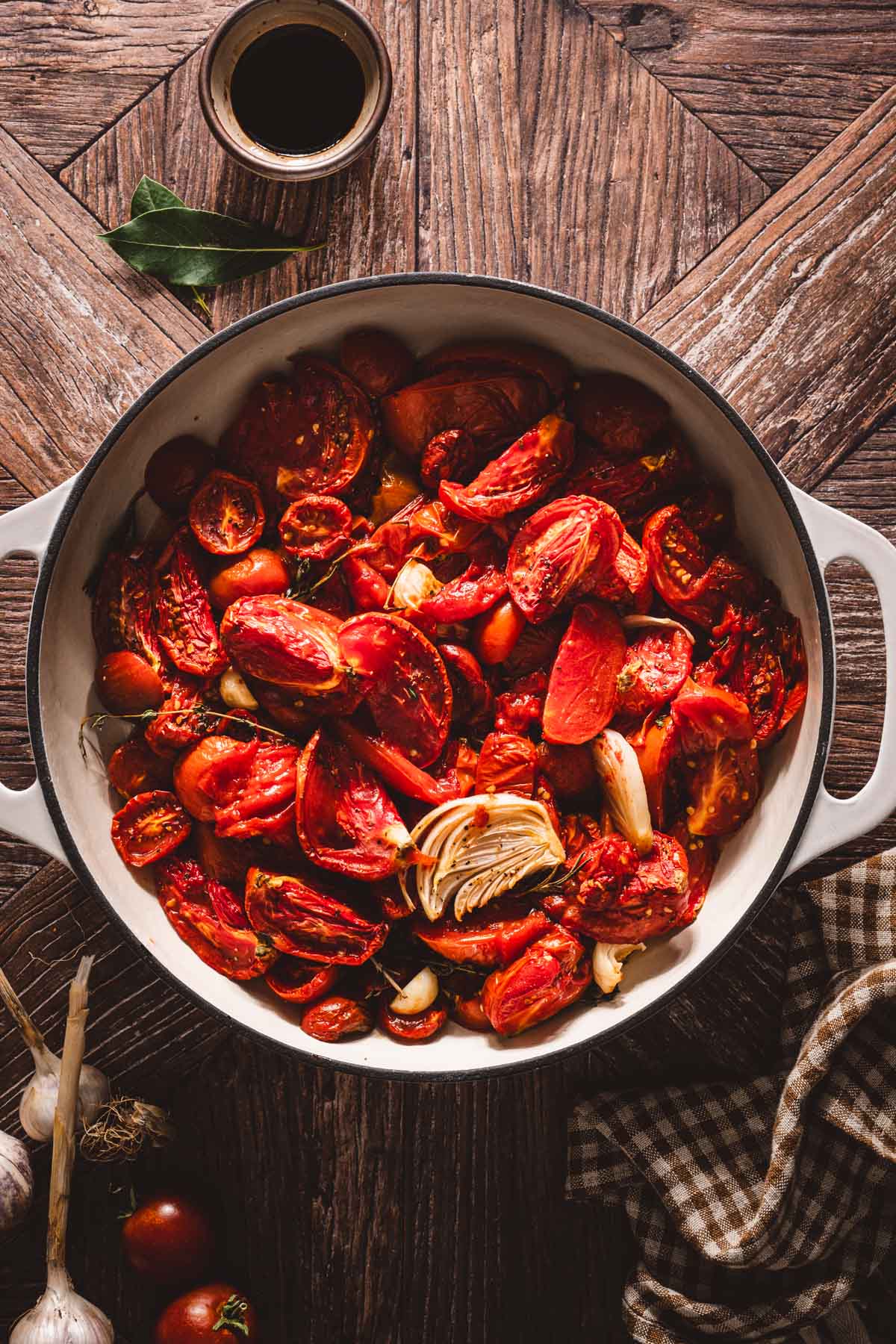
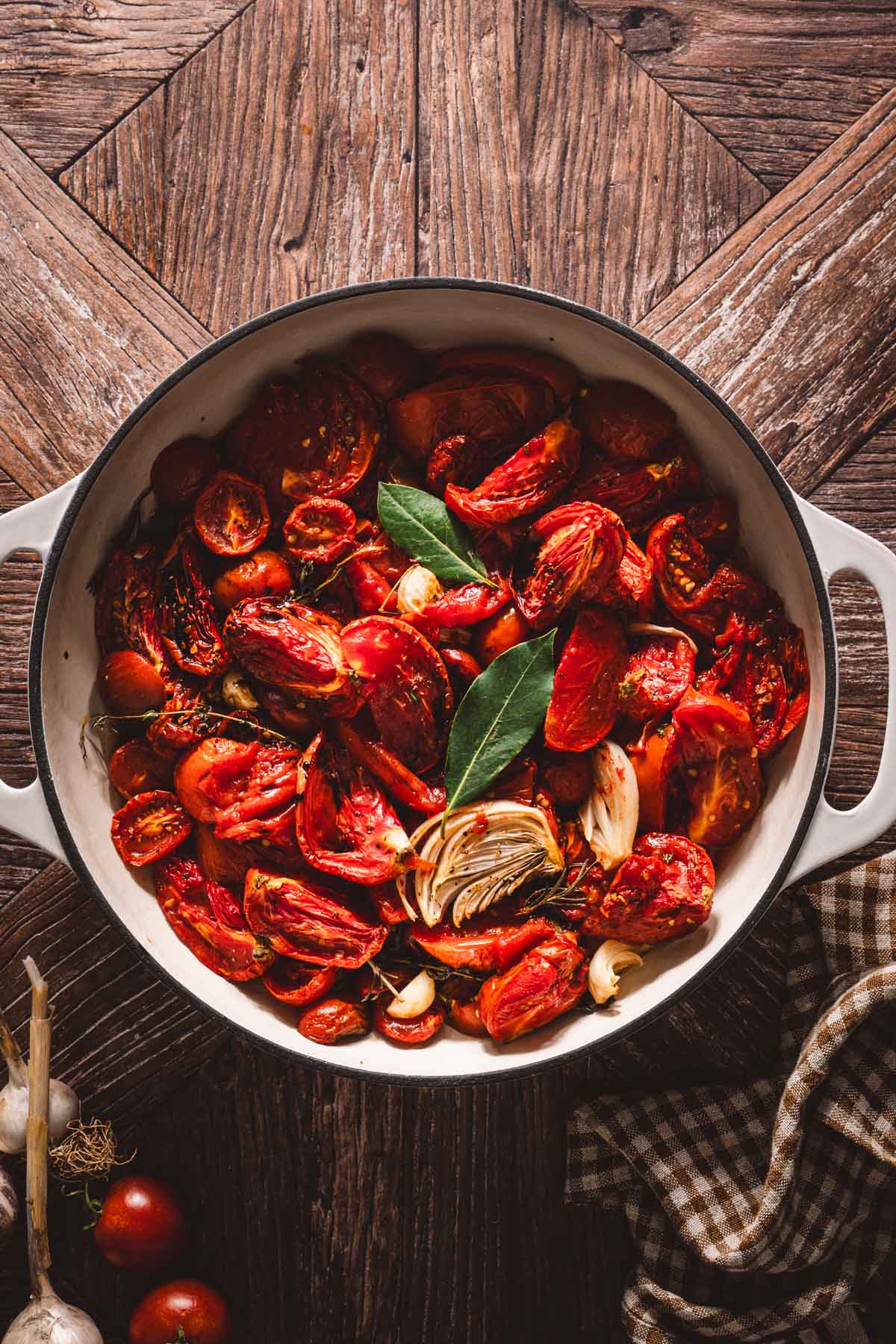

- Gently simmer 15–30 minutes to marry flavors and loosen solids — this makes milling easier. Taste and adjust salt.
- Pass the mixture through a food mill (best) to remove skins and seeds — you want a smooth puree. If you don’t have a food mill, push through a fine-mesh sieve or chinois with a spatula. Discard skins/seeds.
- Return the smooth puree to a wide, heavy-bottomed pan (wider surface = faster evaporation). Simmer gently on low heat, stirring often and scraping the bottom so it doesn’t scorch.
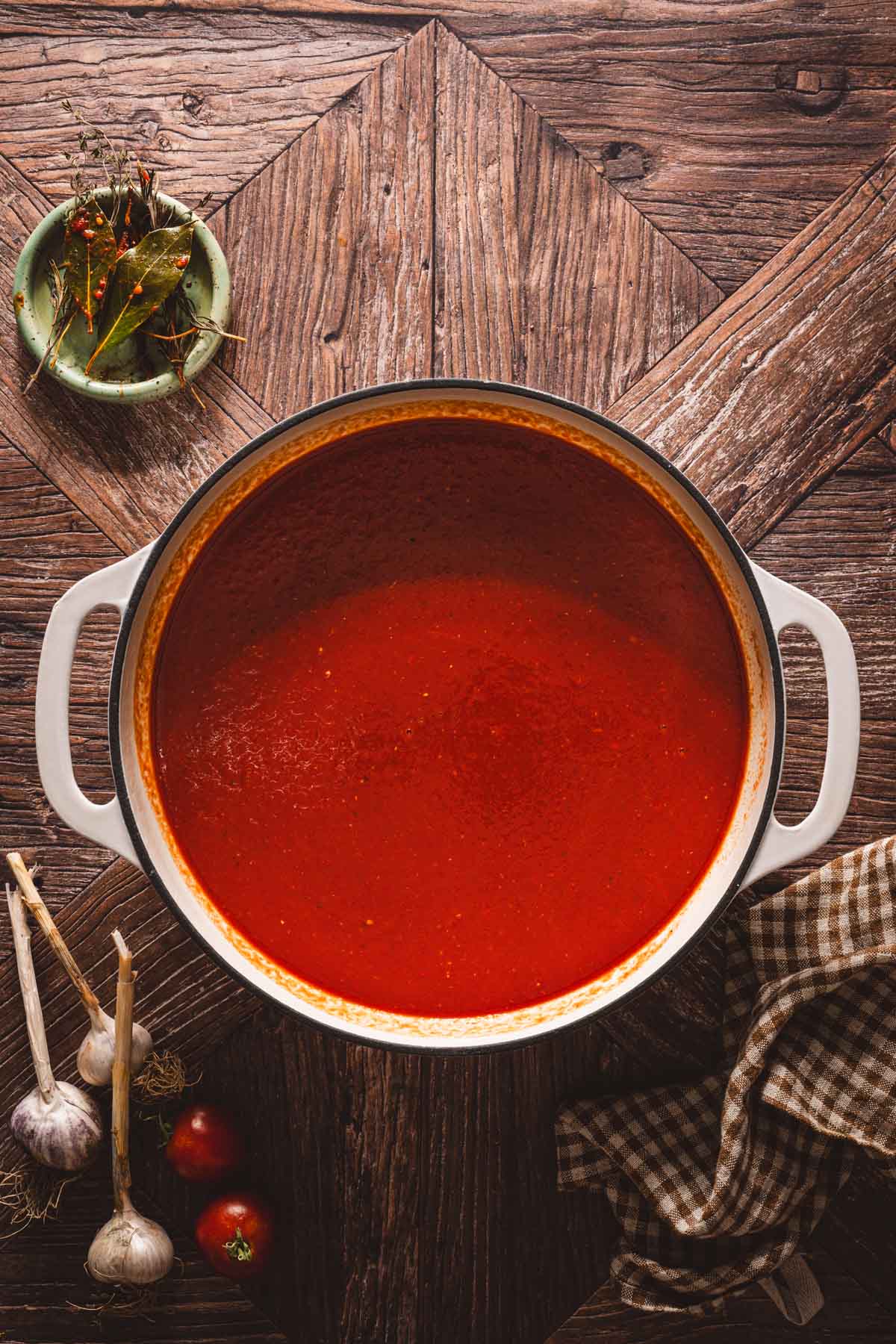
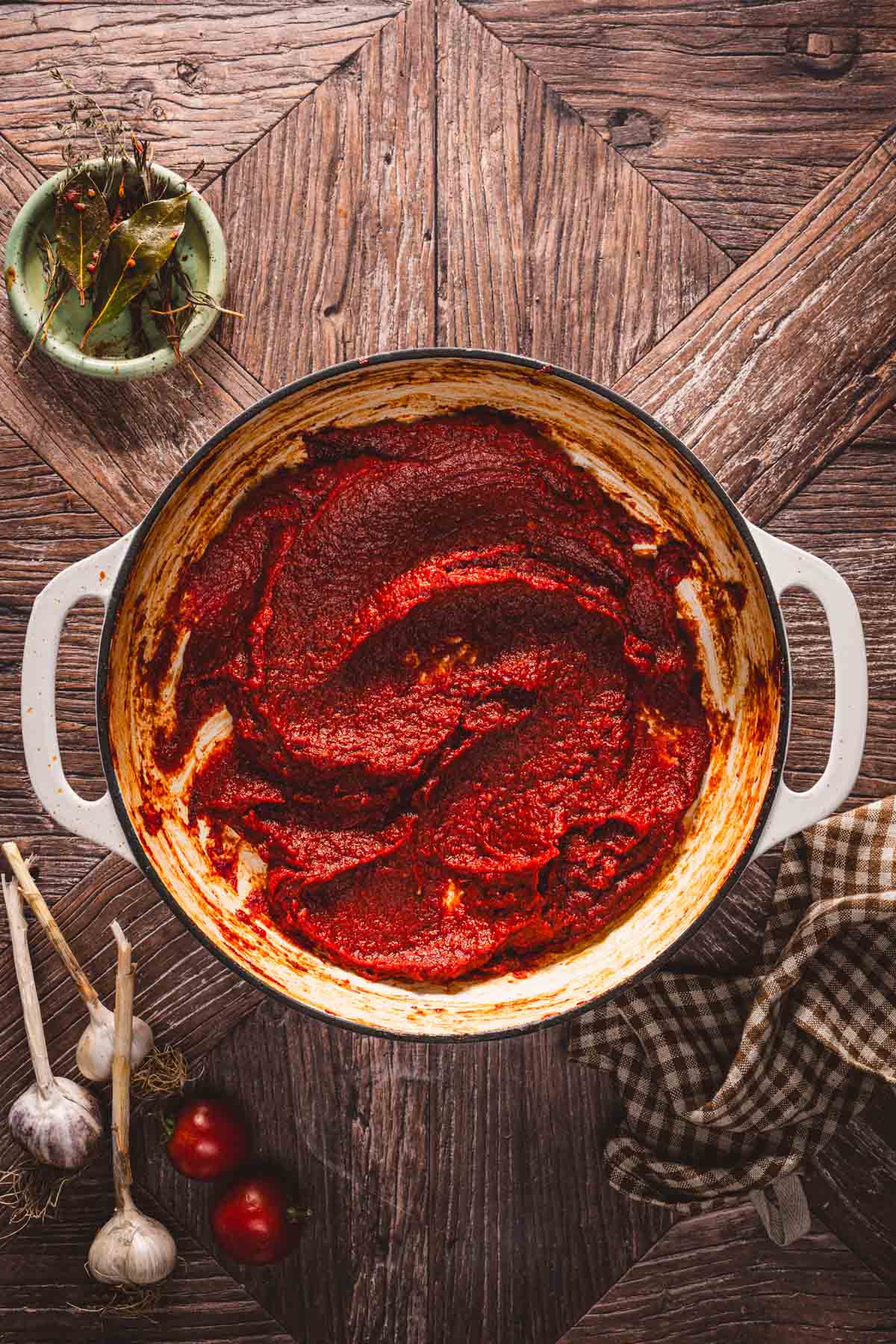

- Depending on how watery the tomatoes were, expect 1.5–3 hours of reduction.
- Early on: low–medium heat to keep a gentle simmer.
- Near the end: lower the heat and stir more frequently; the paste will thicken and darken.
- Optional oven finish: spread the thickening puree thinly on a parchment-lined sheet pan and finish at 225°F / ~105°C for 30–90 minutes, checking every 20–30 min, until it reaches a concentrated, spreadable paste. This reduces stove-watching and lowers scorch risk.
- Remove bay/herb stems. Adjust salt and a tiny splash more balsamic.
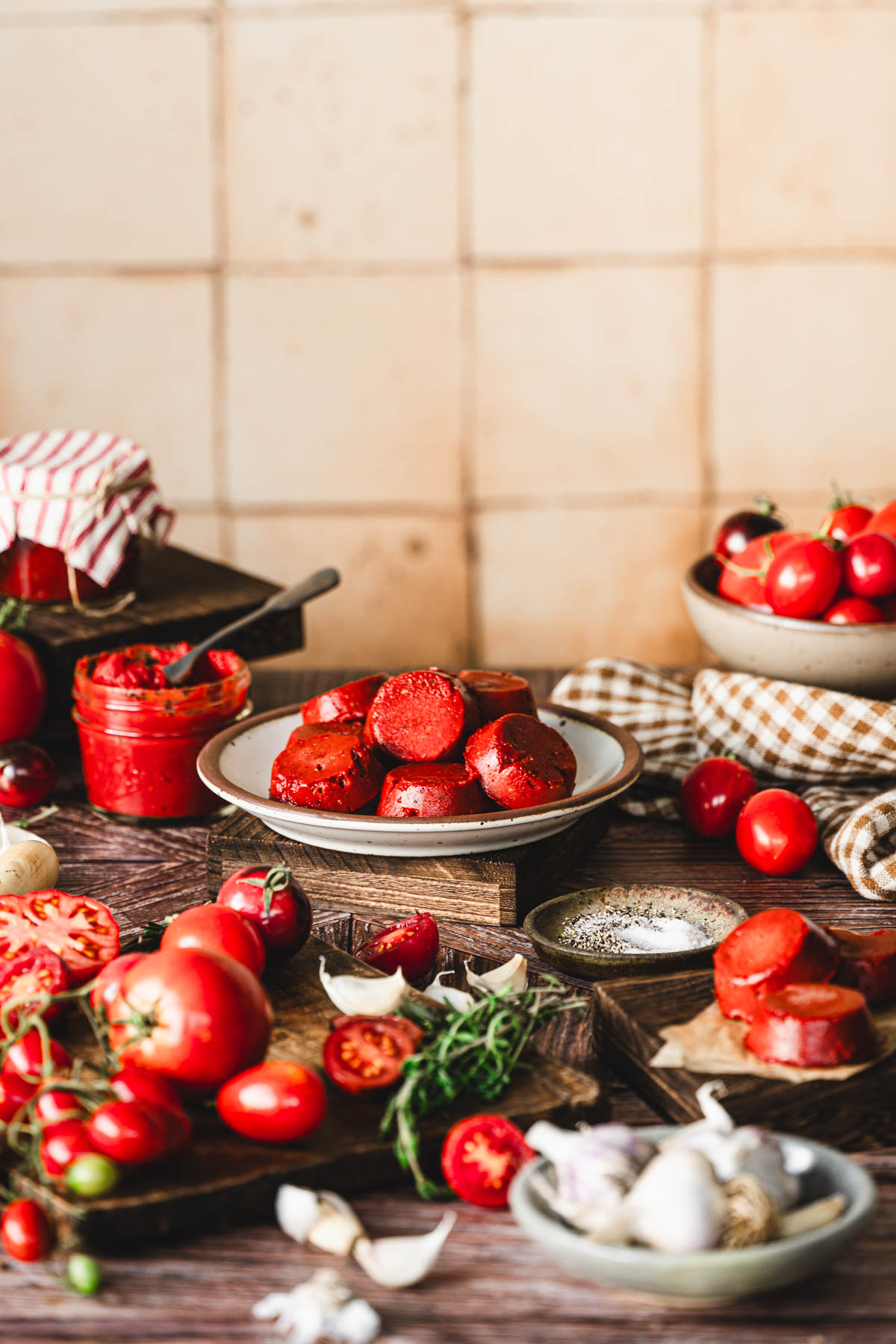
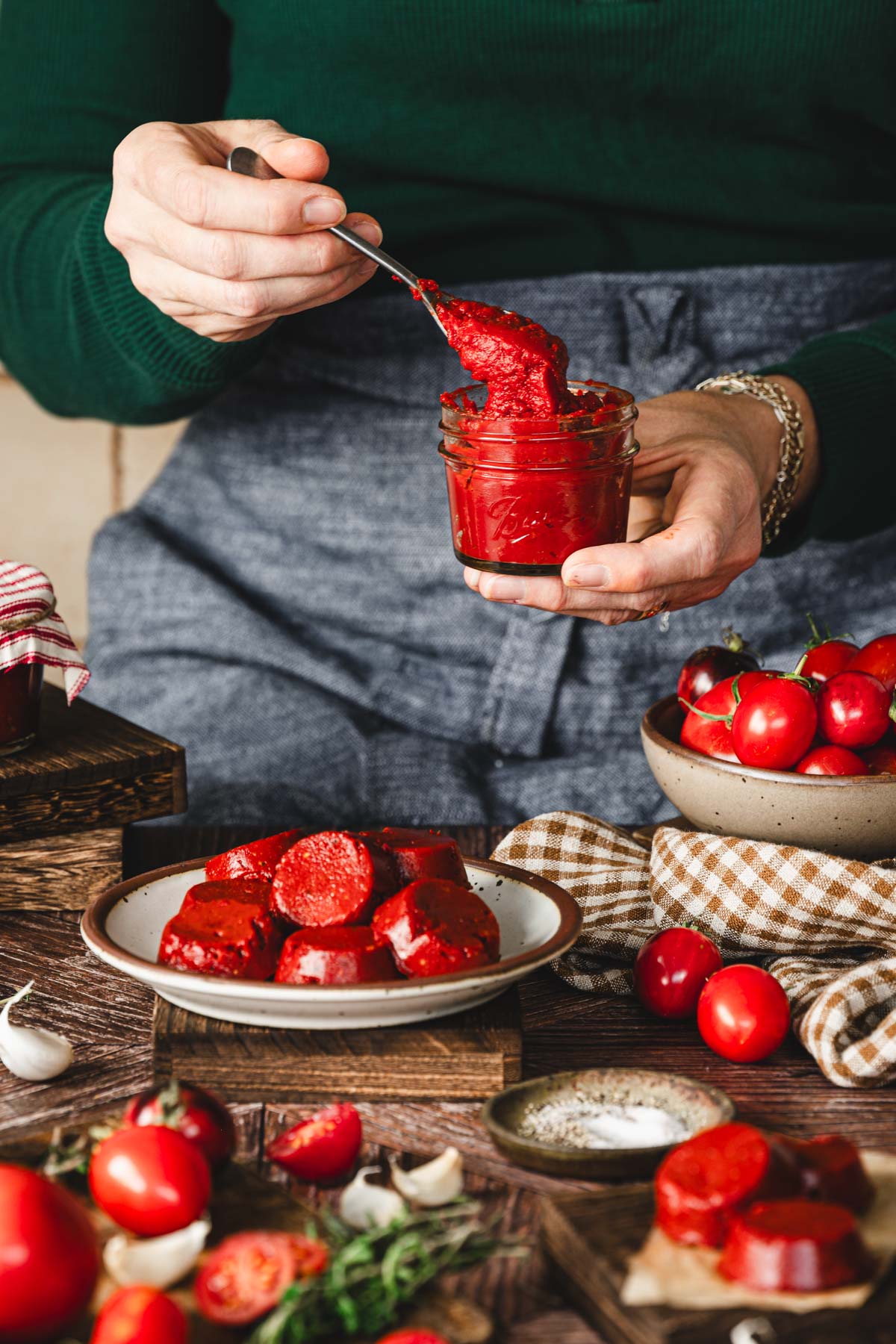
- Spoon into silicone ice cube trays or tablespoon molds (1 Tbsp portions are perfect). Freeze solid.
- Pop frozen cubes into labeled freezer bags, press out air, and store flat. Or pack into small freezer jars and top with a thin layer of oil before sealing.
- For fridge use (short term): store in a jar topped with oil for up to ~10–14 days.
- Canning: this method is for freezing. If you want to can, follow tested, up-to-date canning guidelines (don’t can raw or non-acidified tomato concentrates without a trusted recipe).

Best Ways to Use Tomato Paste
- As a flavor booster for soups, stews, and sauces
- Use in homemade BBQ Sauce
- Add to curries & chili
- Use in braised dishes
- Pizza Sauce Shortcut: Thin paste with olive oil, garlic, and herbs → instant pizza base.
- Use as a marinade or rub
You may also like:
Storage instructions, reheating
Storage for Tomato Paste
Freezer: best quality within 6 months. Spoon into silicone ice cube trays or tablespoon molds (1 Tbsp portions are perfect).
Fridge: up to 10–14 days in an airtight jar topped with olive oil.
Using from frozen: toss a frozen cube directly into a simmering pot or thaw in the fridge for a few hours.
How to make Homemade Tomato Paste Recipe

Equipment
- Rimmed baking sheets
- Large, wide pot (Dutch oven or wide sauté pan)
- Food mill or fine-mesh sieve
- Wooden spoon or silicone spatula
- Silicone ice cube trays, small jars
- Sharp knife, cutting board
- Measuring spoons and cups
- immersion blender
Ingredients
- 5 – 10 lbs tomatoes Roma/plum preferred
- 1 head garlic cloves separated, peeled
- 1 onion thick slices
- ¼ cup olive oil
- 2 tsp salt
- 3-4 fresh rosemary
- 3-4 fresh thyme
- 1 bay leaf
- 2 tsp balsamic vinegar optional umami boost
Instructions
- Preheat oven to 275°F / 135°C.
- Wash, halve or quarter tomatoes. Arrange them cut-side up on a rimmed sheet pan.
- Scatter peeled garlic cloves + sliced onion + herb sprigs.
- Drizzle with olive oil, season with salt + pepper. Roast 2–3 hrs until collapsed, caramelized, and jammy.
- Let cool slightly. Scrape tomatoes, garlic, onion, and all juices into a big pot.
- Keep the roasted tomatoes in the pot. Add bay leaf and balsamic vinegar.
- Gently simmer 15–30 minutes. Taste and adjust salt..
- Pass the mixture through a food mill (best) to remove skins and seeds — you want a smooth puree. If you don’t have a food mill, push through a fine-mesh sieve or chinois with a spatula. Discard skins/seeds.
- Return the smooth puree to a wide, heavy-bottomed pan (wider surface = faster evaporation). Simmer gently on low heat, stirring often and scraping the bottom so it doesn’t scorch. Depending on how watery the tomatoes were, expect 1.5–3 hours of reduction.
- Early on: low–medium heat to keep a gentle simmer.
- Near the end: lower the heat and stir more frequently; the paste will thicken and darken.
- Optional oven finish: spread the thickening puree thinly on a parchment-lined sheet pan and finish at 225°F / ~105°C for 30–90 minutes, checking every 20–30 min, until it reaches a concentrated, spreadable paste. This reduces stove-watching and lowers scorch risk.
- Remove bay leaves. Adjust salt and add a tiny splash more balsamic if you want.
- Spoon into silicone ice cube trays or tablespoon molds. Freeze solid.
- For fridge use (short term): store in a jar topped with oil for up to ~10–14 days.
Notes
Nutrition
Did you make this recipe?
Tag me @sylwiavaclavekphotography or tag me using #myomnikitchen so I can see your creations! You can also leave a comment below!
Conclusion
And there you have it, best tomato paste that’s as versatile and delicious. With just a handful of ingredients and a few hours of cooking, you’ve got a paste that will add flavor to any dish.
FAQ
Will tomato paste thicken the sauce?
Absolutely. Tomato paste is just tomatoes cooked way down until all the excess water is gone. When you add a spoonful to a pot of sauce, it both thickens the texture and boosts the flavor. Stir it in early while sautéing onions or garlic so it caramelizes a little.
What’s the difference between tomato paste and tomato sauce?
Tomato paste is super concentrated — think of it as the essence of tomato flavor in a thick, spoonable form. It’s made by cooking tomatoes way down until almost all the water is gone. You usually only need a tablespoon or two to add depth to soups, stews, and sauces.
Tomato sauce, on the other hand, is lighter and pourable. It’s cooked and blended, but still has more liquid, so you can ladle it straight over pasta, layer it into lasagna, or use it as a base for other dishes.
Can I skip the food mill?
Yes, but a food mill gives the smoothest paste and removes seeds/skins. If you don’t mind a more rustic texture, just blend well.
Do I need to roast before making paste?
You don’t have to, but roasting adds incredible depth of flavor. Starting with raw tomatoes will work — it’ll just be a little brighter and less rich.
How to Make Tomato Sauce from Tomato Paste
Tomato paste it’s way too thick and intense to spoon over pasta as-is. The trick? Loosen it up and build some layers:
- Sauté aromatics first – heat a little olive oil in a pan, then add minced garlic and/or chopped onion.
- Add tomato paste – stir in a few tablespoons of paste. Let it cook for 1–2 minutes.
- Loosen with liquid – whisk in water, broth, or even a splash of wine until it thins to a sauce consistency. (Ratio tip: 1 part paste + 2–3 parts liquid = a good starting point.)
- Season it up – salt, pepper, dried or fresh herbs (basil, oregano, thyme), maybe a pinch of chili flakes for heat.
- Simmer – let it bubble gently for 10–15 minutes so the flavors come together.
- Optional extras – to balance acidity, stir in a touch of balsamic vinegar or a pinch of sugar.