
Braised Red Cabbage with Plums Recipe
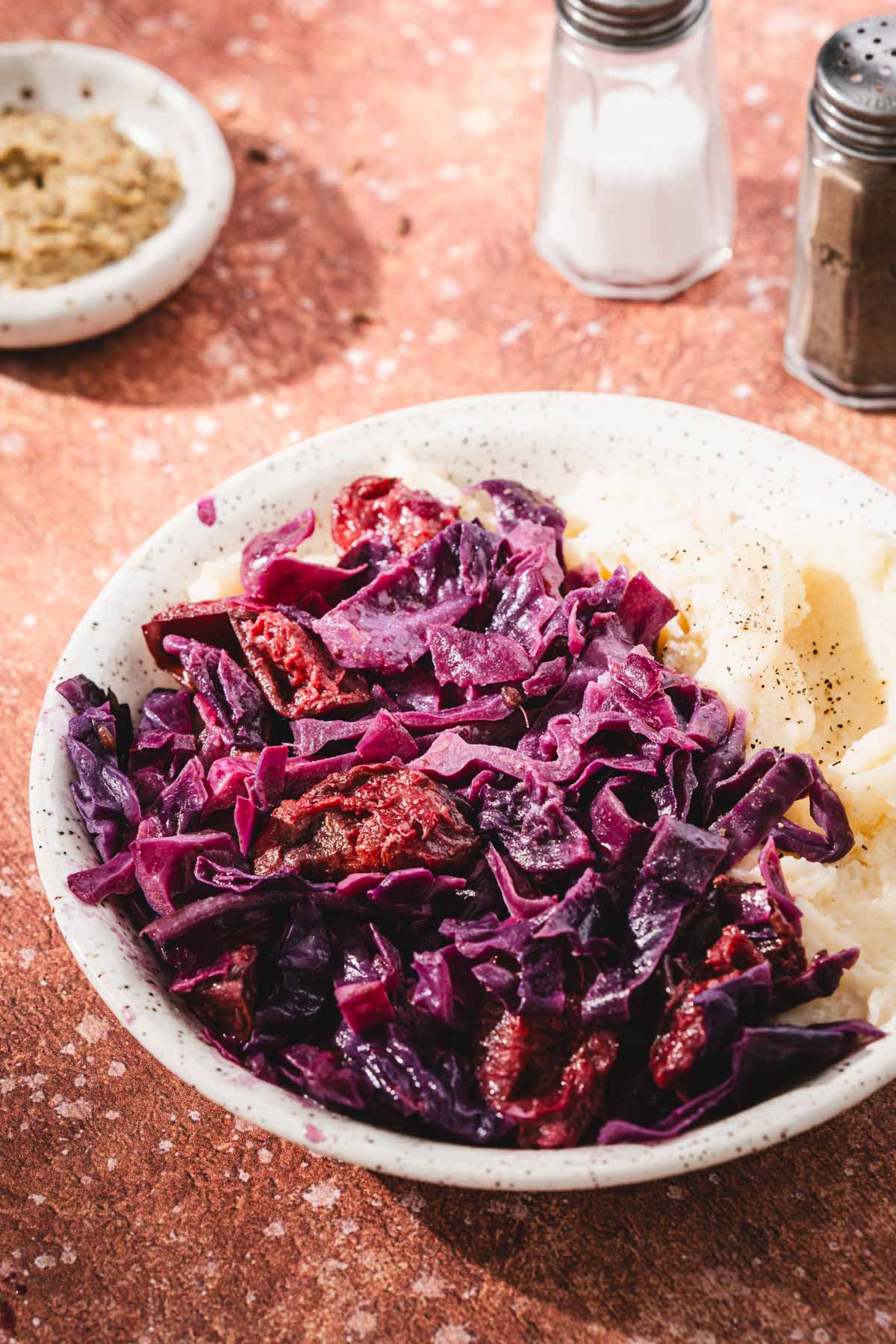
This version takes the Polish idea of modra kapusta and gives it an early-fall twist with Italian plums, brown butter, caraway, and juniper. Minimal ingredients, one pot, and about 45 minutes is all it takes
The plums are added in two stages. Some cook down into the cabbage, creating a naturally fruity, slightly tangy braising liquid, while the rest are added later so you still get soft plum pieces throughout.
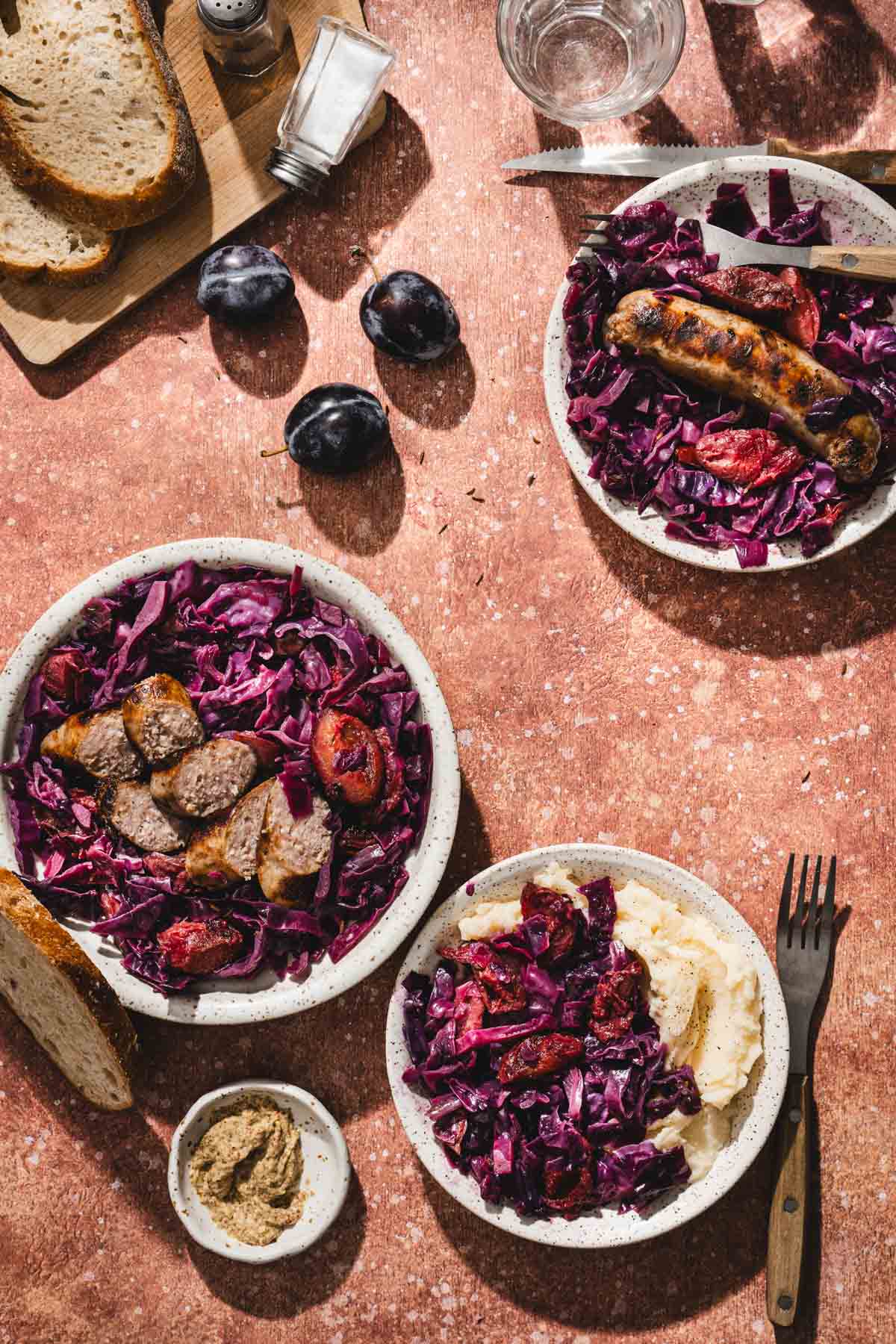
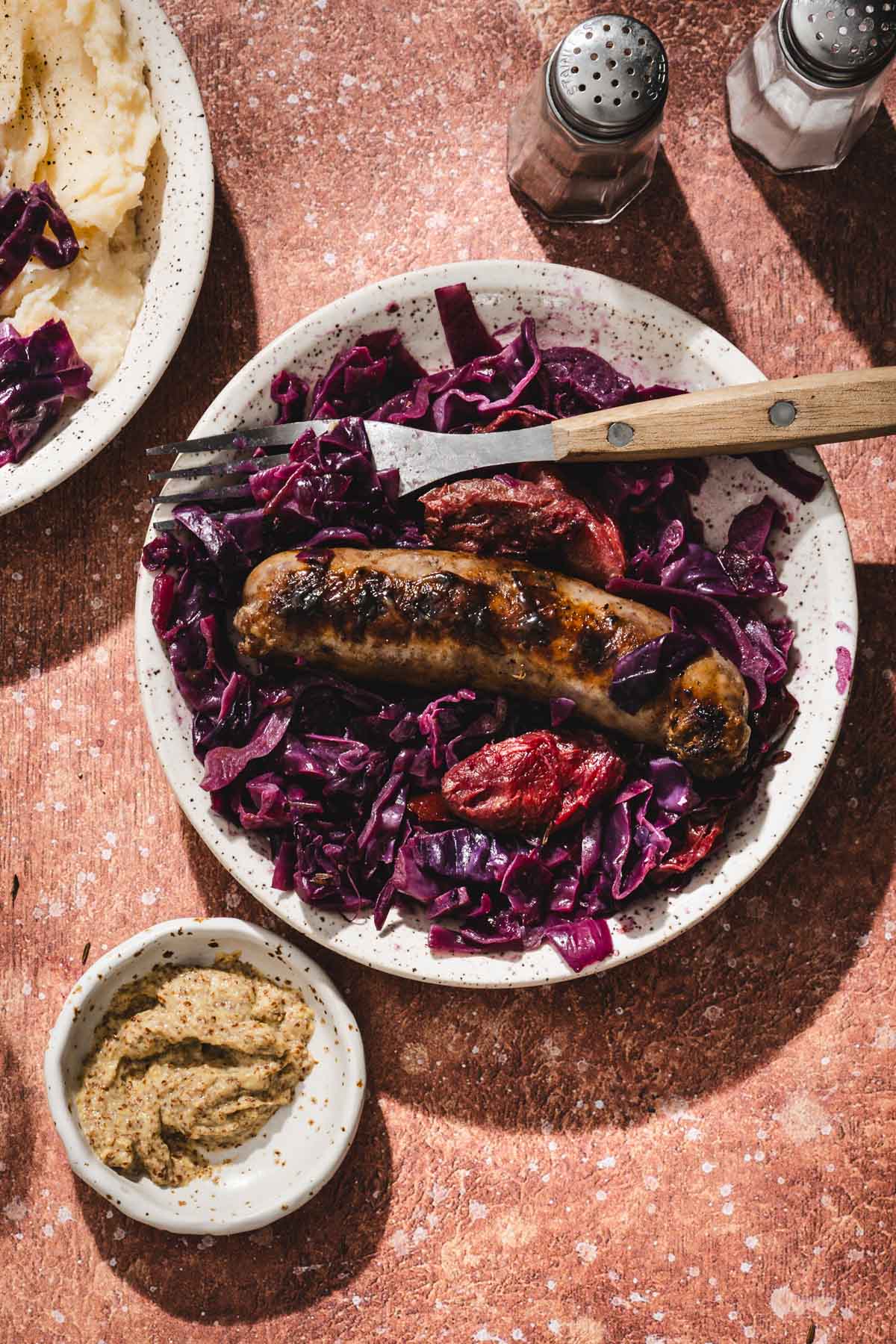
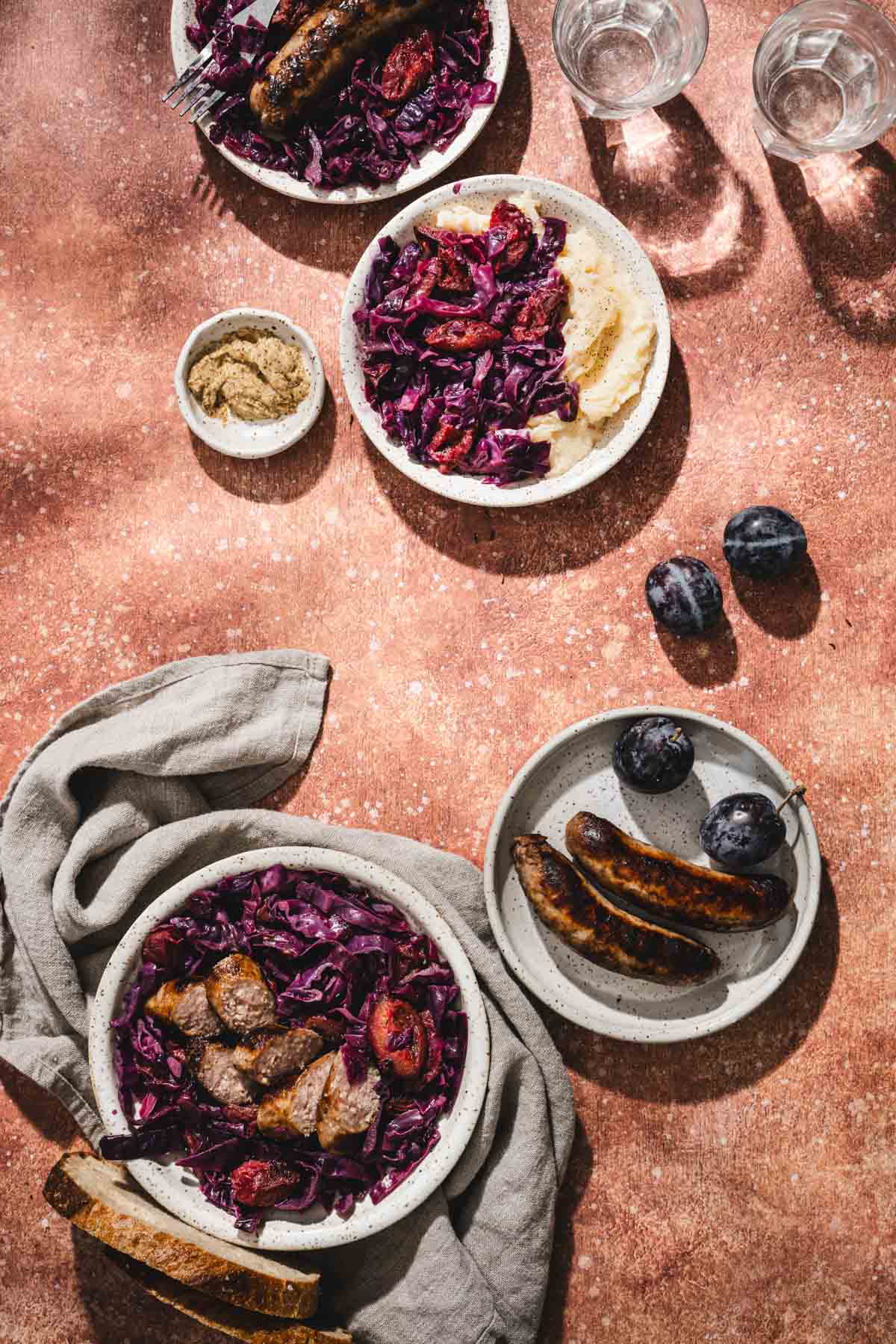
It is especially good with grilled kiełbasa or roast pork, but it is versatile enough to serve with chicken, buckwheat, or a vegetarian meal. The trick is balancing the acidity so the cabbage stays bright and flavorful.
Quick Look at this Recipe:
More cabbage recipes you should try.
Key Ingredients, Variations and Substitutions
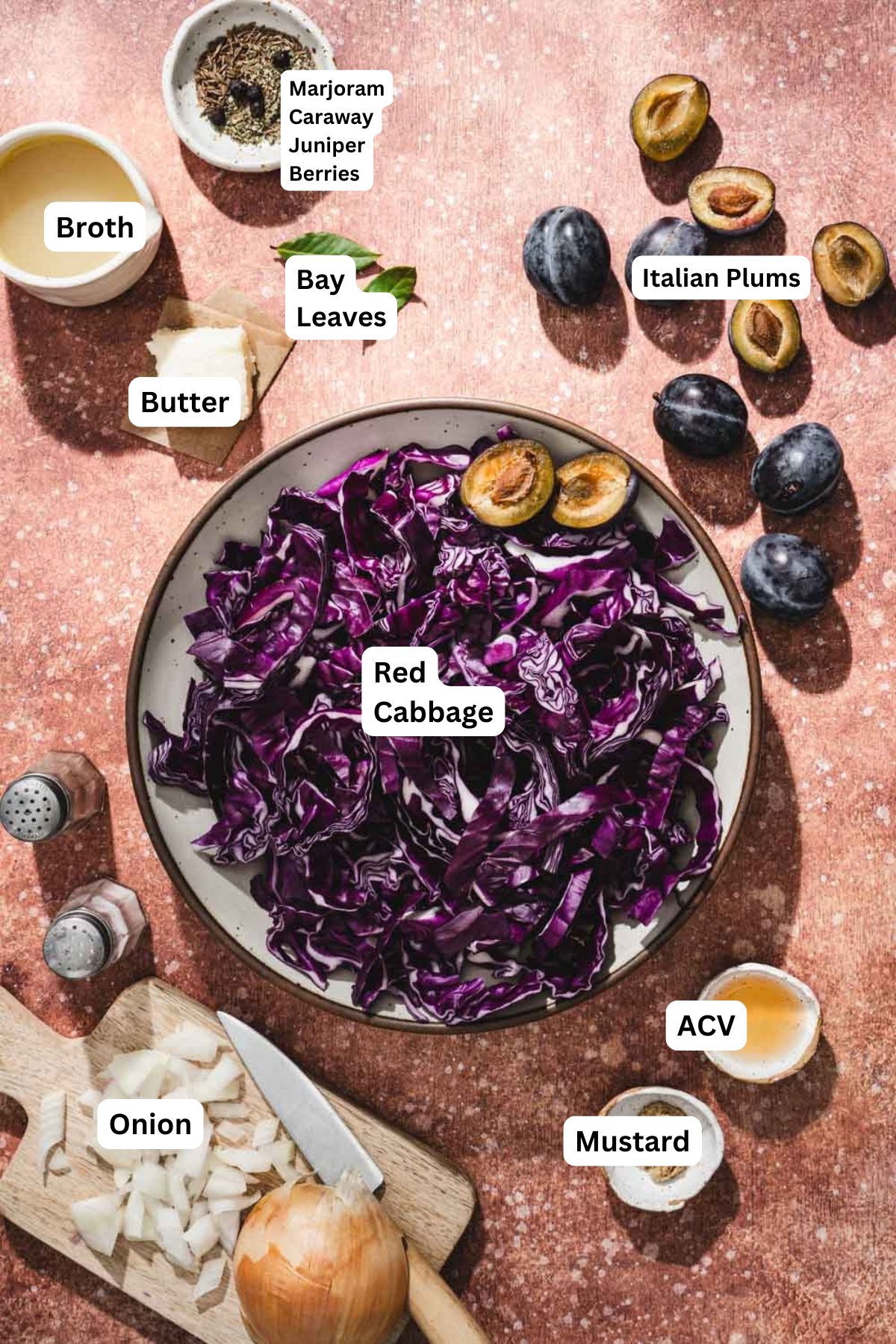
Red Cabbage – slightly peppery bite, and that deep purple color that only gets more beautiful as it braises. Slice it thin, around 5 to 7 mm, so it softens evenly without turning to mush. If you can’t find red cabbage, green cabbage works in a pinch.
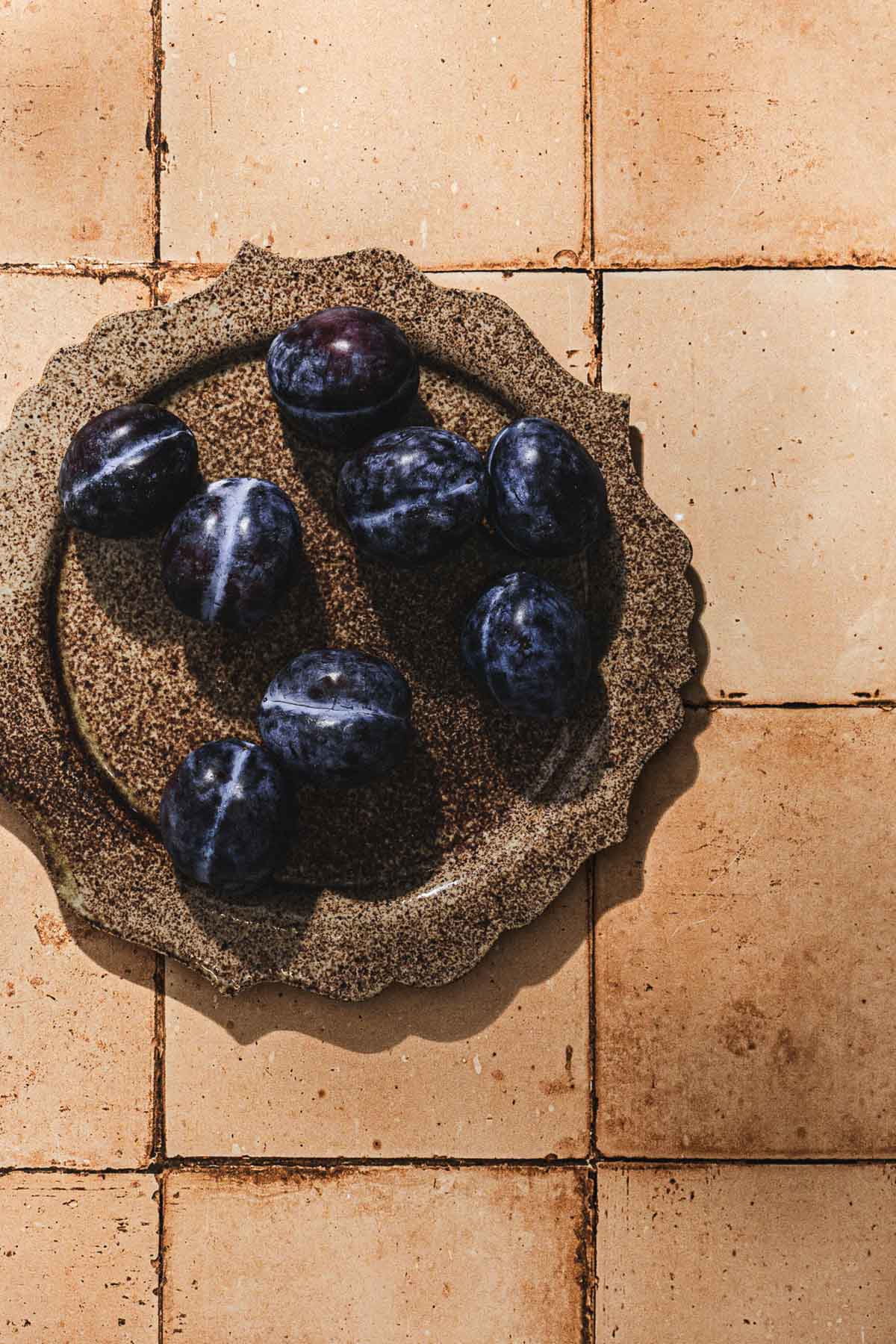
Italian Plums – the real reason this recipe works. These small, oval plums are firmer and less sweet than regular plums, which means they hold up during the longer braise while still breaking down enough to create a jammy, glossy sauce. If Italian plums aren’t in season, regular red or black plums work well. Just taste as you go because they can be sweeter, and you may not need any added honey at the end. My Italian Plum Upside-Down cake uses the same variety for the same reason: that firm flesh that holds its shape while still going jammy with heat.
Caraway Seeds and Juniper Berries – these two together are very Polish spices. Caraway adds that warm, slightly anise-forward note you’ll recognize from rye bread and sauerkraut. Juniper brings a gentle piney, almost floral depth. Lightly crush the juniper before adding it so it can actually release its flavor into the braise.
Other ingredients: Dijon mustard, unsalted butter, yellow onion, dried marjoram, bay leaf, chicken or vegetable stock, apple cider vinegar, fine salt, black pepper, water or additional stock as needed.
Equipment you will need
- Large heavy-bottomed pot or Dutch oven
- Sharp knife
- Cutting board
- Wooden spoon or spatula
- Measuring cups and spoons
- Small pan or knife (for crushing juniper)
Top Tips
Add the plums in two stages. The first 200 g go in early and dissolve into the liquid, building the sauce. The second 100 g go in later so you get soft pieces with some texture left. Don’t skip the split.
Check the pot, not the clock. Depending on how thin your cabbage is and how much moisture it holds, cooking times can shift by 10 to 15 minutes either way. The cabbage is done when it’s fully tender and the liquid looks glossy and slightly saucy, not watery.
Keep the heat low and steady. This is a slow braise, not a stir-fry. Medium-low and covered is what gives you that silky, melted texture without burning the bottom. It doesn’t need to cook for a long time, but it does need low, steady heat to get that silky, melted texture
Add vinegar in two rounds. Once during the braise to help the cabbage hold its color and again at the end to taste.
Step-by-step instructions
- Remove the tough outer leaves from the red cabbage and slice it into strips about 5–7 mm thick.
- Finely dice the onion. Pit and quarter the Italian plums, dividing them into 200 g for the first stage and 100 g to add later.
- Lightly crush the juniper berries with the side of a knife or the bottom of a small pan.
- Brown 40 g of unsalted butter in a large, heavy-bottomed pot or Dutch oven over medium-low heat. Add 120 g diced onion and cook for 5-7 minutes, stirring occasionally, until softened and lightly golden.
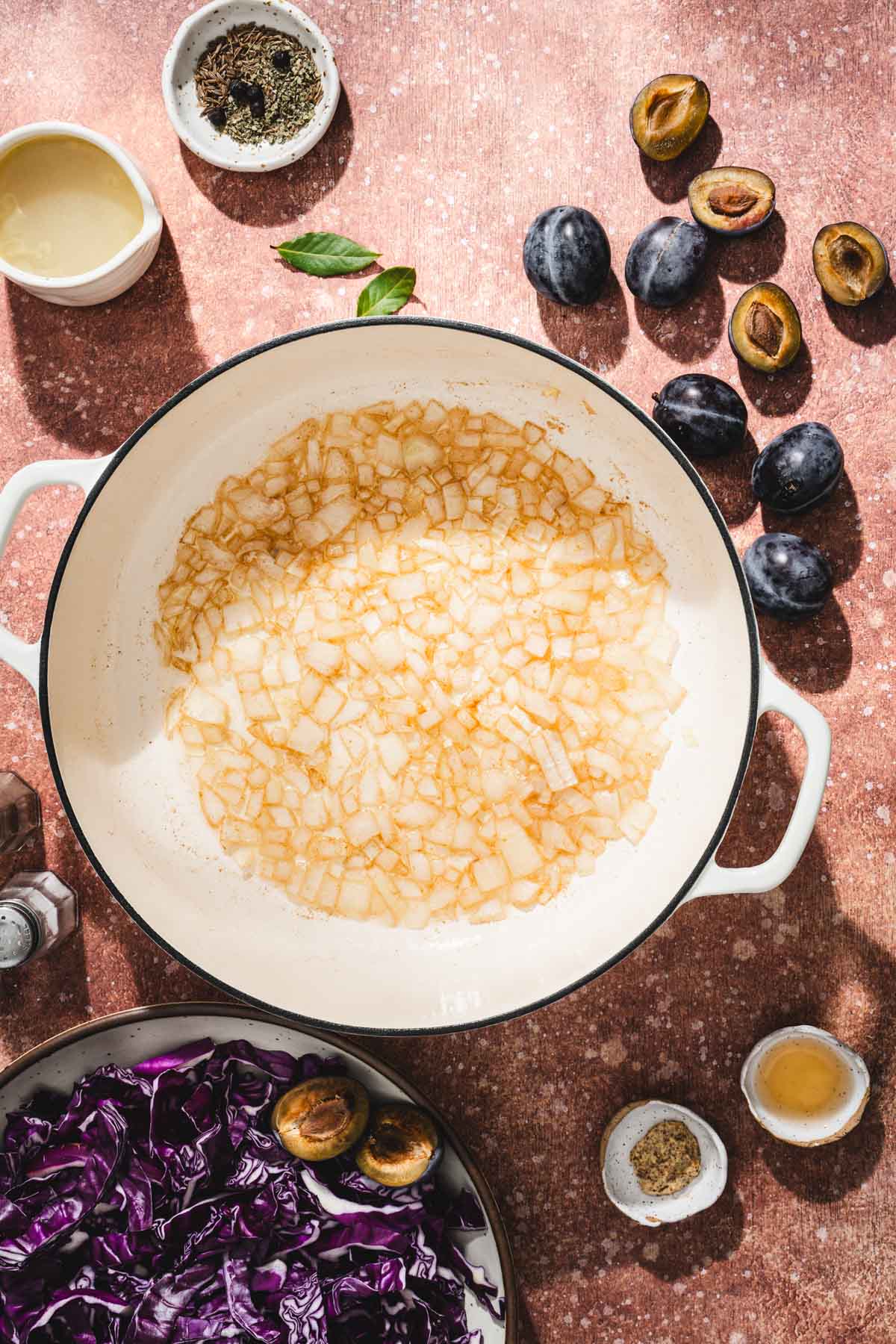
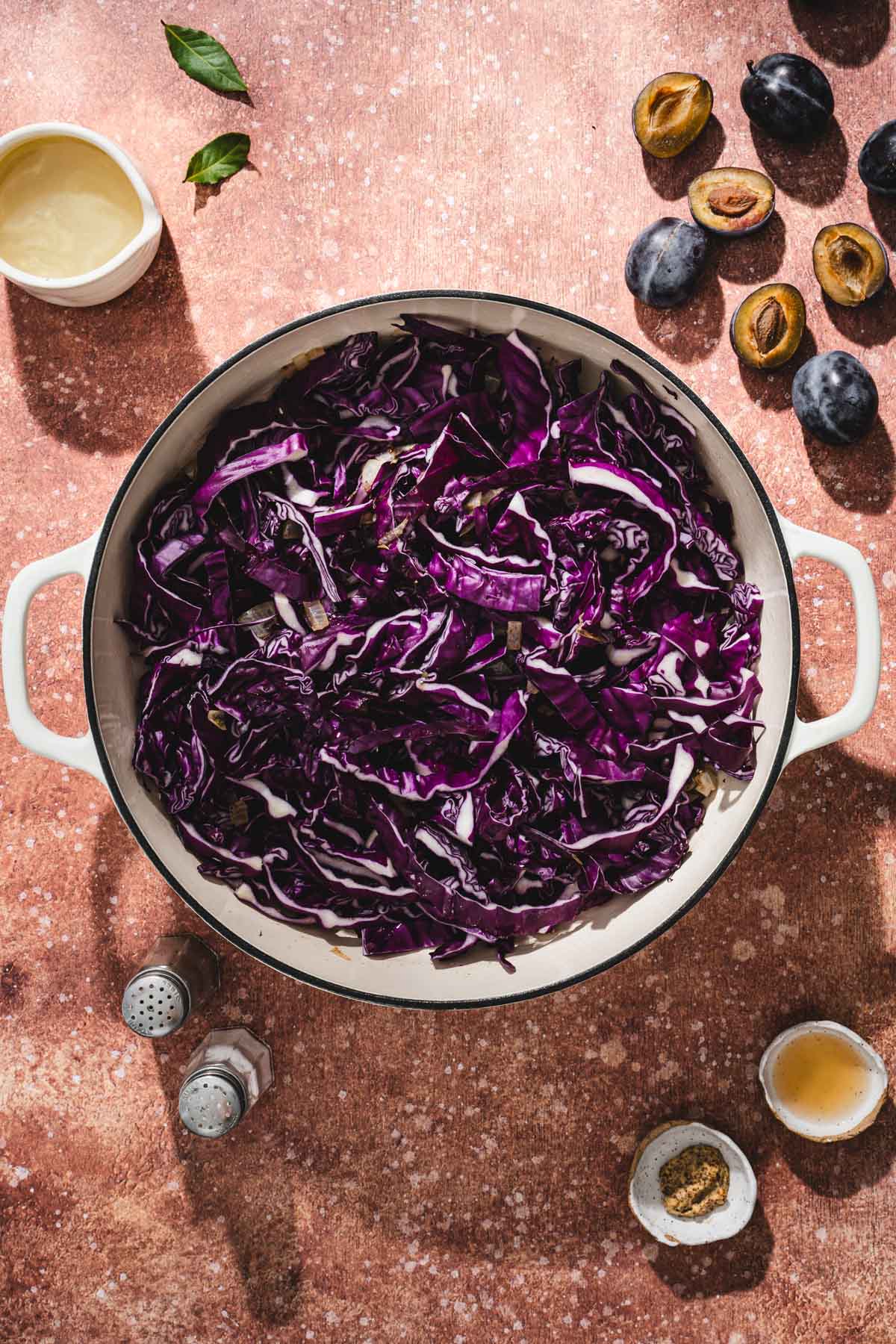
- Add 1 tsp caraway seeds, ½ tsp dried marjoram, and 4 lightly crushed juniper berries.
- Add 900 g sliced red cabbage, 1 tsp salt, and ¼ tsp black pepper.
- Cook for 5-8 minutes, stirring occasionally, until the cabbage softens and reduces in volume.
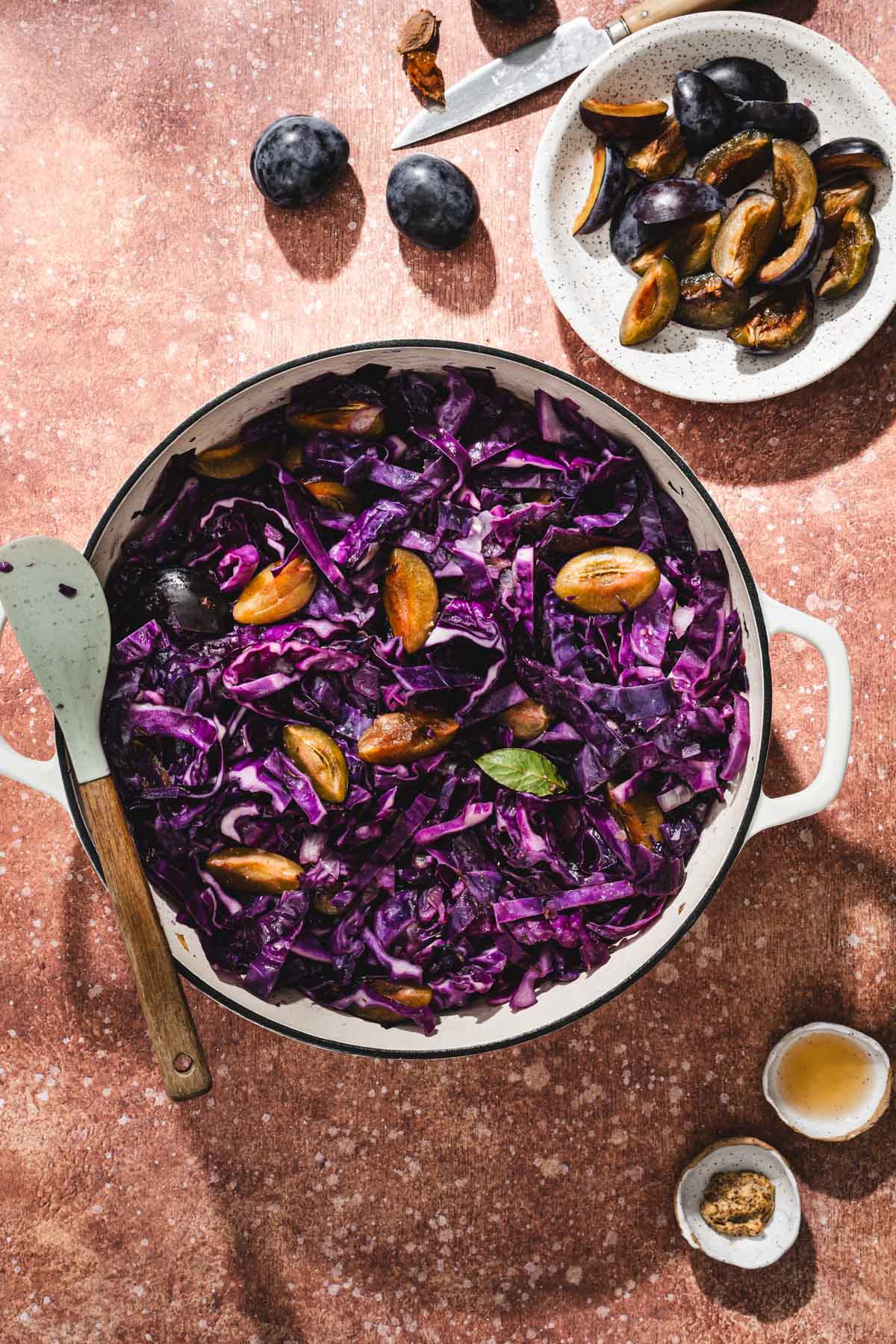
- Add: 1 tbsp apple cider vinegar, 200 g quartered Italian plums, 180 g chicken or vegetable stock, and 1 bay leaf. Stir to combine, then bring to a gentle simmer.
- Reduce the heat to low, cover, and cook for 20 minutes, stirring once or twice. The cabbage should begin to soften, and some of the plums should start breaking down into the cooking liquid.
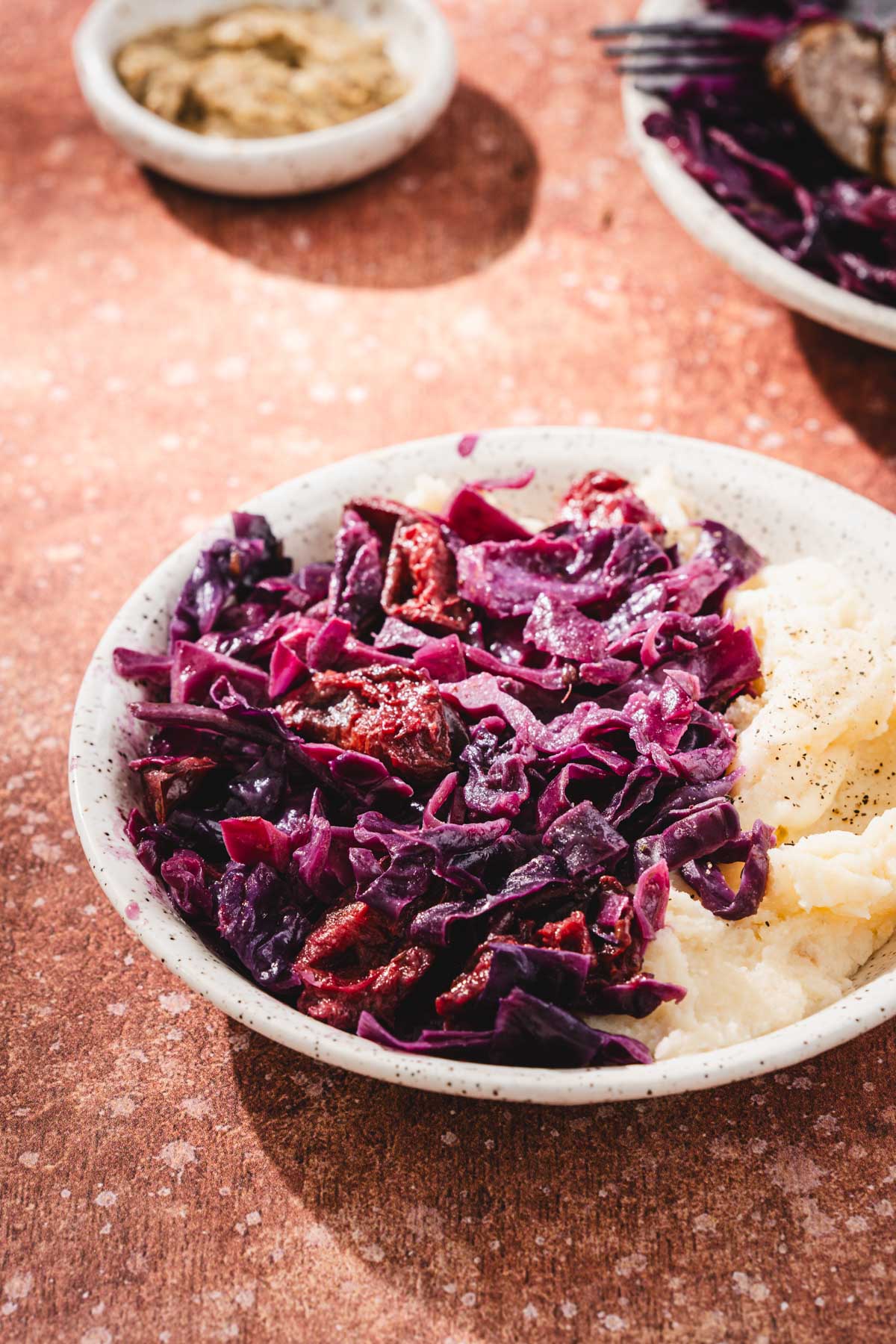
- Add the remaining 100 g quartered Italian plums. Cover and continue cooking for 15–25 minutes, or until the cabbage is tender and some of the plums have partially broken down while others retain their shape.
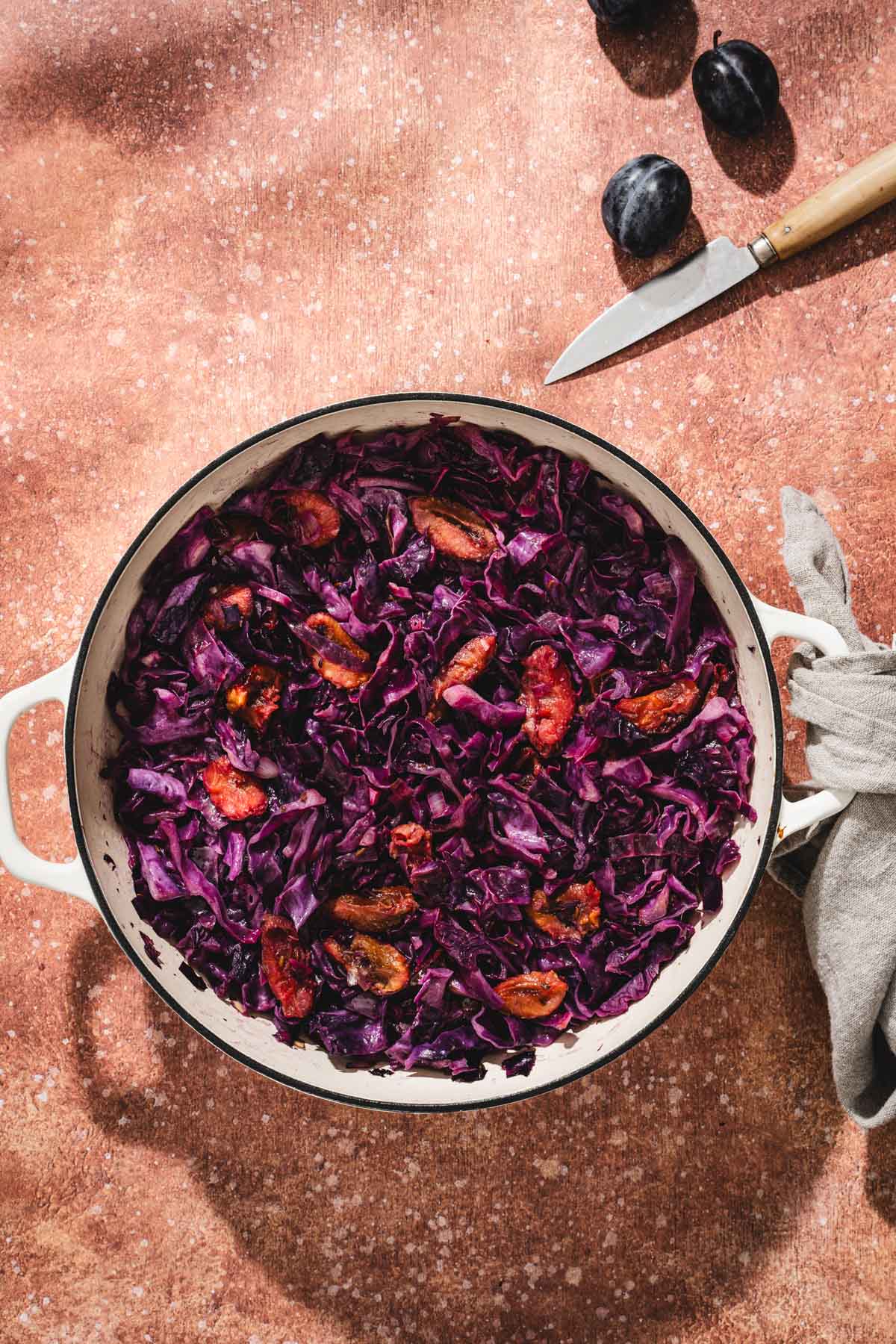
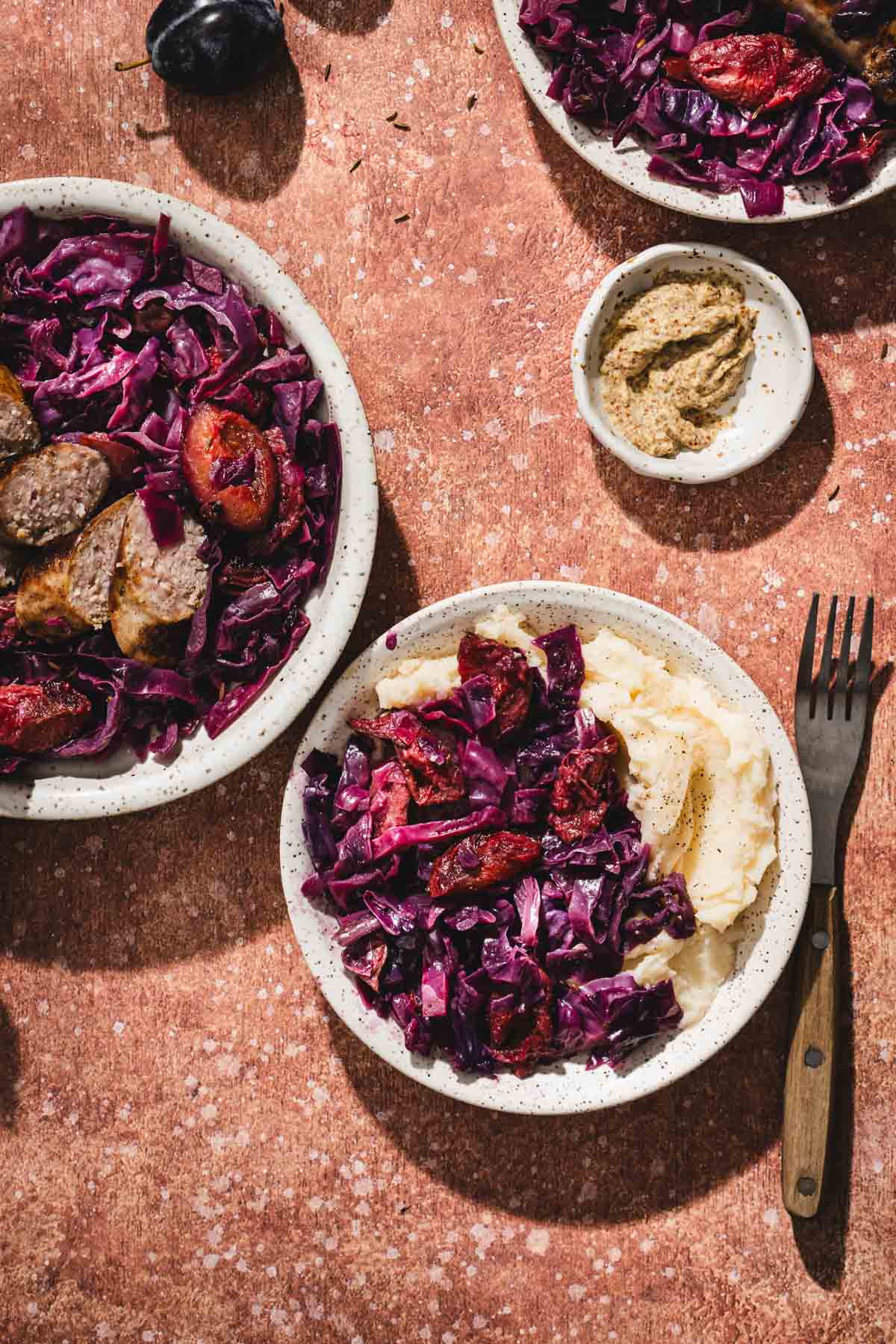
- Check the pot occasionally. If the cabbage looks dry before it is tender, add a splash of water or stock. The finished dish should be moist but not soupy.
- Remove the bay leaf and juniper berries. Stir in 1 tsp Dijon mustard and 1 tsp apple cider vinegar. Taste, then add the remaining vinegar as needed for brightness.
- Adjust the seasoning with additional salt and black pepper. If the plums are particularly tart, add 1–2 tsp honey or brown sugar, if necessary.
- If there is too much liquid, simmer uncovered for 3–5 minutes to reduce it.
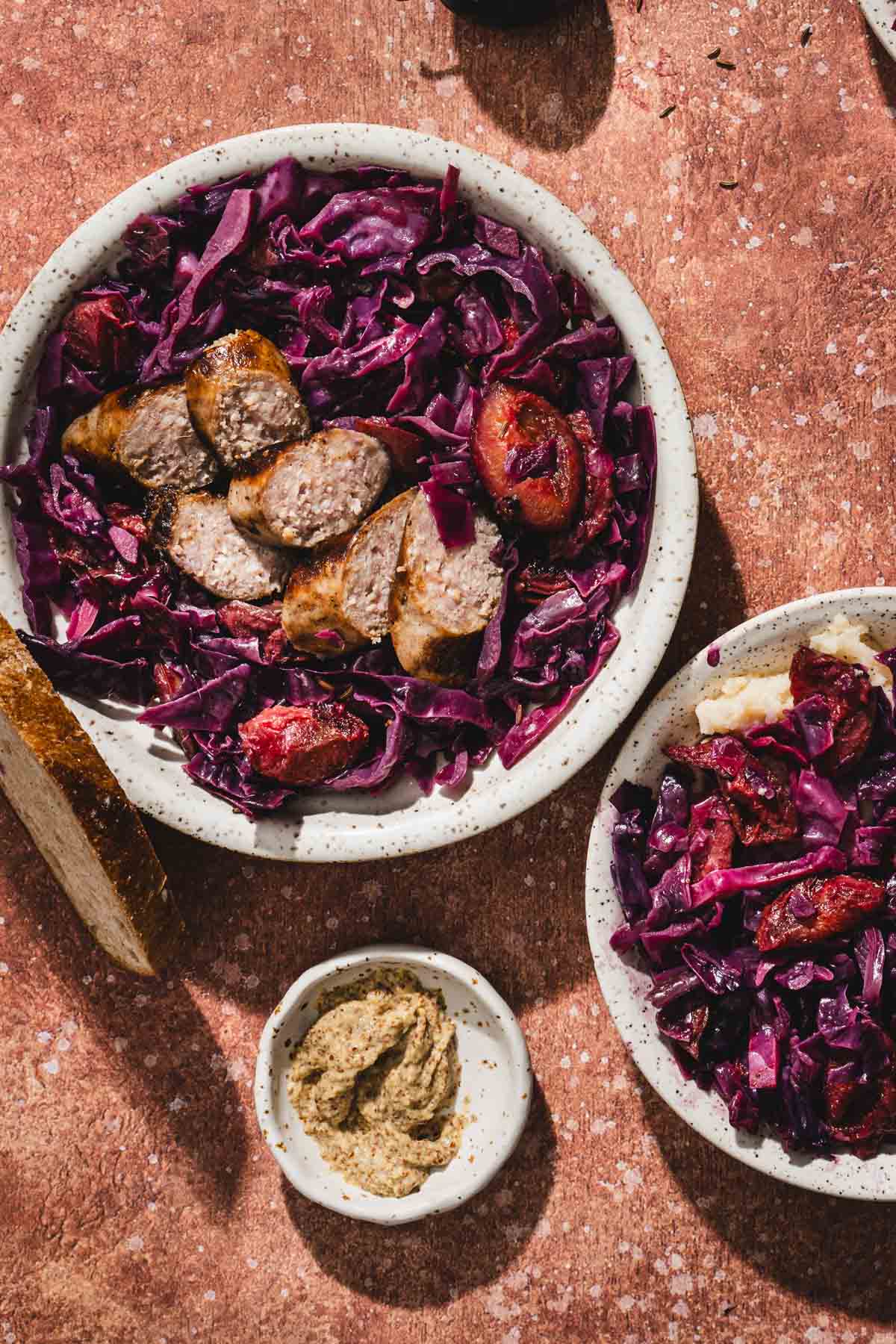
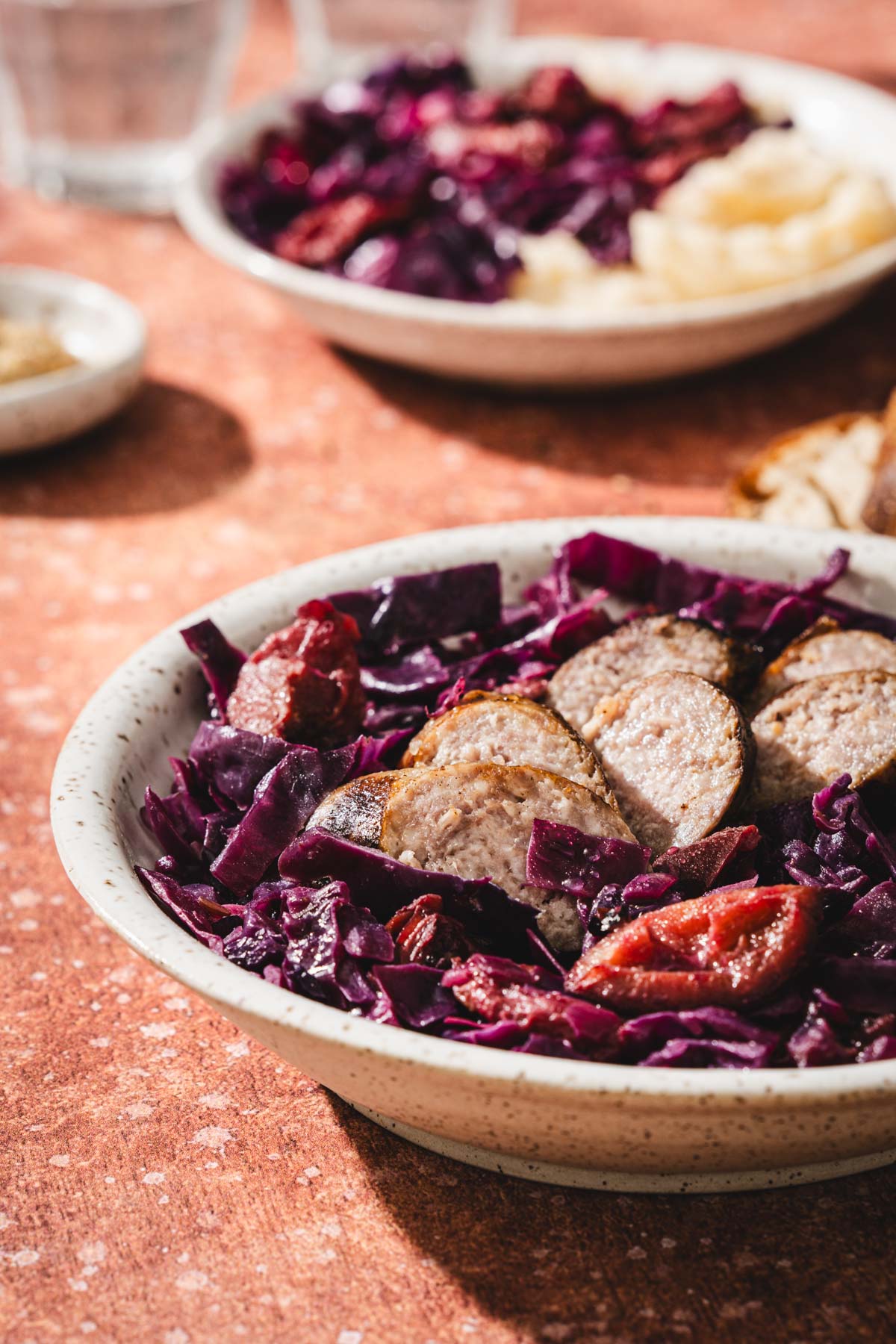
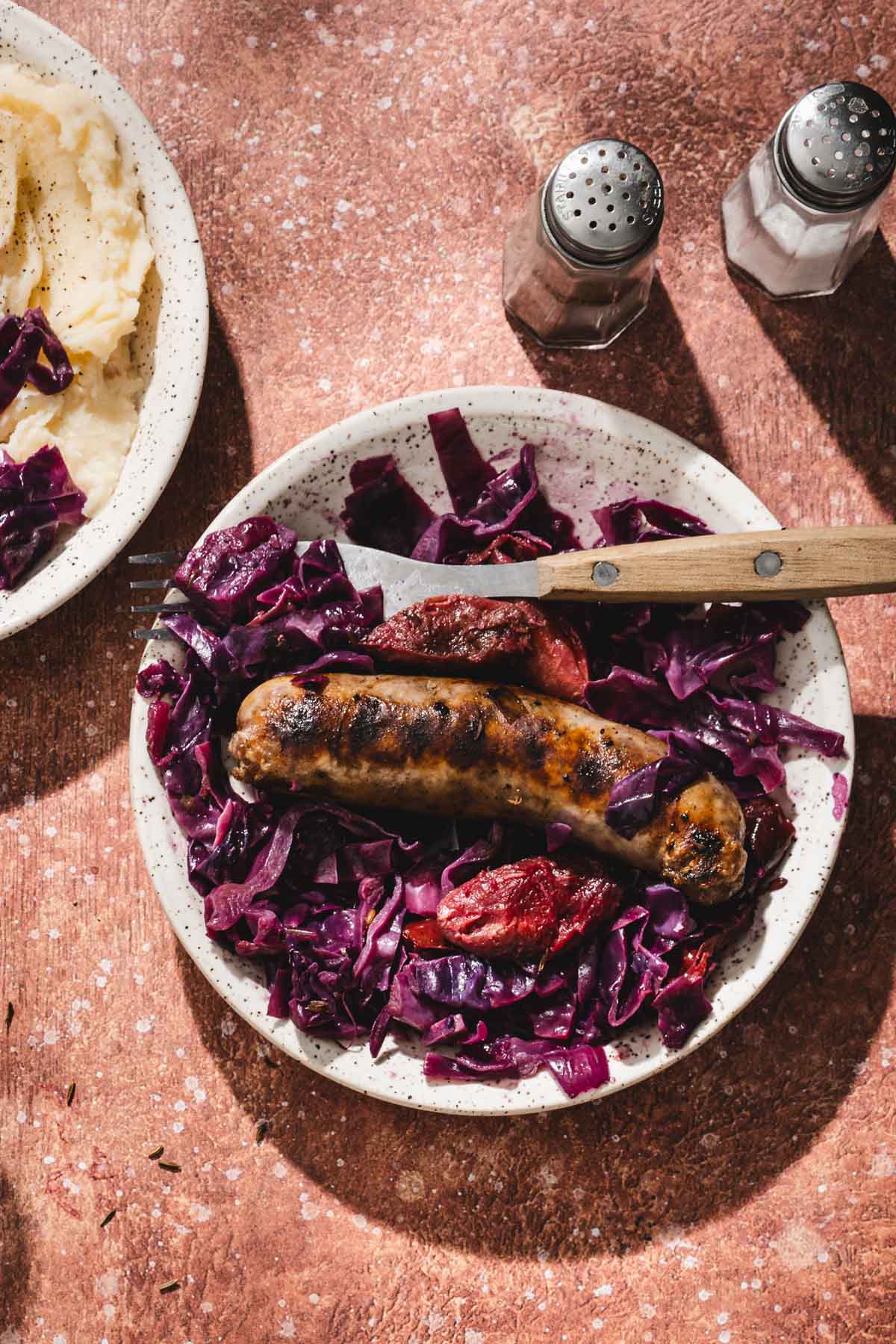
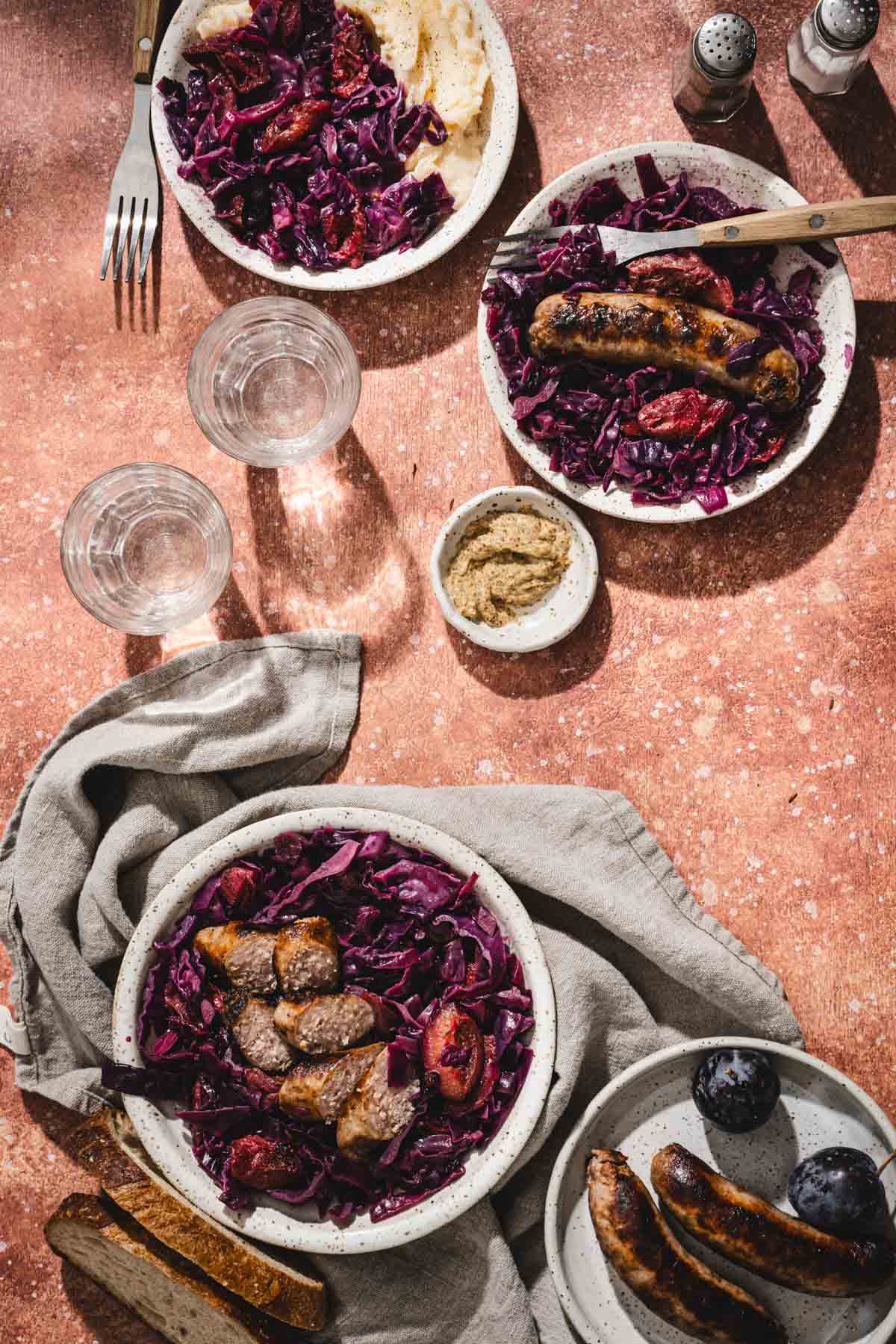
- Let the cabbage rest for a few minutes, then serve warm alongside grilled kiełbasa, roast pork, chicken, buckwheat, or a vegetarian main dish.
Best way to enjoy
Next to grilled kiełbasa or kotlet schabowy
Alongside pork tenderloin, chicken, or duck
Served over buckwheat groats or with placki ziemniaczane for a vegetarian main
As part of a bigger Polish spread with pierogi and beet relish
Piled onto rye bread with mustard
Looking for more Polish side dish recipes to round out your table? There are plenty worth exploring.
More Polish recipes you will love:
Storage instructions, reheating
Refrigerator: Store in an airtight container for up to 4 days.
Freezer: Cool completely, then freeze in a sealed container for up to 2 months. Thaw overnight in the fridge before reheating.
Reheating: Warm gently on the stovetop over medium-low heat with a small splash of water or stock to loosen it up. Stir and taste, then adjust with a little vinegar if it needs brightening after storage.
Make-ahead tip: This dish is actually better the next day. Make it the day before, reheat slowly, and finish with a fresh squeeze of vinegar right before serving. I rely on the same make-ahead approach for my Polish braised sauerkraut with mushrooms, where the overnight rest is honestly half the recipe.
Braised Red Cabbage with Plums

Equipment
- Large heavy-bottomed pot or Dutch oven
- sharp knife
- cutting board
- wooden spoon or spatula
- measuring cups and spoons
- Small pan or knife (for crushing juniper)
Ingredients
- 900 grams red cabbage (thinly sliced (5–7 mm)
- 300 grams Italian plums (pitted and quartered, divided into 200 g and 100 g)
- 40 grams unsalted butter
- 120 grams yellow onion (finely diced)
- 1 teaspoon caraway seeds
- 4 juniper berries (lightly crushed)
- ½ teaspoon dried marjoram
- 1 bay leaf
- 180 grams chicken stock (or vegetable stock)
- 1 tablespoon apple cider vinegar (for the braise)
- 2 tablespoons apple cider vinegar (to finish, plus more as needed)
- 1 teaspoon Dijon mustard
- 1 teaspoon fine salt (plus more to taste)
- ¼ teaspoon freshly ground black pepper
- Water or additional stock as needed
Instructions
- Remove the tough outer leaves from the red cabbage and slice it into strips about 5–7 mm thick.
- Finely dice the 120 grams yellow onion. Pit and quarter the 300 grams Italian plums, dividing them into 200 g for the first stage and 100 g to add later.
- Lightly crush the 4 juniper berries with the side of a knife or the bottom of a small pan.
- Brown 40 grams unsalted butter in a large, heavy-bottomed pot or Dutch oven over medium-low heat. Add 120 grams yellow onion and cook for 5-7 minutes, stirring occasionally, until softened and lightly golden.
- Add 1 teaspoon caraway seeds, ½ teaspoon dried marjoram, and 4 lightly crushed juniper berries.
- Add 900 grams red cabbage (sliced), 1 teaspoon fine salt, and ¼ teaspoon freshly ground black pepper.
- Cook for 5-8 minutes, stirring occasionally, until the cabbage softens and reduces in volume.
- Add: 1 tablespoon apple cider vinegar, 199.8 grams Italian plums, 180 grams chicken stock or vegetable stock, and 1 bay leaf. Stir to combine, then bring to a gentle simmer.
- Reduce the heat to low, cover, and cook for 20 minutes, stirring once or twice. The cabbage should begin to soften, and some of the plums should start breaking down into the cooking liquid.
- Add the remaining 100.2 grams Italian plums. Cover and cook for 15–25 minutes, or until the cabbage is tender and some of the plums have partially broken down while others retain their shape.
- Check the pot occasionally. If the cabbage looks dry before it is tender, add a splash of water or stock. The finished dish should be moist but not soupy.
- Remove the bay leaf and juniper berries. Stir in 1 teaspoon Dijon mustard 2 tablespoons apple cider vinegar. Taste, then add the remaining vinegar as needed for brightness.
- Adjust the seasoning with additional salt and black pepper. If the plums are particularly tart, add 1–2 tsp honey or brown sugar, if necessary.
- If there is too much liquid, simmer uncovered for 3–5 minutes to reduce it.
- Let the cabbage rest for a few minutes, then serve warm alongside grilled kiełbasa, roast pork, chicken, buckwheat, or a vegetarian main dish.
Notes
Nutrition
Did you make this recipe?
Tag me @sylwiavaclavekphotography or tag me using #myomnikitchen so I can see your creations! You can also leave a comment below!
Conclusion
Stop walking past that pile of Italian plums at the market. This is exactly what they’re for. Tender braised cabbage, jammy plum sauce, caraway, juniper, and a hit of Dijon at the end. It’s the kind of side dish that gets more attention than the main. Make it today.
FAQ
Can I use regular plums instead of Italian plums?
Yes. Regular red or black plums work well. They tend to be sweeter and juicier, so taste before adding any honey at the end. The texture will be slightly different since they break down faster, but the flavor is still great.
Do I have to use juniper berries?
You don’t have to, but they add something you can’t fully replicate. If you can’t find them, a small extra pinch of caraway and a crack of black pepper will get you close.
Why does my cabbage look pink instead of deep purple?
Red cabbage changes color based on pH. The apple cider vinegar helps it stay more vibrant and purple. If yours looks more pink, add a small splash more vinegar during the braise.
What if there’s too much liquid at the end?
Simmer it uncovered for 3 to 5 minutes. It will reduce quickly. You want the liquid to be glossy and lightly saucy, not watery.
Hungry for more? Check out the latest posts from My Omni Kitchen.
- Buckwheat Bowl with Roasted Squash and Chickpeas
- Savory Buckwheat Bowl with Polish Sausage Recipe
- Polish-Style Buckwheat with Mushrooms Bowl Recipe
- Smoked Salmon Buckwheat Bowl Recipe
- Braised Red Cabbage with Plums Recipe