
Simple Buckwheat bowl with white Beans Recipe
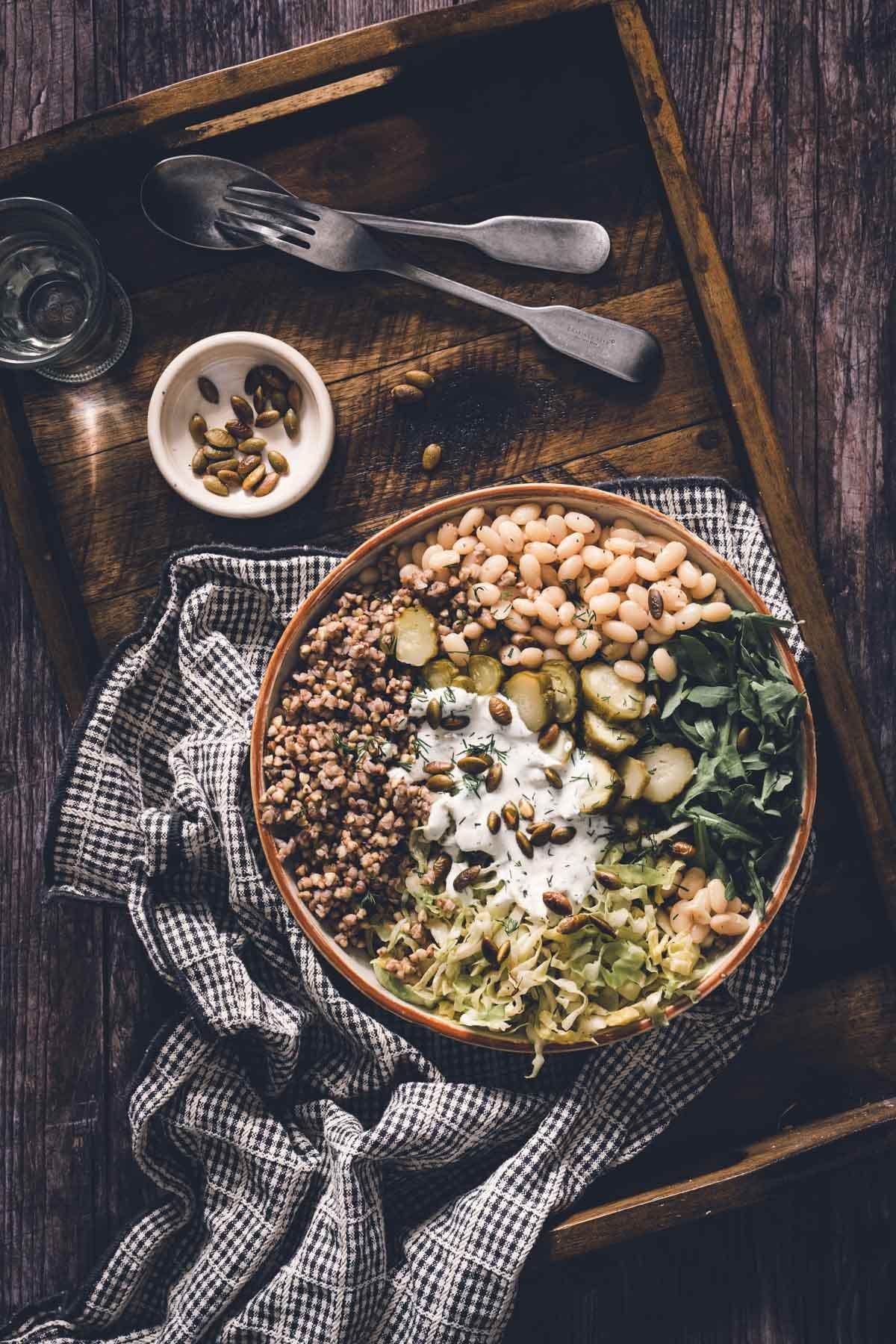
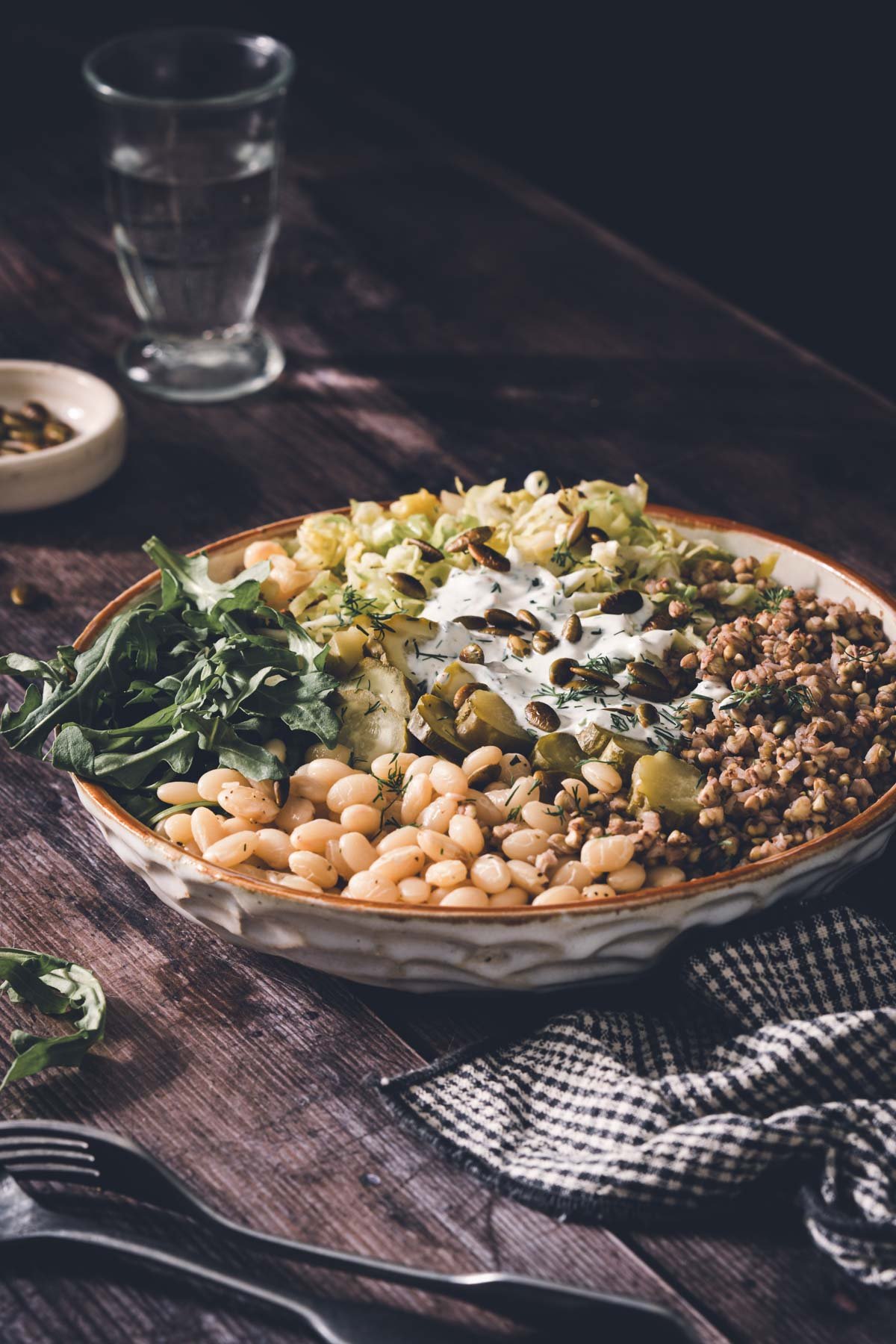
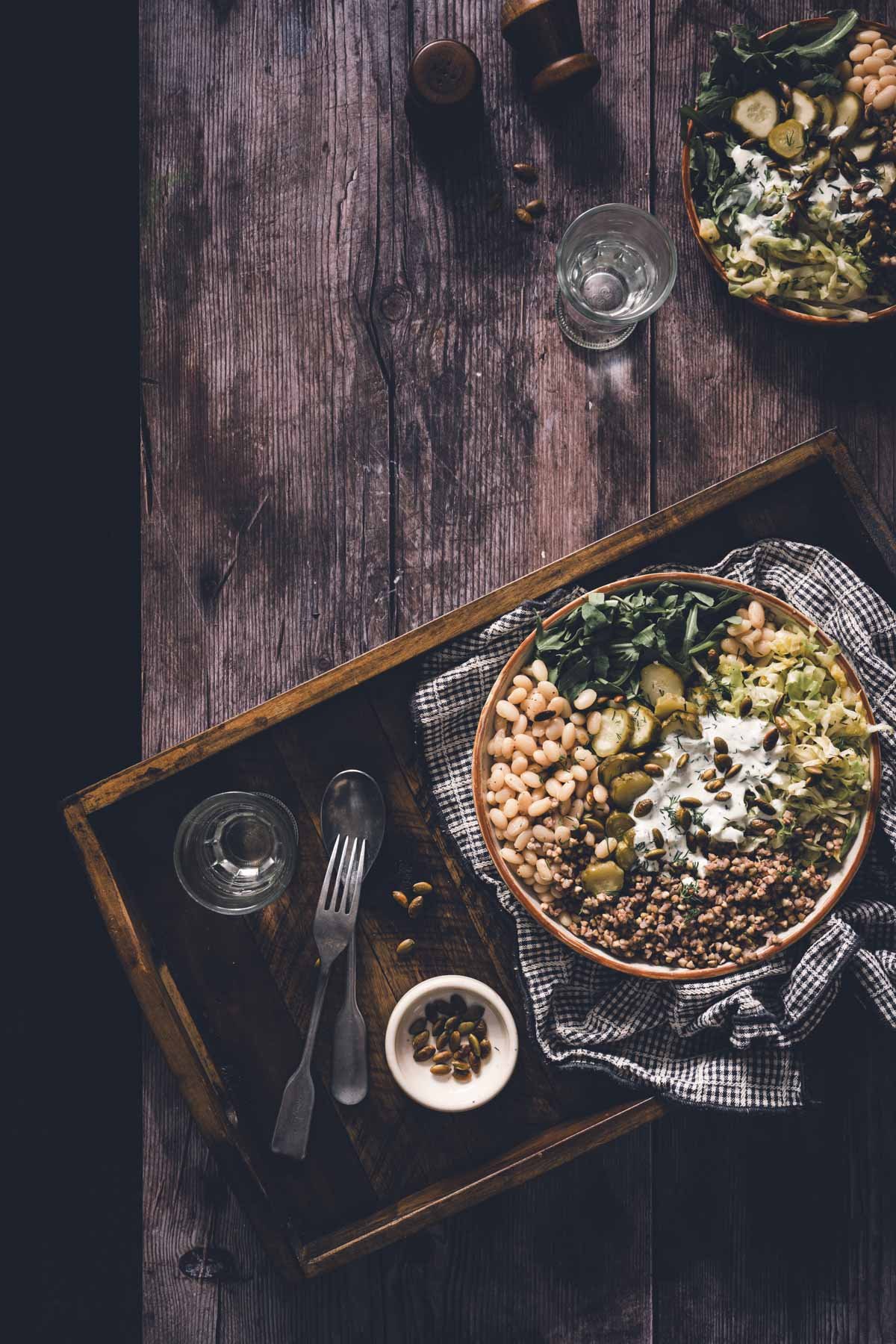
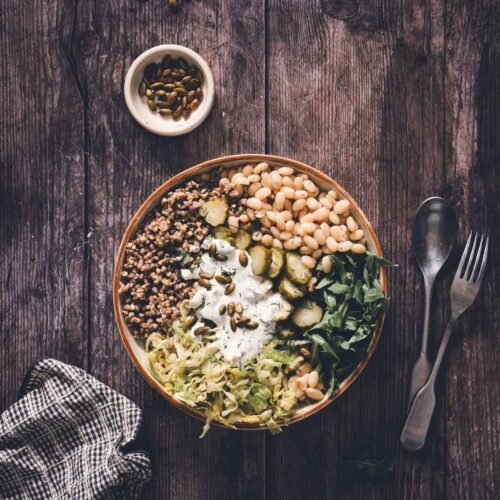
This Buckwheat bowl with White Beans proves that Polish pantry staples can carry a whole meal on their own. Kasza gryczana is one of those ingredients that never gets enough credit outside Eastern Europe. Pair it with creamy white beans, caraway, brown-butter cabbage, and a Greek yogurt dill dressing made with pickle brine, and you get a full meal.
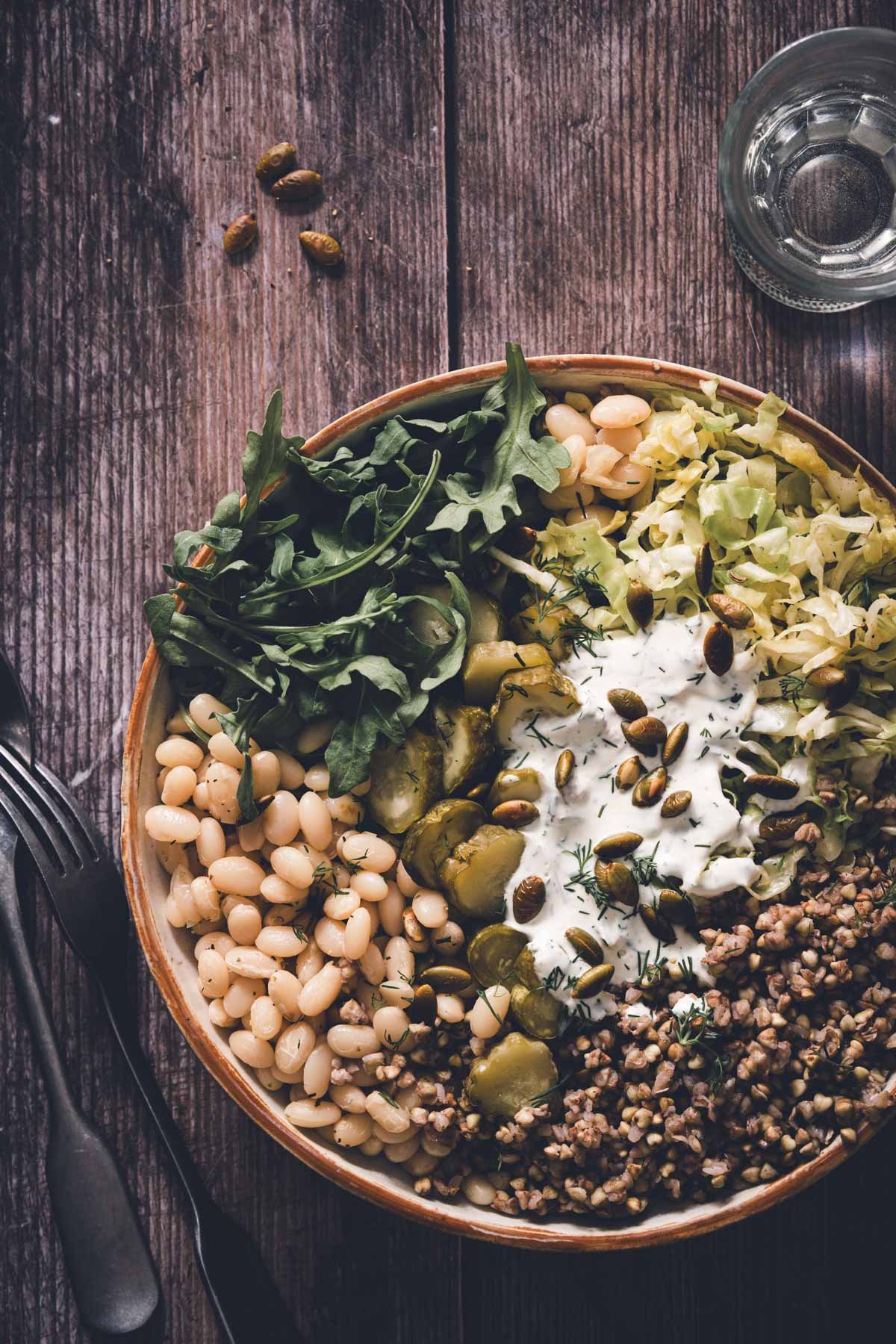
This bowl started as a way to use up beans I had soaking on the counter and a head of cabbage that needed attention. The dressing came from a jar of ogórki kiszone brine I almost poured down the drain. Don’t pour it down the drain! A teaspoon of that stuff in your dressing does something lemon juice alone can’t. Now this is one of those meals I make on repeat, especially when I want something satisfying but not fussy. I have a whole collection of Polish recipes if you want to keep exploring this kind of cooking.
For more buckwheat-based ideas, start with my Polish-Style Buckwheat with Mushrooms Bowl.
Quick Look at this Recipe:
More buckwheat bowls to try:
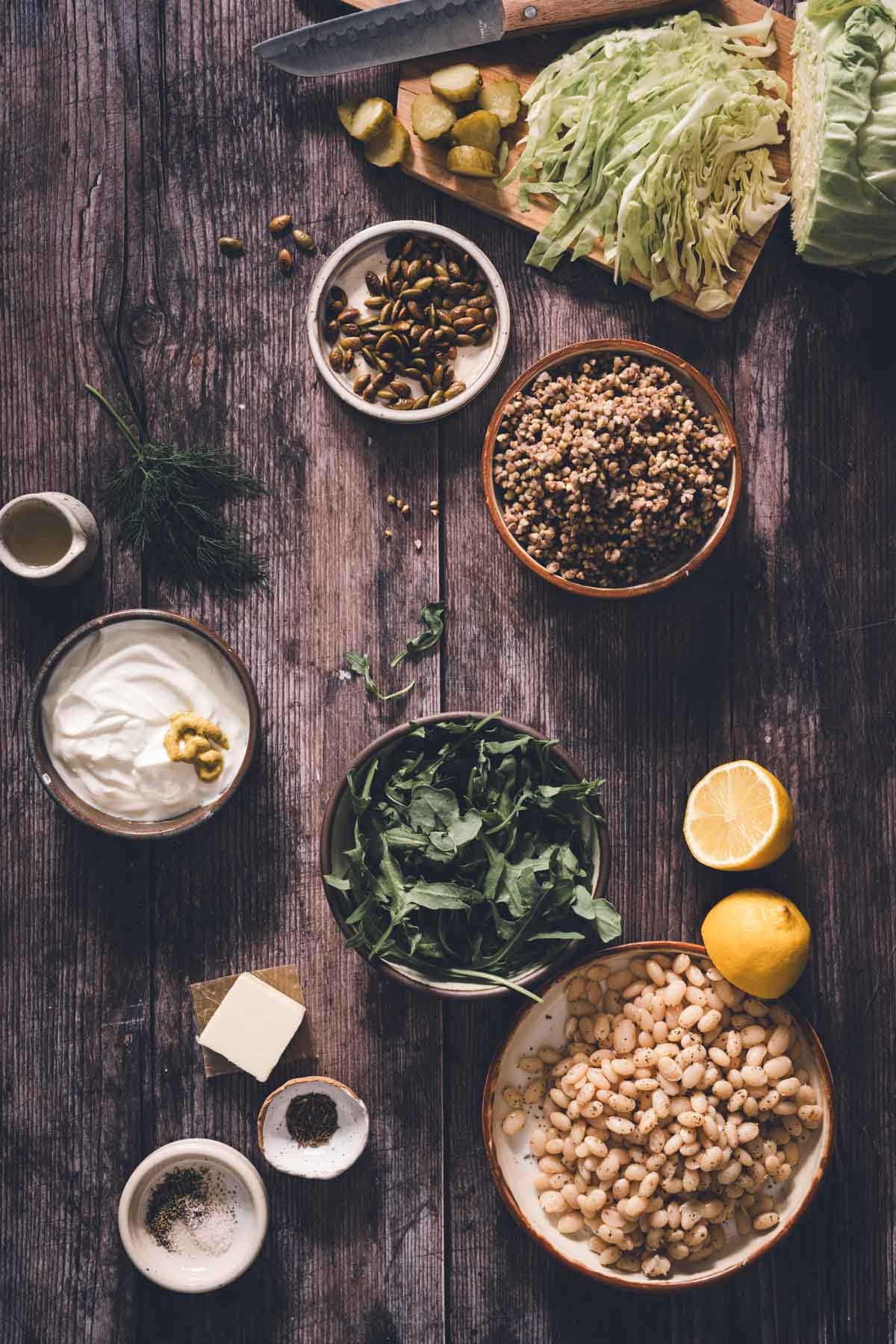
Key Ingredients, Variations and Substitutions
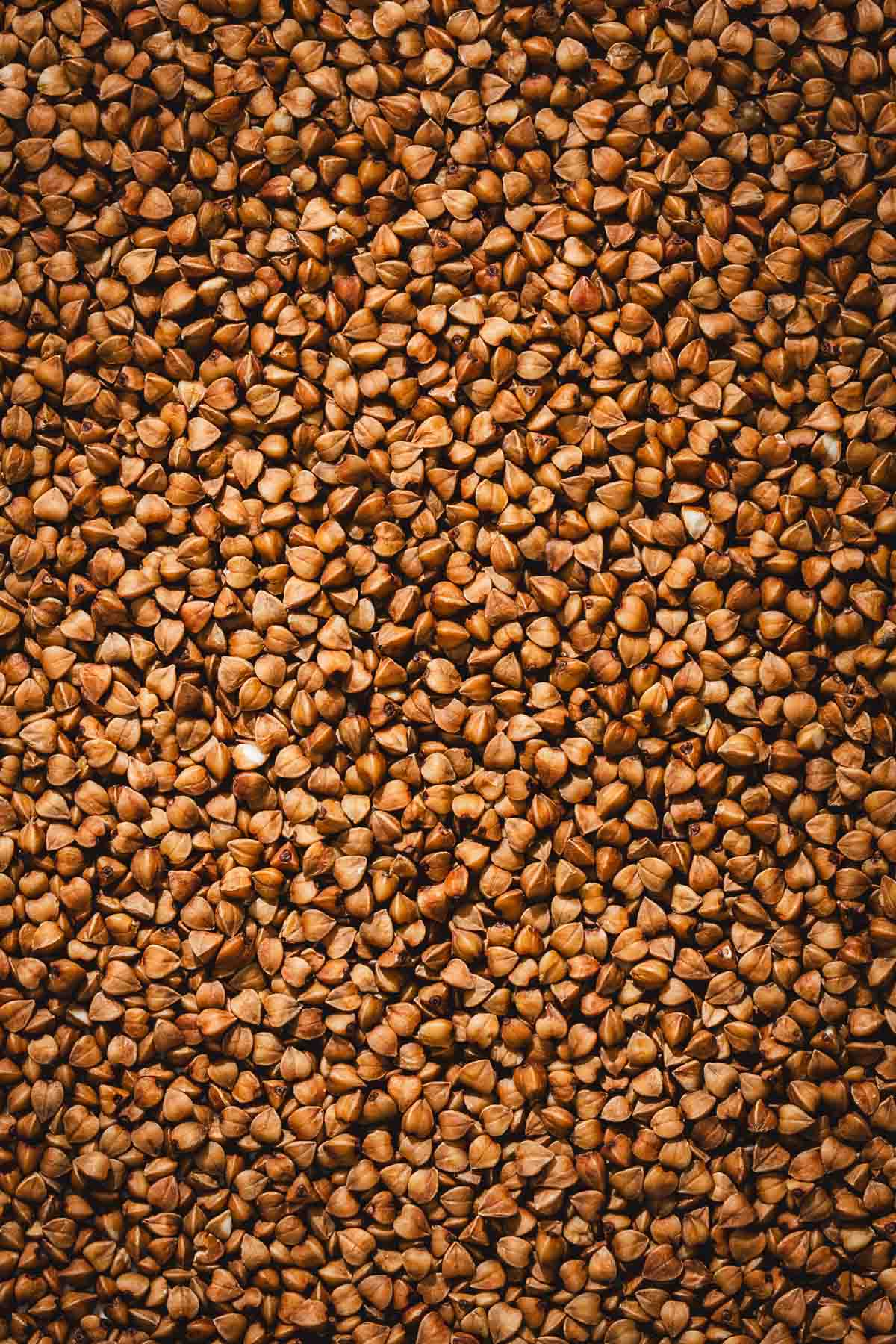
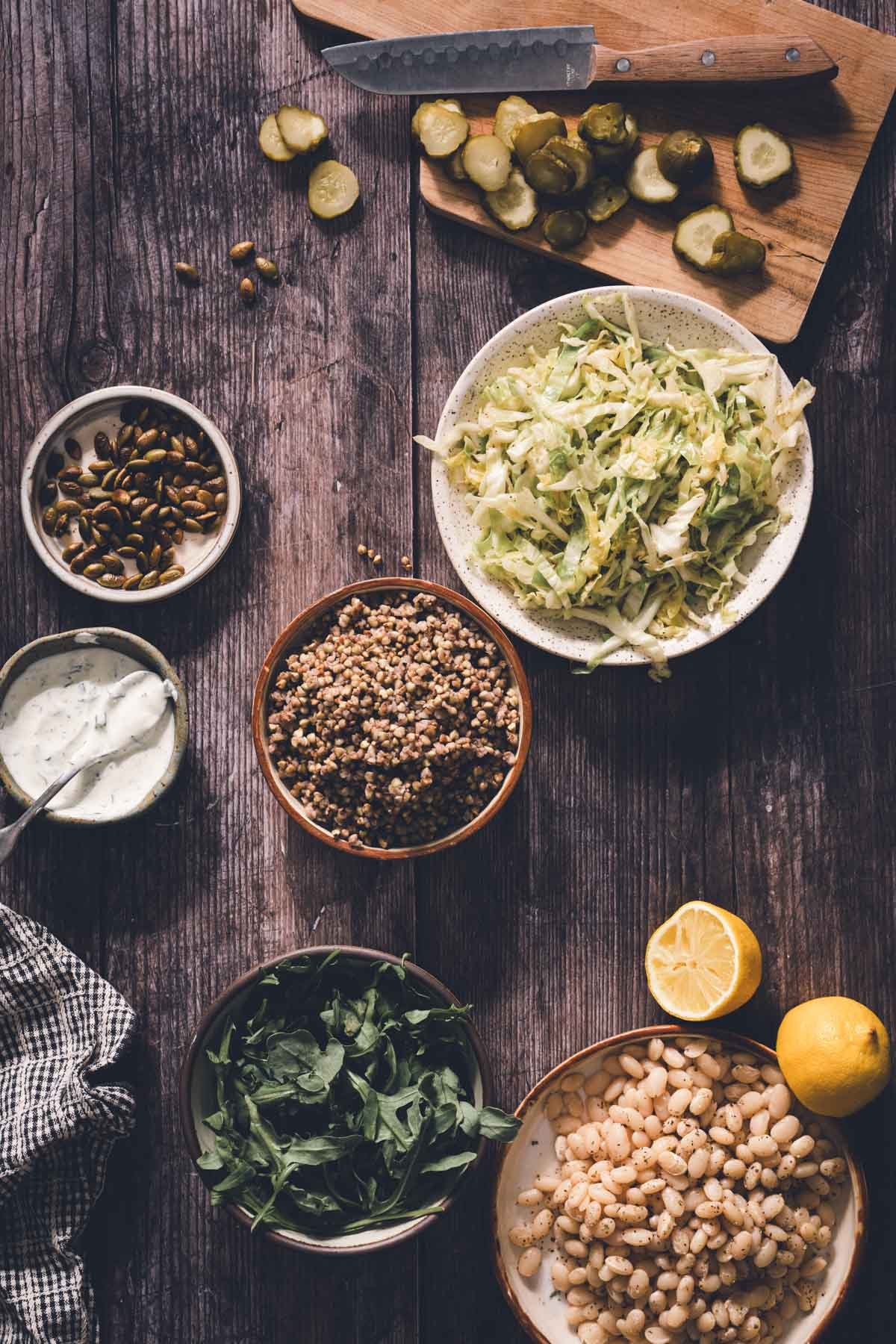
Roasted Buckwheat Groats (Kasza Gryczana) – brings a deep, nutty flavor than raw buckwheat groats and cooks up into separate, fluffy grains. Look for it labeled as kasza gryczana or toasted buckwheat groats. If you can only find raw (unroasted) buckwheat, dry-toast it in a skillet for a few minutes before cooking to bring out that flavor. My Ultimate Guide to Cooking Buckwheat Groats covers everything you need to know if this is your first time cooking with it. You can substitute farro, barley, or brown rice, though the flavor will be different.
Rancho Gordo Alubia Blanca Beans – these exceptional dried white beans cook up incredibly creamy, with thin, delicate skins. They pair beautifully with the dill dressing and hold their shape without getting gluey. Canned Cannellini beans or any good-quality white bean (Great Northern) work here too. Canned beans are a fine shortcut. Just drain and rinse them, then toss with the marjoram, salt, and black pepper. You’ll save a lot of time, and the result is still very good.
Polish Fermented Dill Pickles (Ogórki Kiszone) – these are not the same as American dill pickles. Fermented pickles are sour, funky, and deeply savory in a way that jarred vinegar pickles can’t match. The brine is just as important as the pickles themselves here – it goes into the dressing! Look for them at Eastern European grocery stores or order online. In a pinch, use your best-quality dill pickles and a splash of apple cider vinegar in the dressing to mimic that tang. If you want to make your own, my Polish Half Sour Pickles recipe is easier than it sounds.
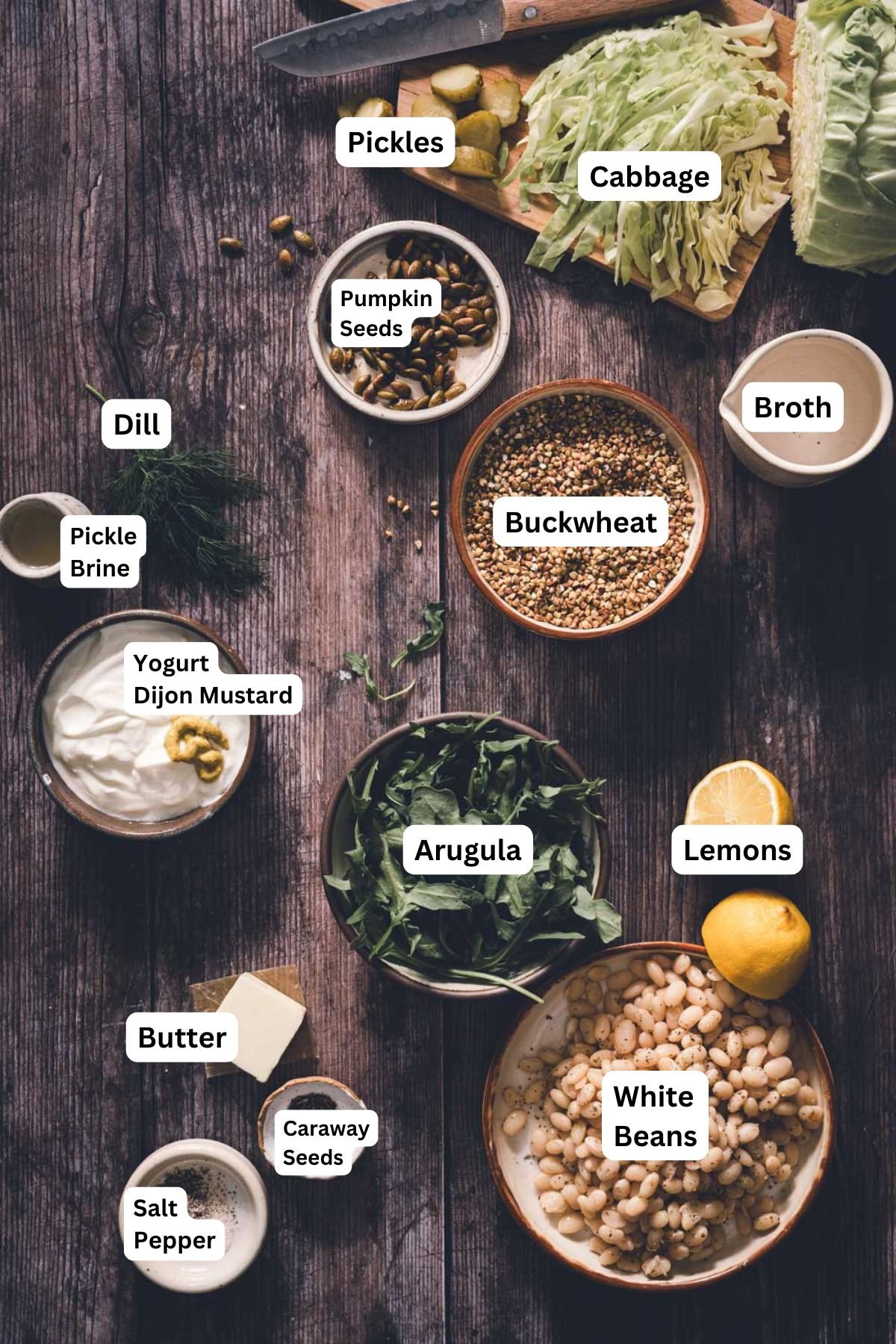
Other ingredients: vegetable or chicken broth, caraway seeds, dried marjoram, butter, lemon juice, Greek yogurt, Dijon or Polish mustard, fresh dill, pumpkin seeds, fresh arugula ( or use spinach, fresh greens, or even shredded romaine), sea salt, black pepper.
Equipment you will need
- Medium saucepan (for the beans)
- Small saucepan (for the buckwheat)
- Large skillet
- Small mixing bowl
- Whisk
- Dry skillet (for toasting pumpkin seeds)
- Cutting board and sharp knife
- Measuring cups and spoons
Top Tips
Don’t salt the beans too early – add salt only once the beans start to soften, about halfway through cooking. Salting too early can toughen the skins and slow everything down.
Let the buckwheat steam off the heat – after the liquid is absorbed, pull it off the stove and let it sit covered for 5 minutes. This is what gives you fluffy, separate grains instead of a clumped-up mess.
Use the pickle brine – it sounds like a small thing, but it genuinely changes the dressing. Start with 1 teaspoon and add more to taste. It adds a fermented tang that lemon juice alone can’t provide.
Step-by-step instructions
- Sort through the dried beans, removing any debris, then rinse them well.
- If you have time, use the quick-soak method: cover the beans with several inches of water, bring to a boil, cook for 2 minutes, then turn off the heat, cover, and let stand for 1 hour. Drain and rinse.
- Place the beans in a saucepan and cover with fresh water by about 2 inches. Bring to a boil, then cook for 10–15 minutes, then reduce to a gentle simmer.
- Cook until the beans are tender and creamy, adding more water if needed. Add salt once they begin to soften. Cooking time varies with bean age, so check periodically.
- Drain the beans well. Gently toss with the dried marjoram and black pepper. Taste and add salt as needed.
- Short on time? You can skip soaking, but unsoaked beans may take 1–2 hours or longer to become tender. A pressure cooker is a faster alternative.
- Bring 1½ cups water or vegetable broth to a boil in a saucepan over medium-high heat. Stir in the roasted buckwheat groats.
- Reduce the heat to low, cover, and simmer for 10–12 minutes, or until the liquid is absorbed and the groats are tender yet separate.
- Remove from the heat and let stand, covered, for 5 minutes. Fluff with a fork.
- Brown the butter in a large pan over medium heat.
- Add the caraway seeds and cook for about 30 seconds, just until fragrant.
- Add the sliced cabbage and a pinch of salt. Cook for 5–8 minutes, stirring occasionally, until softened with a few lightly golden edges.
- If the cabbage sticks before it softens, add 1–2 tbsp of water and continue cooking.
- Remove from the heat, then season with black pepper and 1 tsp lemon juice. Taste and add more lemon juice or salt if needed.
- The cabbage should be tender but not limp. A little browning adds depth and prevents the flavor from becoming too mild.
- In a small bowl, whisk together the Greek yogurt, mustard, chopped dill, and 2 tsp of pickle brine.
- Gradually add water until the dressing is creamy and easy to drizzle.
- Season with salt and black pepper.
- Taste and adjust with lemon juice or 1 tsp of pickle brine.
- Place the pumpkin seeds in a dry skillet over medium-low heat.
- Toast for 2–4 minutes, stirring frequently, until fragrant and lightly golden brown.
- Transfer to a small bowl and let cool.
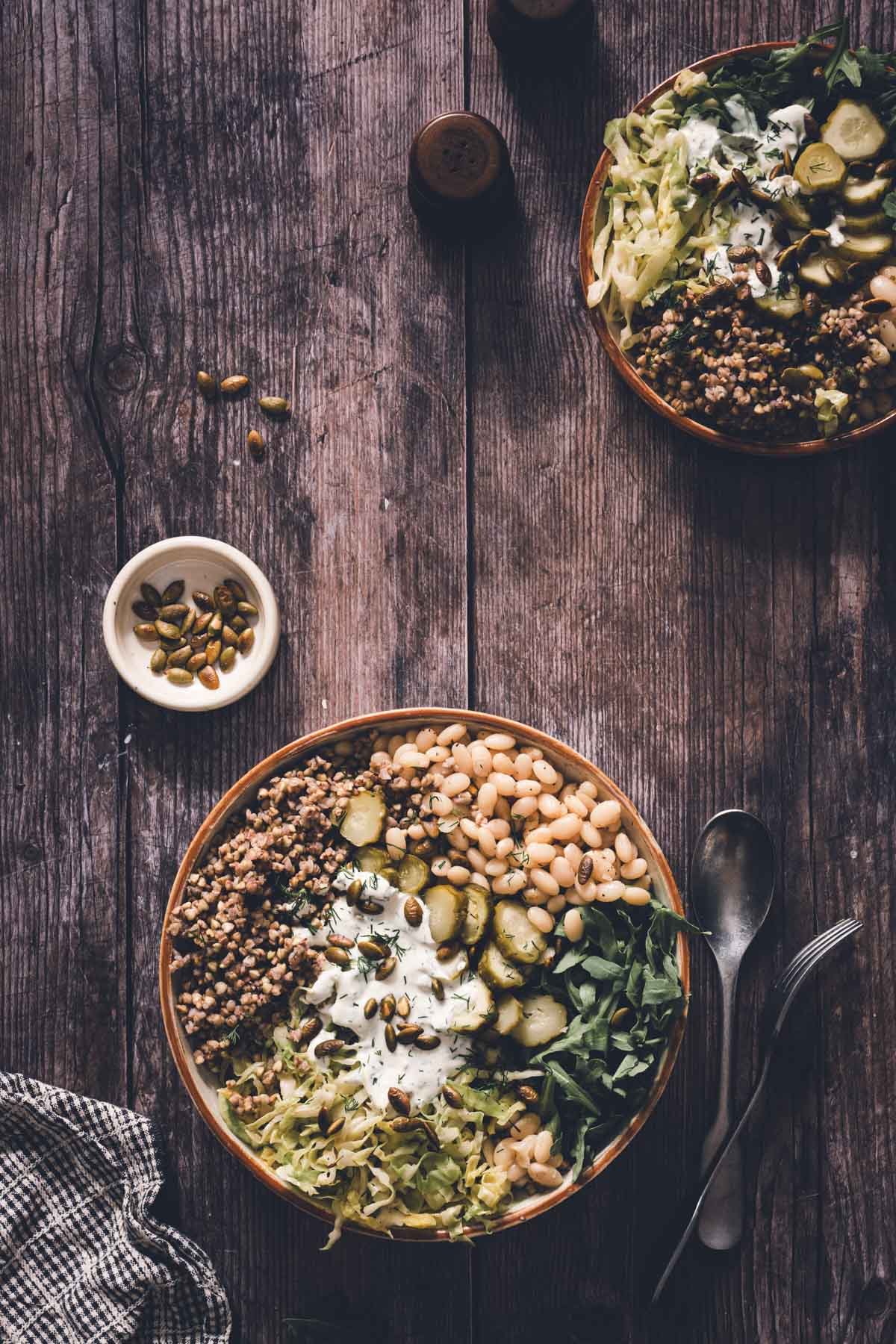
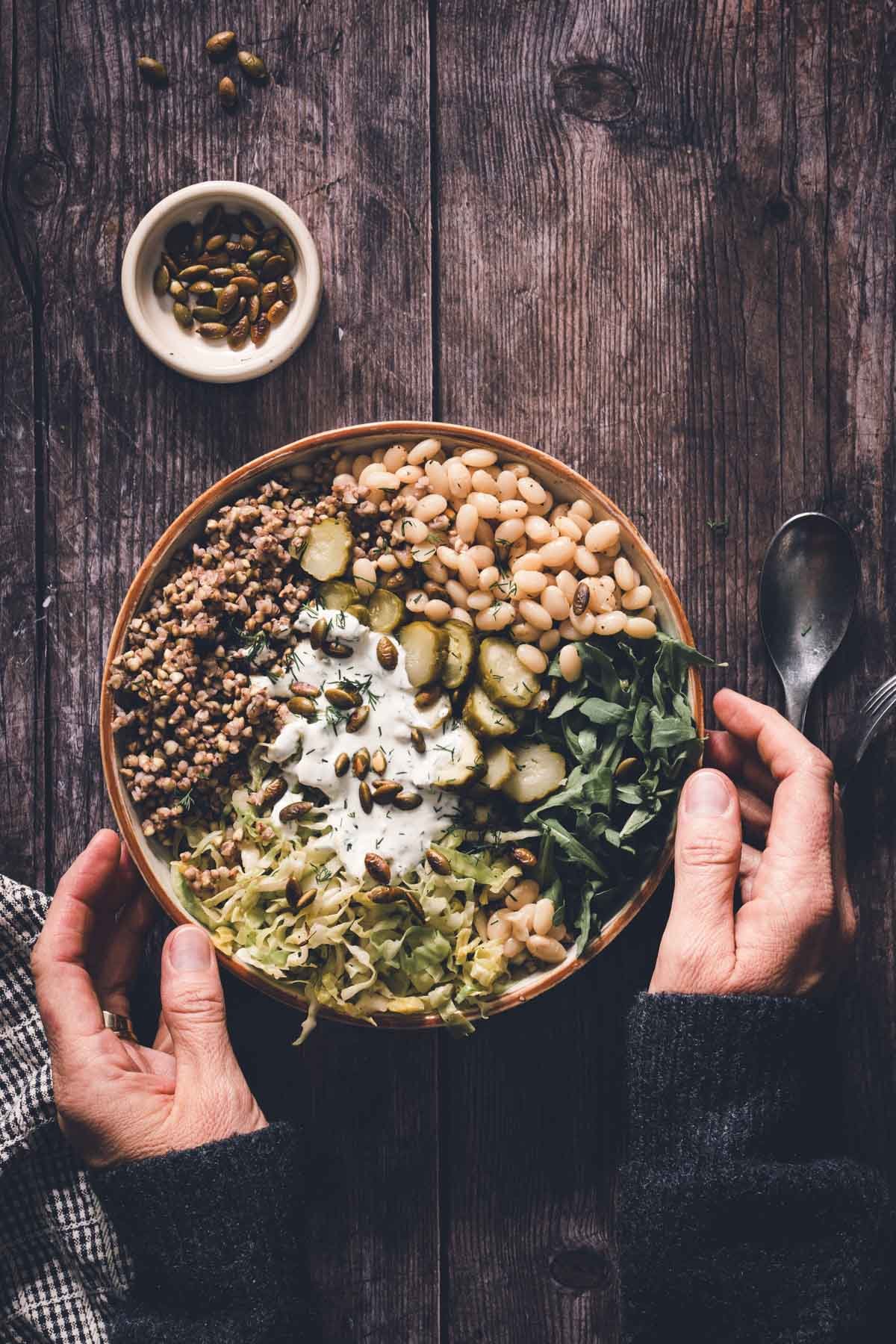
- Divide the cooked buckwheat between two bowls.
- Add the seasoned alubia blanca beans and sautéed caraway cabbage.
- Top with fresh arugula and sliced or chopped ogórki kiszone.
- Drizzle with the Greek yogurt dill-mustard dressing.
- Finish with toasted pumpkin seeds and plenty of fresh herbs.
Best way to enjoy
With a soft-boiled egg or a slice of rye bread on the side
Packed for lunch the next day – keep the dressing separate
Topped with a piece of pan-seared salmon or smoked fish for extra protein
You may also like:
Storage instructions, reheating
Refrigerator – store each component separately in airtight containers and refrigerate for up to 3-4 days.
Dressing – keep in the fridge for up to 4 days. Give it a stir and add a splash of water to loosen it up if it thickens after sitting.
Assembled bowls – if the bowls are already dressed, eat within 24 hours. The arugula wilts quickly once the dressing hits it.
The cabbage – reheats well in a small skillet with a tiny bit of butter. Give it a minute or two over medium heat, and it comes right back to life.
Freezing – the buckwheat and beans freeze well separately for up to 2 months. The cabbage and dressing don’t freeze – make those fresh.
Simple Buckwheat bowl with white Beans Recipe

Equipment
- Medium saucepan (for the beans)
- Small saucepan (for the buckwheat)
- large skillet
- small mixing bowl
- whisk
- Dry skillet (for toasting pumpkin seeds)
- cutting board and sharp knife
- measuring cups and spoons
Ingredients
For the Alubia Blanca beans
- ½ cup dried white beans or one can
- water for soaking and cooking
- salt to taste
- ¼ teaspoon dried marjoram
- black pepper freshly ground to taste
For the buckwheat
- ¾ cup buckwheat groats (kasza gryczana) roasted
- 1½ cups water or vegetable broth
- Salt to taste, when cooking in water
For the caraway cabbage
- 3 cups green cabbage thinly sliced
- 2 tablespoons butter
- ½ teaspoon caraway seeds
- 1 tablespoon water as needed
- 1 tablespoons lemon juice to taste
- Salt and freshly ground black pepper to taste
For the Greek yogurt dill-mustard dressing
- ½ cup 120 g plain Greek yogurt
- 1 teaspoon Dijon mustard
- 2 tablespoons fresh dill finely chopped
- 2 teaspoons pickle brine to taste
- 1 tablespoon water to thin
- salt and freshly ground black pepper to taste
For serving
- 2 cups arugula
- 3 dill pickles Polish fermented ; ogórki kiszone, sliced or chopped
- 2 tablespoons pumpkin seeds dry toasted
- 2 tablespoons fresh dill for finishing
- 1 tablespoon pickle brine optional
Instructions
- Sort through the dried beans, removing any debris, then rinse them well.
- If you have time, use the quick-soak method: cover the beans with several inches of water, bring to a boil, cook for 2 minutes, then turn off the heat, cover, and let stand for 1 hour. Drain and rinse.
- Place the ½ cup dried white beans in a saucepan and cover with fresh water by about 2 inches. Bring to a boil, then cook for 10–15 minutes before reducing to a gentle simmer.
- Cook until the beans are tender and creamy, adding more water if needed. Add salt once they begin to soften. Cooking time varies with bean age, so check periodically.
- Drain the beans well. Gently toss with ¼ teaspoon dried marjoram and black pepper. Taste and add salt as needed.
- Short on time? You can skip soaking, but unsoaked beans may take 1–2 hours or longer to become tender. A pressure cooker is a faster alternative.
- Bring 1½ cups water or vegetable broth to a boil in a saucepan. Add salt.
- Stir in the ¾ cup buckwheat groats (kasza gryczana).
- Reduce the heat to low, cover, and simmer for 10–12 minutes, or until the liquid is absorbed and the groats are tender yet separate.
- Remove from the heat and let stand, covered, for 5 minutes. Fluff with a fork.
- Brown the 2 tablespoons butter in a large skillet over medium heat.
- Add the ½ teaspoon caraway seeds and cook for about 30 seconds, just until fragrant.
- Add the 3 cups green cabbage sliced thinly, and a pinch of Salt. Cook for 5–8 minutes, stirring occasionally, until softened with a few lightly golden edges.
- If the cabbage sticks before it softens, add 1 tablespoon water and continue cooking.
- Remove from the heat and season with Salt and freshly ground black pepper and 1 tablespoons lemon juice. Taste and add more lemon juice or salt if needed.
- The cabbage should be tender but not limp. A little browning adds depth and prevents the flavor from becoming too mild.
- In a small bowl, whisk together the ½ cup 120 g plain Greek yogurt, 1 teaspoon Dijon mustard, 2 tablespoons fresh dill (chopped), and 2 teaspoons pickle brine.
- Gradually add 1 tablespoon water until the dressing is creamy and easy to drizzle.
- Season with salt and freshly ground black pepper.
- Taste and adjust with more lemon juice or 1 tsp of pickle brine for extra tang.
- Place the 2 tablespoons pumpkin seeds in a dry skillet over medium-low heat. Toast for 2–4 minutes, stirring frequently, until fragrant and lightly golden.
- Transfer to a small bowl and let cool.
- Divide the cooked buckwheat between two bowls.
- Add the cooked and seasoned Alubia Blanca beans and the sautéed caraway cabbage.
- Arrange the fresh 2 cups arugula and sliced 3 dill pickles on top.
- Drizzle with the Greek yogurt dill-mustard dressing.
- Finish with toasted pumpkin seeds and plenty of 2 tablespoons fresh dill and 1 tablespoon pickle brine.
Notes
Nutrition
Did you make this recipe?
Tag me @sylwiavaclavekphotography or tag me using #myomnikitchen so I can see your creations! You can also leave a comment below!
Conclusion
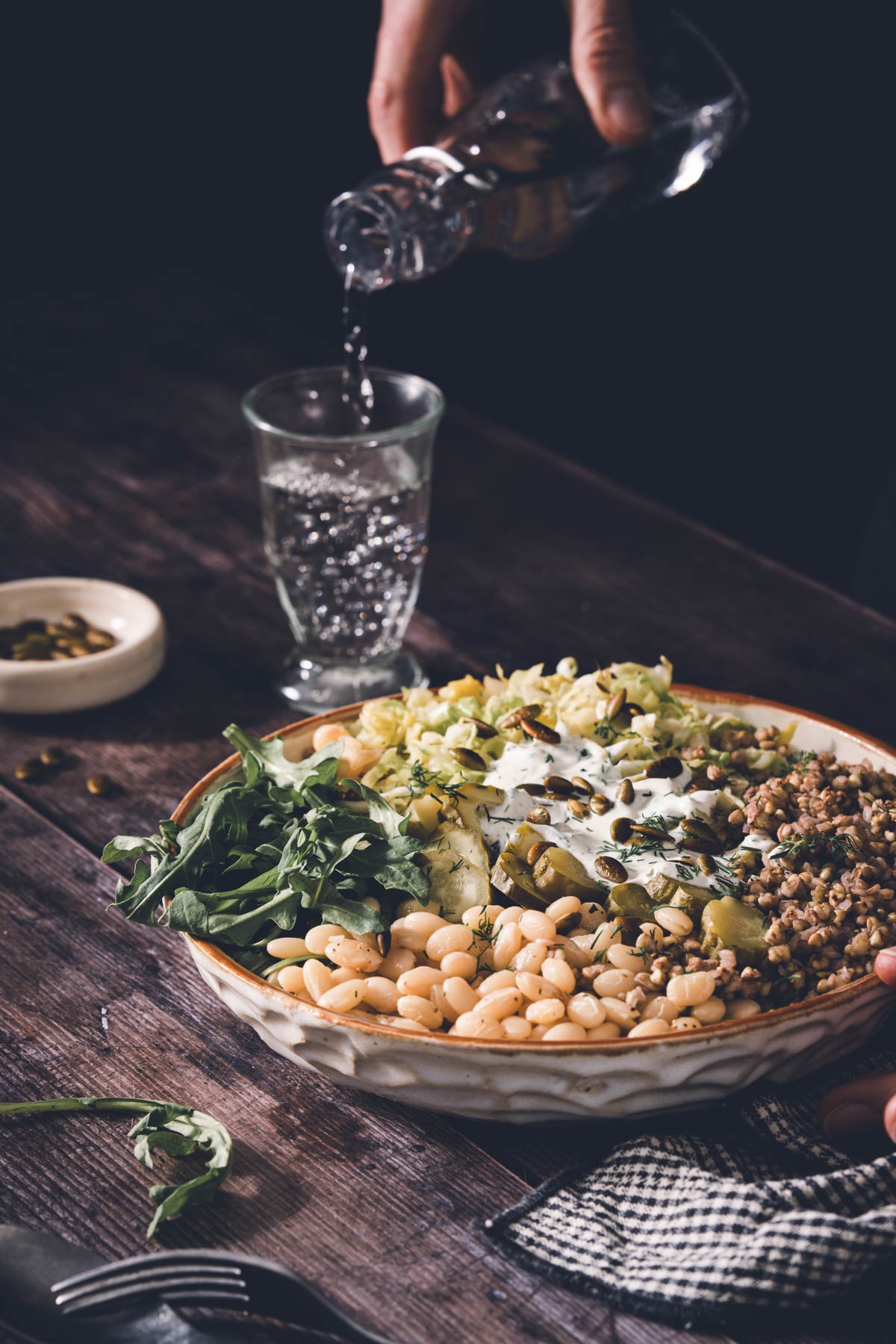
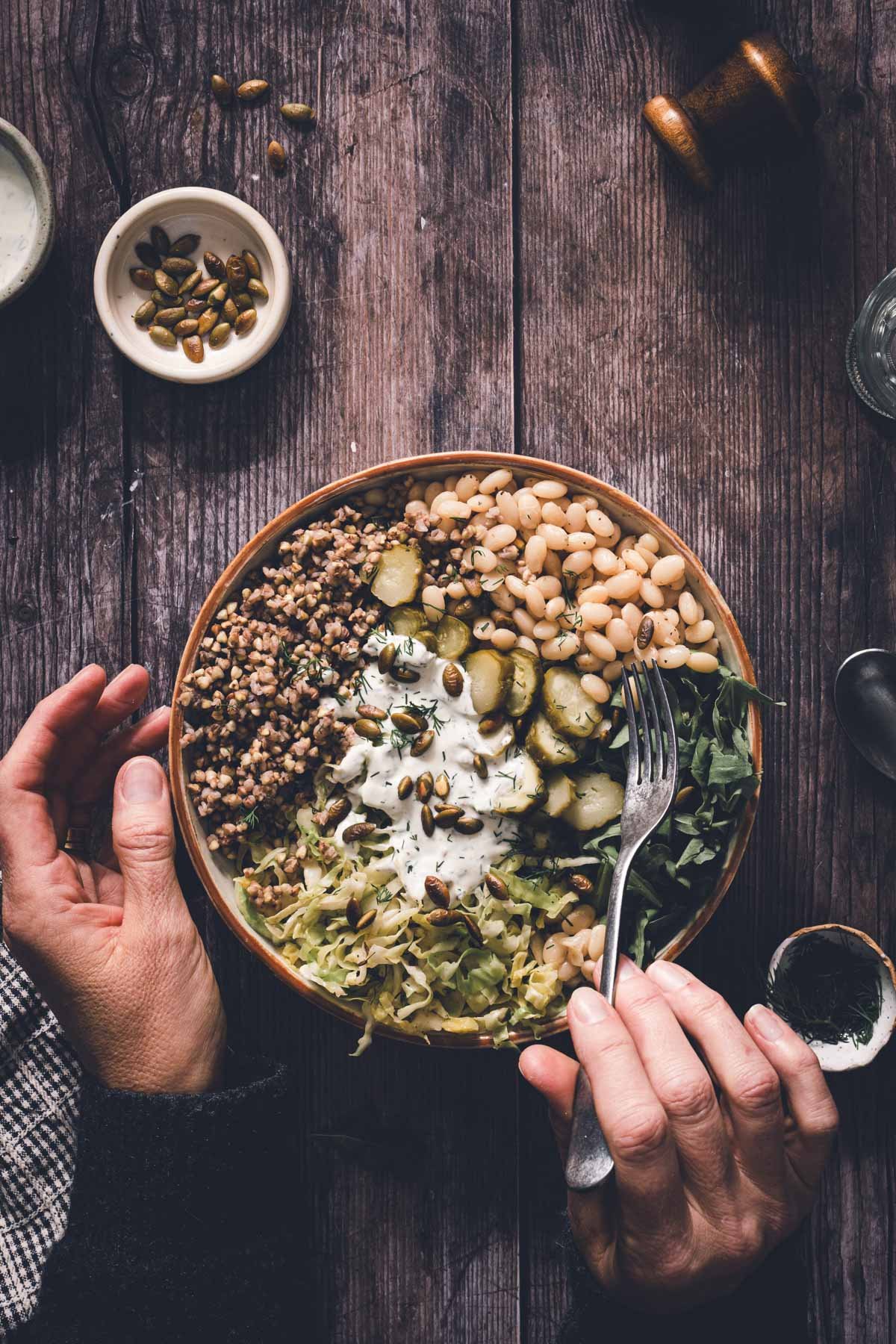
This bowl earns its place in your weeknight rotation. Everything works together: nutty buckwheat, creamy beans, caraway cabbage, and a tangy dressing with a hit of pickle brine.
Make it once, and you’ll see. It will become your favorite thing to eat.
FAQ
Do I need to soak the beans?
Soaking shortens the cooking time significantly and gives you more even results. The quick-soak method works well if you forget to plan ahead. Unsoaked beans can take 1.5 to 2 hours or longer to become truly tender, so plan accordingly.
Can I make this vegan?
Swap the butter for olive oil when cooking the cabbage, use a dairy-free yogurt in the dressing, and skip any dairy toppings. The rest of the recipe is already plant-based.